



The Knotters
The Persian system is a very sustainable system because the knotters themselves decide when they work, what they produce, and at what price they want to sell. And all of this happens in the best environment one can have - in their own homes.
History & Tradition
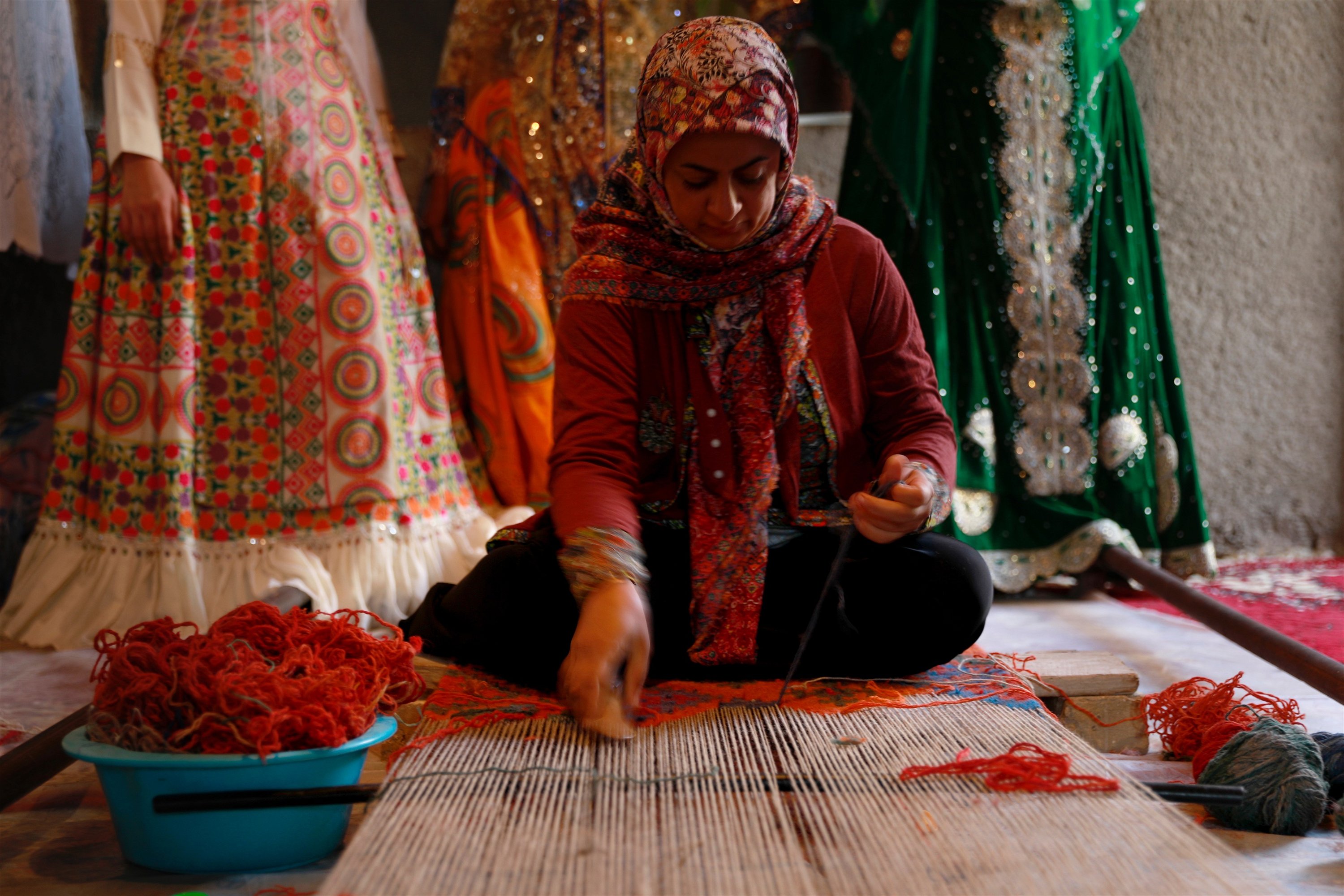
The art of rug weaving is a centuries-old craft that is not subject to strict production chains. It has evolved over time but still incorporates centuries-old tradition. Every rug must be viewed as a work of art, not as the result of a strictly timed production chain. The process of hand-weaving is as individual as the rugs and the knotter herself. For example, a nomadic woman spins the wool for her rug from her sheep by hand, dyes it with natural colours, and weaves it in her tent according to her mood and time. The entire pattern usually comes from traditional patterns passed down, combined with her own imagination and taste.
Genuine Handwork
Often, these women weave the rugs and Kelim on horizontal looms. Here, they sit on the part of the rug that is already finished, and so the rug sometimes stretches due to the weight. This is also the reason why some of the tribal rugs may be crooked here and there. This is not a flaw, but part of the authentic rug-weaving process. Another example is a rug weaver from a village buying his wool at the nearest bazaar and weaving the rug in his own home on a vertical loom. In larger cities like Nain or Isfahan, rug weaving has a great tradition, and very fine rugs are knotted. Here too, all rugs are hand-knotted, but unlike the women in the villages and tribes, the knotters often use design templates for their rugs instead of weaving according to their own ideas. As you can see, there isn't "one way" to design a rug or Kelim, but hundreds. And that's what makes it so beautiful.