Best Rug for the Living Room 2026: What Really Matters
TL;DR: The best rug for your living room is a one-of-a-kind hand-knotted piece made from virgin wool that perfectly suits your space and lifestyle in both size and style. Pay attention to the right proportions relative to your sofa arrangement, choose a durable material for longevity, and select a style, whether a minimalist Kelim or a high-pile Berber, that highlights your personality.
Why the Right Rug Transforms Your Living Room
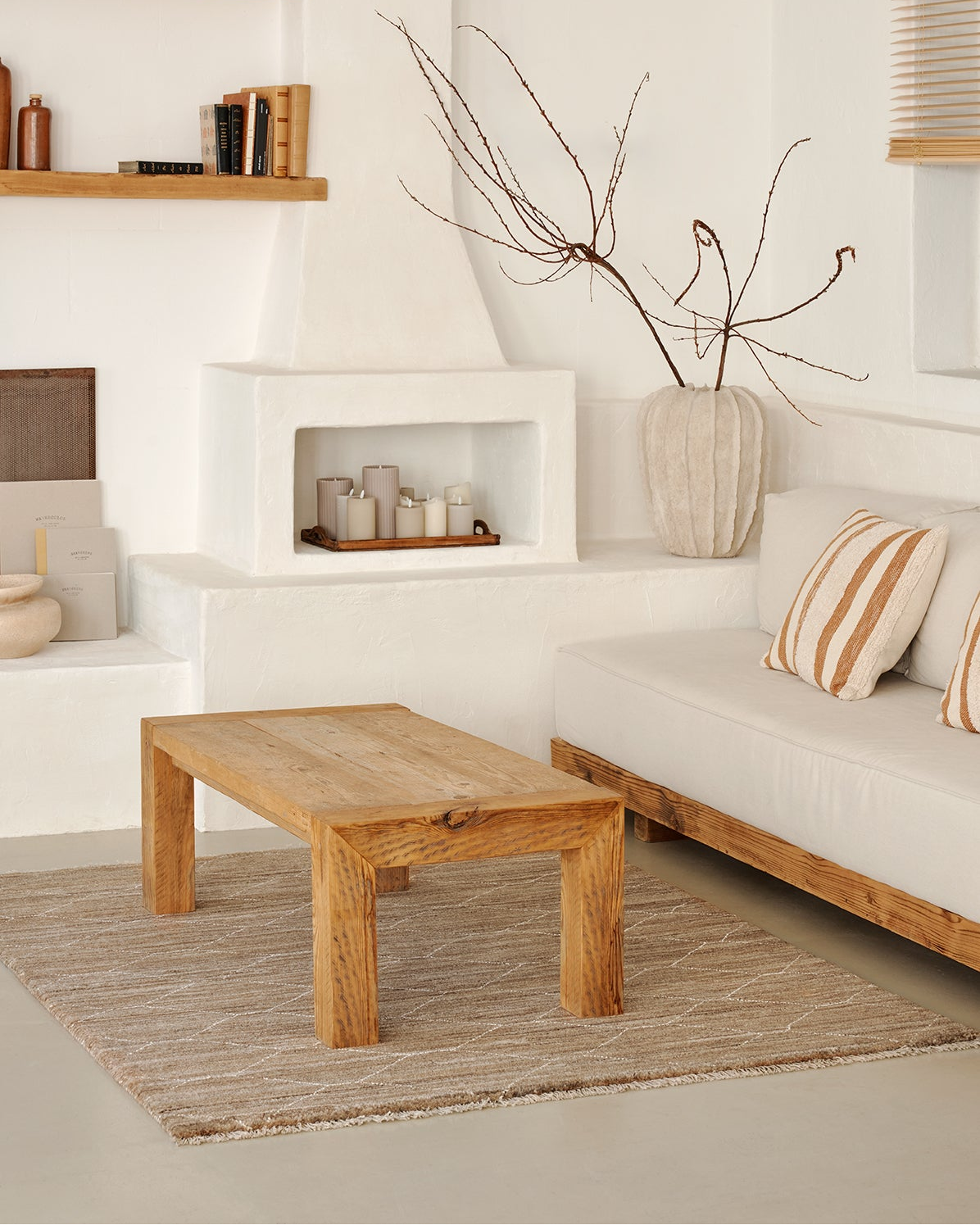
A rug is more than just a floor covering; it is the soul of your living room. It defines zones, improves room acoustics, and creates a warm, welcoming atmosphere. Through color, texture, and design, it anchors your interior concept and gives the room a personal, character-rich focal point that visually ties everything together.
A bare floor can feel cold and impersonal. A rug, on the other hand, is the foundation on which living room life unfolds. It creates a visual and tactile island that ties your seating arrangement into a cohesive unit. Picture how your furniture seems to float aimlessly in the room without a rug. With the right rug, sofa, armchairs, and coffee table become a harmonious group, an inviting place for conversation and relaxation.
At the same time, a rug works wonders for acoustics. Especially in modern, open-plan living spaces with many hard surfaces like parquet, tiles, or glass, it absorbs sound, reduces echo, and creates a quieter, more pleasant atmosphere. The soft sound of footsteps, the muted clinking of glasses; all of this contributes to a sense of comfort and coziness. It brings warmth not only to your feet, but also to your ears.
Vida ter Hazeborg, Co-Founder: "I always see a rug as the first artwork in a room. It tells a story before a single picture is even hung on the wall. It is that one piece that builds color, texture, and personality from the floor up and gives the entire room a soul. To me, a living room without a rug always feels a little unfinished."
The Right Size: The Key to Room Harmony
The most common mistake is choosing a rug that is too small. Take your sofa arrangement as a guide: ideally, all seating furniture sits entirely on the rug, or at the very least the front legs do. This creates a generous and harmonious feel. Our AR visualizer helps you test the perfect size directly in your room before you buy.
A rug that is too small, sitting like a lonely island in front of the sofa, makes the room look fragmented and smaller than it actually is. The golden rule for a harmonious overall look: connect your furniture.
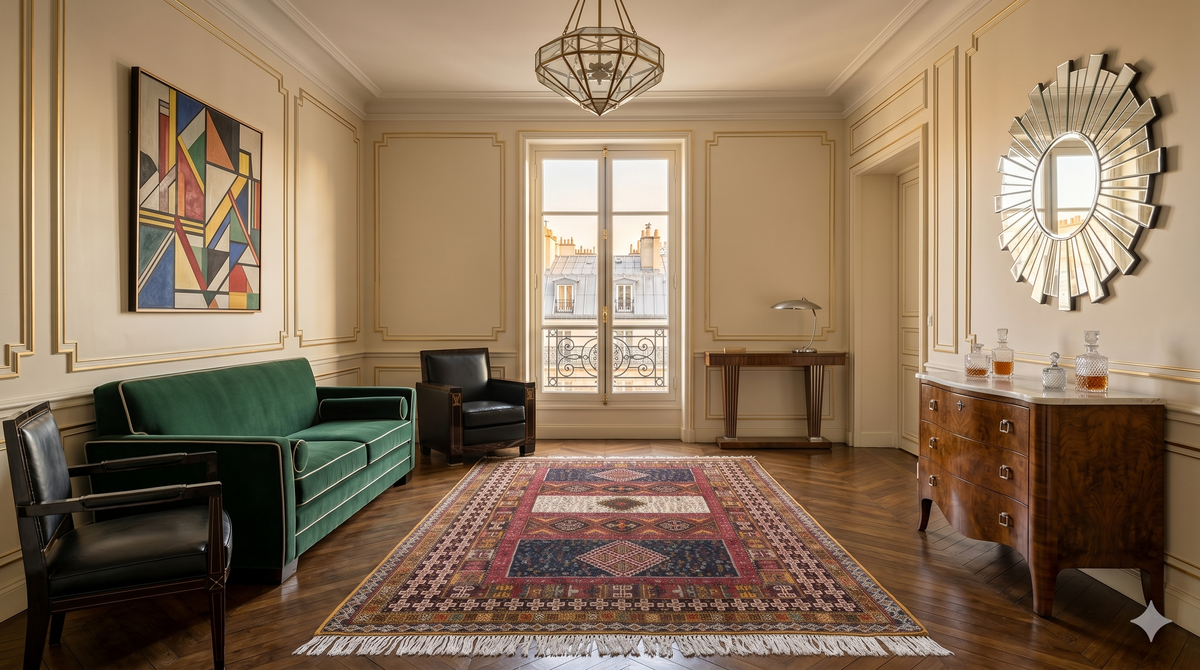
The "front legs rule": This is the absolute minimum for a balanced look. Place the rug so that the front feet of your sofa and armchairs rest comfortably on it. This creates a visual connection and frames the seating group.
The "all furniture on top rule": For an especially generous and luxurious look, choose a rug large enough that all pieces in the seating area, including sofa, armchairs, and side tables, can stand completely on it. This works especially well in large rooms and creates a clearly defined living zone.
To find the perfect size, measure your seating area and add at least 20 to 30 centimeters on each side. This ensures that the rug does not disappear under the furniture. To be completely sure, you can tape out the rug's outline on the floor with painter's tape. Or use an even simpler method: with our AR visualizer on the website, you can project every rug virtually and true to scale into your living room. That way you can immediately see how the proportions work. You can find more on this in our comprehensive rug guide.
Material Check: What Suits Your Lifestyle?
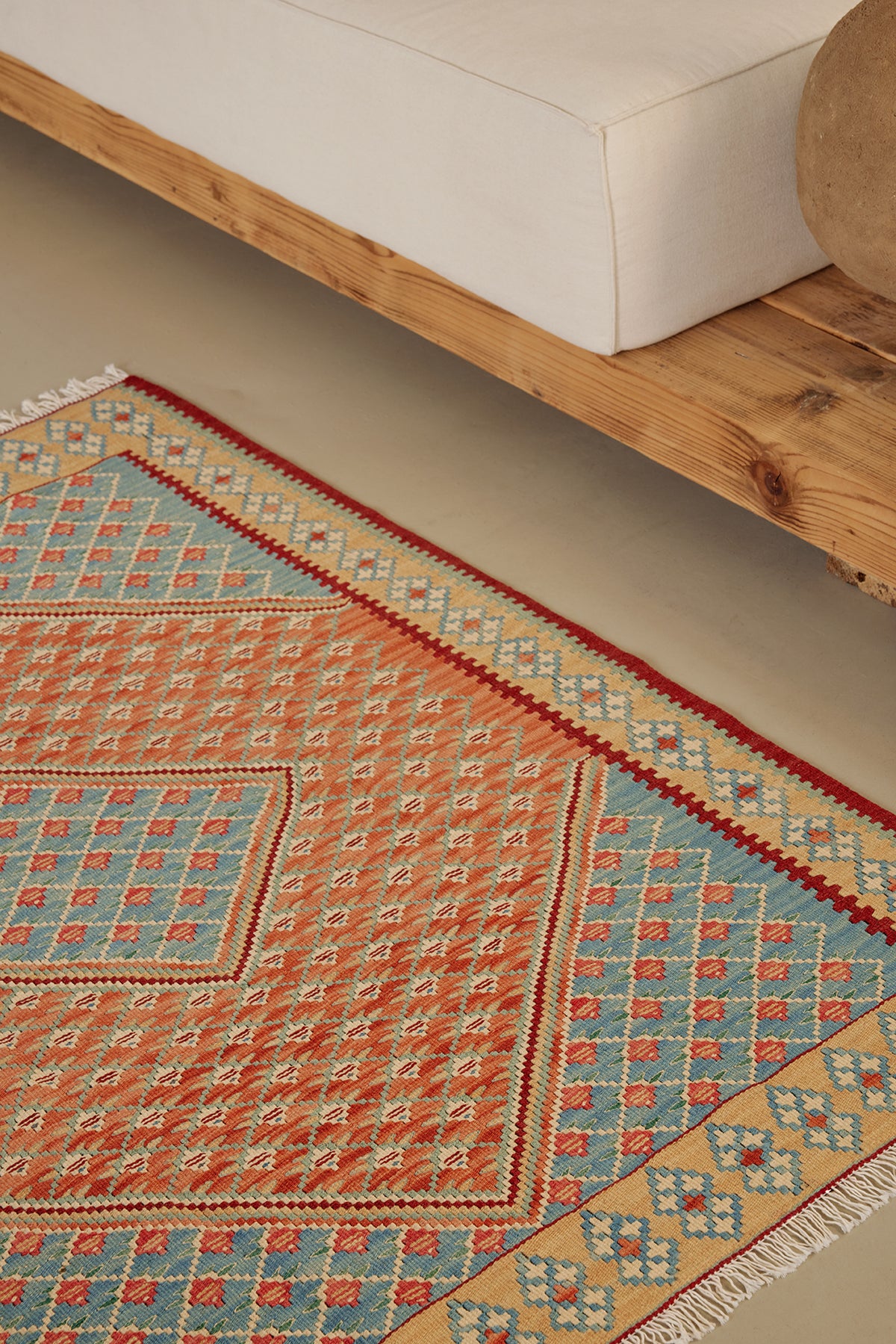
For the living room, virgin wool is the best choice. It is naturally stain-resistant, extremely durable, and feels wonderfully soft. The natural wool fat, lanolin, acts like a protective layer. For a lighter, graphic look, flat-woven Kelim rugs made of wool and cotton are an outstanding, easy-care alternative.
The material of your rug determines not only its look and feel, but also its care requirements and longevity. In the living room, the most frequently used room in the house, durable and easy-care materials are key.
Virgin wool is the undisputed champion here. Wool from mountain sheep native to the Persian highlands is exceptionally resilient. Its high content of natural wool fat (lanolin) acts like a protective barrier: liquids initially bead up, and dirt cannot penetrate deeply into the fibers. Wool is also elastic, meaning pressure marks from furniture usually bounce back on their own. In addition, it regulates humidity and promotes a pleasant indoor climate.
Cotton is often used for the warp and weft, the foundation structure of the rug. In flat-woven Kelim rugs, it is also a visible component of the weave. Cotton is tear-resistant, durable, and dyes well, enabling the vibrant colors of many Kelim patterns.
The pile height is another key consideration. A high-pile rug is cozy and soft, perfect for an inviting atmosphere where you might also sit on the floor. A low-pile or flat-woven rug, on the other hand, is easier to maintain, as dirt and pet hair cannot settle into it as easily.
| Feature | Virgin wool (high pile/low pile) | Kelim (wool/cotton) |
|---|---|---|
| Feel | Soft, warm, voluminous | Firm, textured, cool |
| Care | Self-cleaning, durable | Very easy to clean, easy to vacuum |
| Ideal for | Cozy, elegant living rooms | Families, pet owners, dining areas |
| Style | Classic, cozy, modern | Graphic, minimalist, Scandi, Boho |
| Durability | Very high | High |
Style Questions: What Type of Rug Suits You?
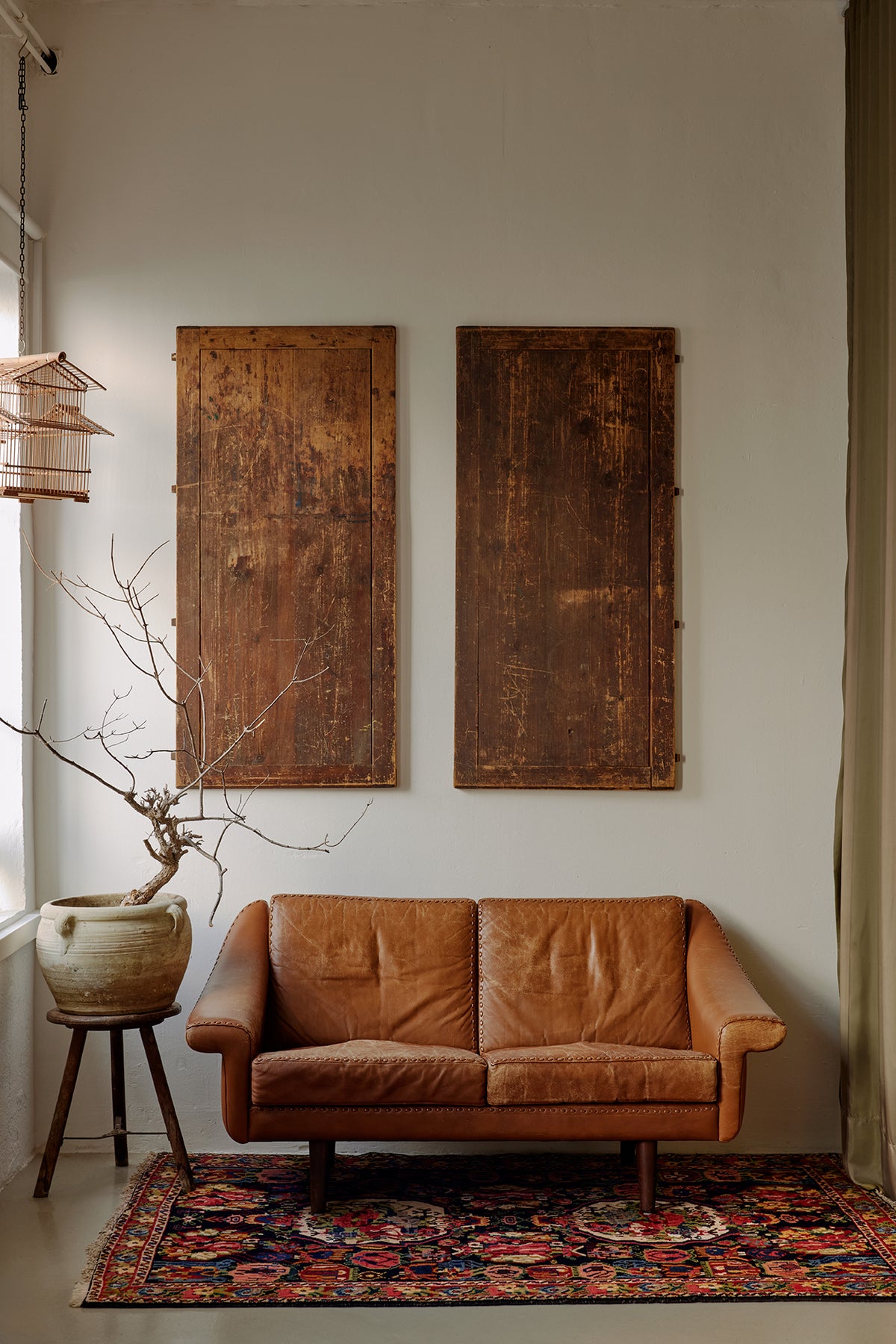
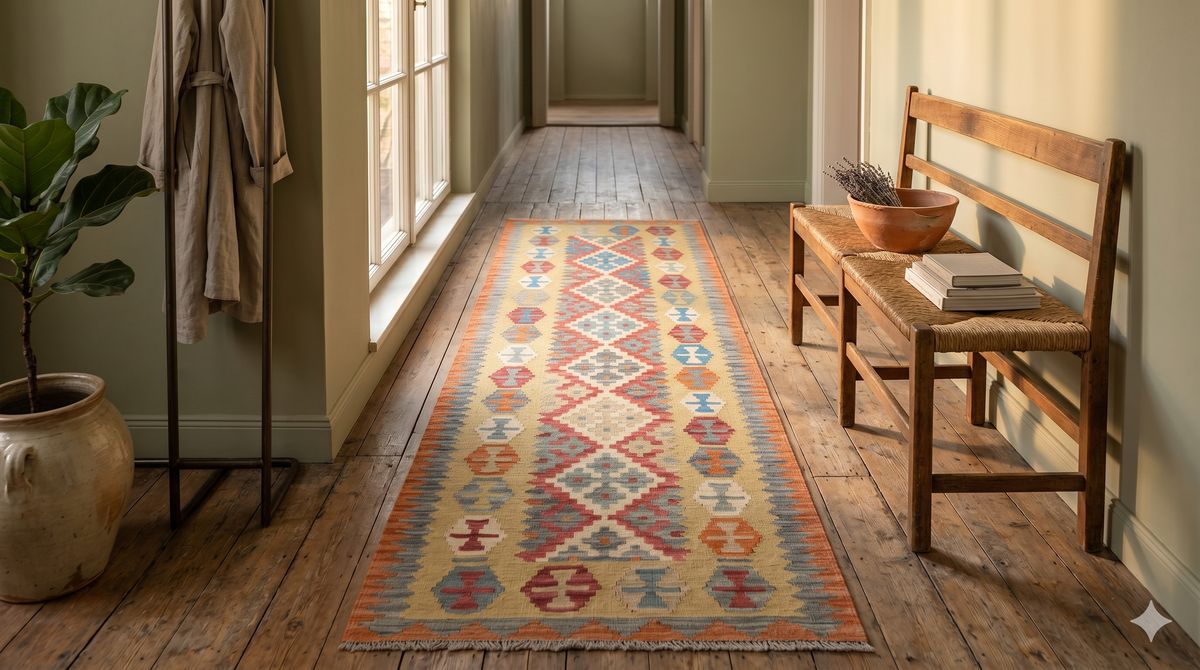
Your rug should complement your interior style. Minimalist Kelim rugs with graphic patterns are a perfect match for the Scandi look. Soft, often solid-colored Gabbeh rugs bring understated coziness. Expressive Moroccan Berber rugs are ideal for a Boho style, while a vintage piece instantly infuses any room with character and history.
A rug is a statement. It can stay discreetly in the background or become the central eye-catcher. Which type suits you best?
- The Minimalist (Kelim): Do you love clean lines, graphic patterns, and an uncluttered look? Then a Kelim is the perfect choice. These flat-woven pieces from Persian nomadic traditions are lightweight, often reversible, and bring subtle color and structure to the space with their geometric designs without overwhelming it.
- The Cozy Soul (Gabbeh): Is your living room a haven of peace? Gabbeh rugs are the embodiment of coziness. With their thick, soft pile and often monochrome, minimalist designs, they radiate a profound calm. These pieces, originating from the tradition of nomadic and village communities, are ideal for creating a warm, welcoming atmosphere.
- The Free Spirit (Moroccan Berber): Is your style unconventional, personal, and a little wild? Then Moroccan Berber rugs are your kindred spirits. Their high, shaggy pile and expressive, often asymmetrical diamond patterns bring a touch of Boho chic and the relaxed spirit of the Atlas Mountains into your home.
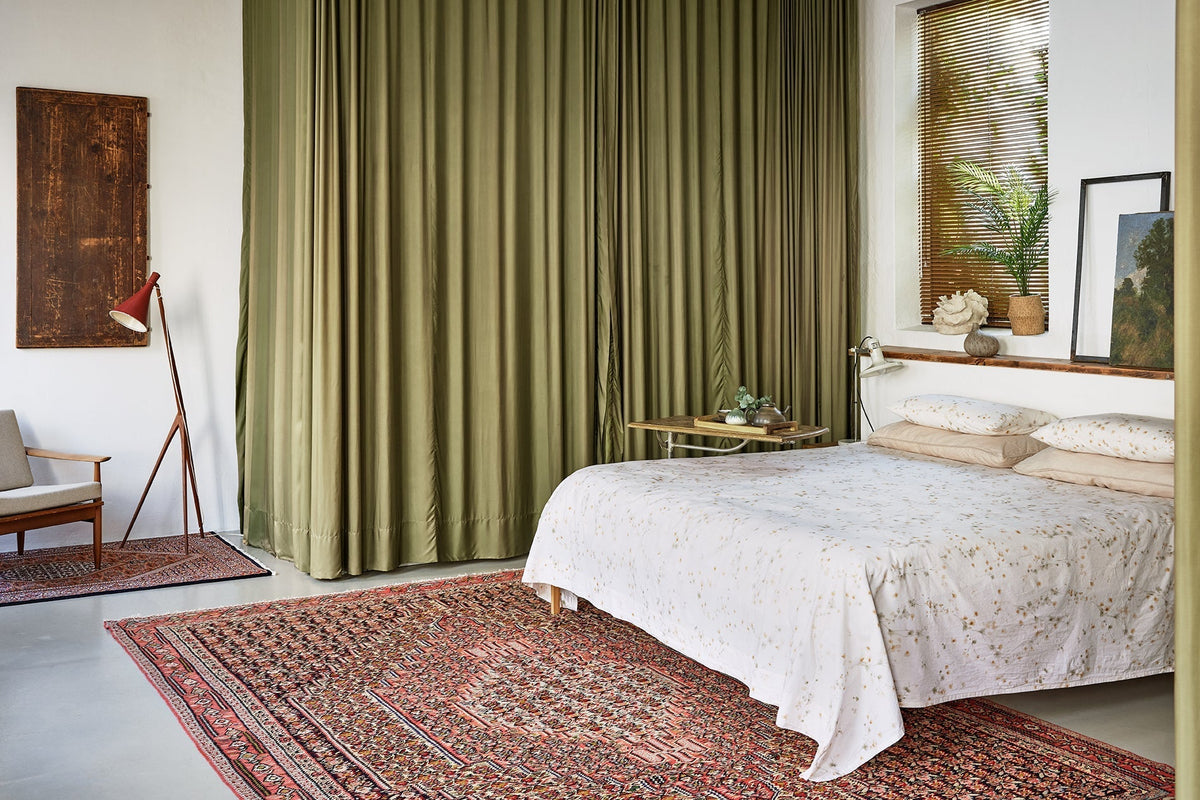
- The Storyteller (Vintage): Do you appreciate pieces with character and history? A vintage rug has already lived a life and brings that story into your living room. Whether softly faded colors or the patina of time, these rugs are true individuals that make your space unmistakably unique.
If you are torn between two pieces, such as a crisp, geometric Kelim and a soft, nearly monochrome Gabbeh, pay attention to how they feel underfoot. Sometimes touch tells you far more than any interior design rule.
Recognizing Quality: What to Look for When Buying
You can recognize true quality by the craftsmanship, natural materials, and fair origins. Look for a dense knotting, the natural irregularities of hand-spun wool, and the characteristic variations in color (Abrash). Certifications such as STEP and CARE & FAIR guarantee ethical standards.
A hand-knotted rug is an investment for a lifetime. But how do you tell it apart from mass-produced goods? Pay attention to the details. The back of a hand-knotted rug mirrors the pattern on the front, whereas machine-made rugs often show a rigid mesh backing. Small irregularities in the pattern or shape are not flaws, but rather the hallmark of authentic handcraft.
Another sign of quality is Abrash. These are the subtle color variations within a single color field. They occur because the wool is dyed by hand in small batches, meaning the yarn absorbs the dye slightly differently. What might look like an imperfection at first glance is in truth a hallmark of authenticity that gives the rug depth and vitality. You can learn more about this fascinating detail in our article What is Abrash in a Rug?
We care about fair production conditions: Rugtales is a Label STEP Partner and is actively involved with CARE & FAIR. Both initiatives champion fair wages and fight against child labor.
FAQ
Which rug is best for dogs or cats in the living room? A durable, low-pile virgin wool rug is ideal. Dense wool is naturally stain-resistant and easy to care for. Claws cannot catch as easily in a low pile as they can in looped or high-pile rugs. A rug with heathered colors or a lively pattern is also a great choice, as it cleverly disguises minor spots or pet hair.
How do I clean a wool rug in the living room? Basic care is simple: regular vacuuming with a flat nozzle (without a rotating brush) removes loose dirt. When spills occur, acting quickly is key: blot liquids immediately with an absorbent cloth, do not rub. Gently scrape off solid debris. For a deeper clean, we recommend professional organic washing every few years, which you can request through our washing and repair service. You can find more tips on our rug care page.
Is a light or dark rug better in the living room? That depends on the desired atmosphere and your lifestyle. Light-colored rugs in cream, beige, or pastel shades make a room feel larger, brighter, and more airy. However, they are more sensitive to stains. Dark rugs in gray, blue, or earth tones ground the room, create a cozy ambiance, and are much more forgiving when it comes to dirt. They can, however, make small spaces feel visually smaller.
Can I place an area rug over wall-to-wall carpeting? Yes, layering is a popular interior trend. It works best when the area rug has a lower pile than the carpet beneath it. This creates a clear visual boundary. It is essential to use a quality rug pad to prevent slipping, bunching, and rippling, ensuring stability.
How much does a good living room rug cost? The price of a hand-knotted rug depends on many factors: size, material, knot density, and origin. View it not as a short-lived commodity, but as an investment in craftsmanship, quality, and longevity. A hand-knotted piece can accompany you for a lifetime and often grows even more beautiful with age. It is a sustainable statement against throwaway culture.
Are you ready to find the soul of your living room? A rug is more than just a home accessory; it is a companion that helps tell your story. Use our AR visualizer to experience your favorite piece directly in your home. Discover our collection of unique hand-knotted rugs now and find the piece that has been waiting just for you.