Hallway Runners: Sizes and Layout
TL;DR: The ideal rug runner for the hallway should cover the main walkway, but leave 15-20 cm of space to the floor on each long side and 15-60 cm at the ends. This frames the runner visually and protects the floor. The length should be proportional to the hallway, without blocking doors or looking cramped.
Why a Hallway Runner Is More Than Just Decoration
A rug runner in the hallway is a functional design statement. It protects your floor from wear in the busiest area of the home, improves acoustics through sound absorption, and creates a warm, welcoming atmosphere. It also guides the eye and connects rooms, giving your home a thoughtful structure and a positive first impression.
The hallway is the main artery of your home. Every day, we walk through it countless times, often in shoes, putting strain on the flooring. A sturdy, hand-knotted runner absorbs most of the dirt and wear, protecting your parquet or tiles. Since we started as a family business in 1952, we have seen how a good runner can extend the life of a floor by years.
But function is only half the story. A runner transforms an often neglected transit area into a real living space. It softens the sound of footsteps and reduces echo, which makes a huge difference, especially in period apartments with long, narrow corridors. The feeling of walking barefoot on soft virgin wool instead of cold tiles instantly creates a cozy, inviting atmosphere for you and your guests. It is the first and last thing you feel when you enter or leave your home. In our collection of hand-knotted runners, discover pieces that fulfill this function perfectly, or browse all hallway rugs directly.
The Golden Rules: How to Find the Exact Runner Size
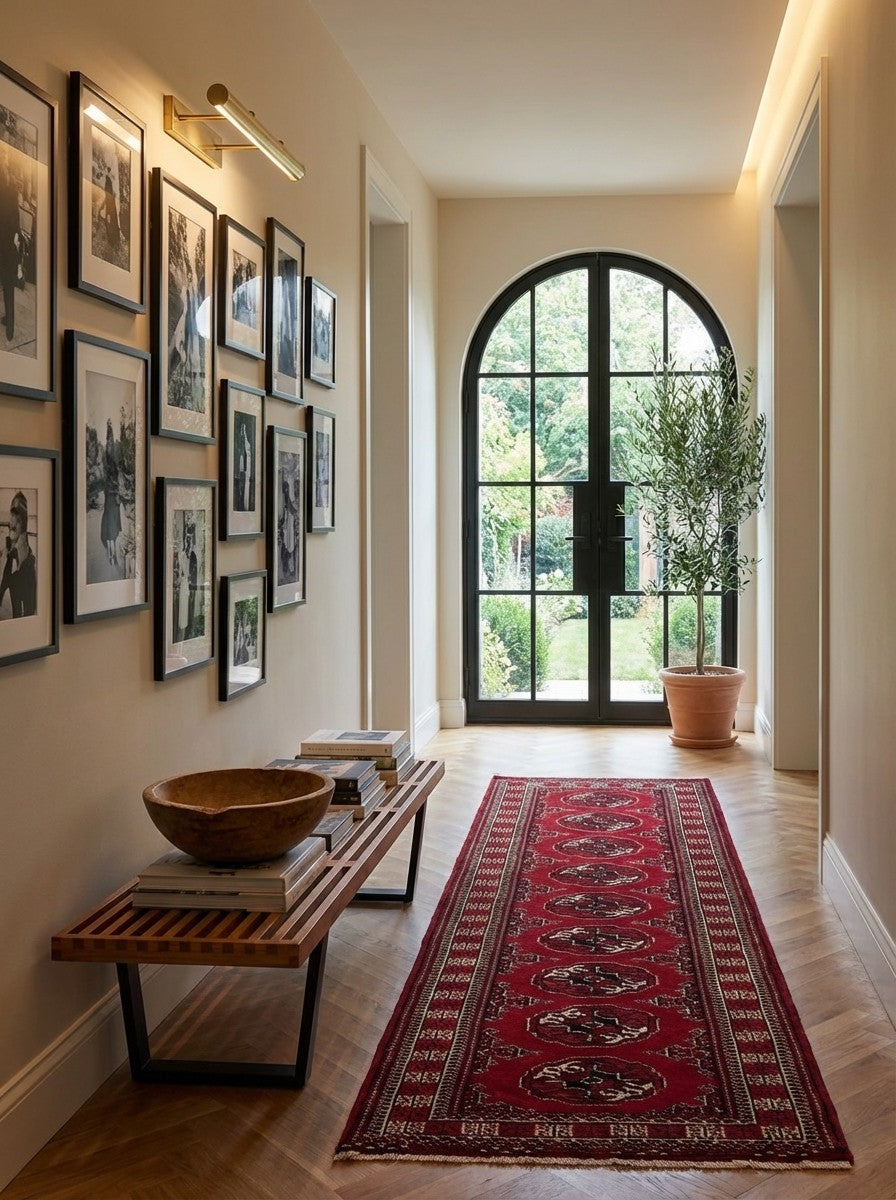
First, measure the width of your hallway and subtract 30-40 cm to determine the ideal runner width (15-20 cm of clearance per side). For the length, measure the entire hallway and subtract 30-120 cm so that enough floor remains visible at both ends. Make sure that no doors are blocked by the runner.
The right size is essential for a runner to develop its full effect. A runner that is too small looks lost, while one that is too large makes the hallway feel overwhelming and cramped. With a few simple rules of thumb, you will find the perfect dimensions.
The width rule: The most important rule is to leave a strip of bare floor along both long sides of the runner. A distance of 15 to 20 cm on each side is ideal. This creates an intentional frame that highlights the runner and visually widens the hallway. Measure the total width of your hallway and subtract 30 to 40 cm from it.
| Hallway width | Ideal runner width |
|---|---|
| 100 cm | 60 - 70 cm |
| 120 cm | 80 - 90 cm |
| 150 cm | 110 - 120 cm |
| 200 cm | 160 - 170 cm |
The length rule: At the ends, too, the runner should not sit directly against the wall or door threshold. Leave at least 15 cm of space at both ends, and up to 60 cm in very long hallways. This prevents the room from feeling compressed. The runner should define the main walkway, but not cover the entire floor. Experience from our consultations shows: a runner that has room to breathe always looks more balanced.
The door check: The most practical aspect: ensure that all doors opening into the hallway can open and close smoothly. Measure the clearance between the bottom edge of the door and the floor, making sure the rug's pile is not too high. Flat-woven Kelim pieces are often a safe choice here. By the way, the principles of proportions apply to all rooms, as you can read in our living room rug size guide.
Layout Solutions for Tricky Hallways: From L-Shapes to Door Clutter
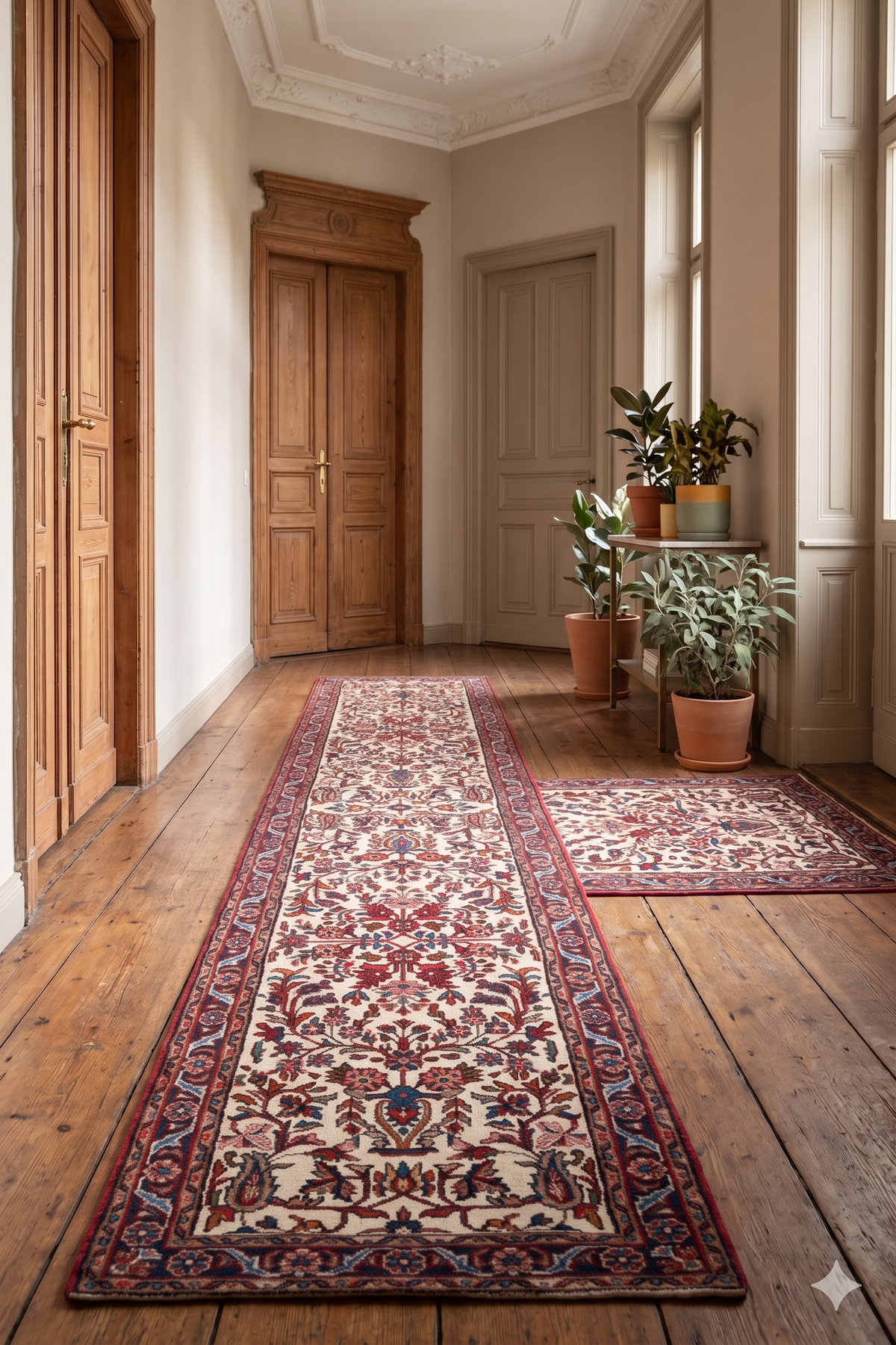
For an L-shaped hallway, you can use two runners that overlap or meet at the corner. In a hallway with many doors, choose a narrower runner placed centrally, keeping sufficient clearance from all thresholds. The goal is always to define a clear, uninterrupted walkway without creating tripping hazards.
Not every hallway is a straight, simple corridor. Awkward layouts or numerous doors call for creative solutions, but they are no obstacle to a beautiful runner.
L-shaped hallways: Here you have two elegant options. You can either place two runners so they meet at a right angle in the corner, or let them slightly overlap, creating a more relaxed, organic look. What matters is that the rugs harmonize in style or color.
Hallways with many doors: If your hallway feels more like a transit hub with many branching doors, a centrally placed, slightly narrower runner is the best solution. It defines a clear path through the space without blocking access to the rooms. Keep a little more distance from the door thresholds here to preserve an open, calm aesthetic.
An L-shaped hallway with multiple doorways can also be styled beautifully: choose two Kelim rugs with similar geometric motifs in complementary colours, placing a longer runner in the main corridor and a shorter one along the turn. If you slide the shorter piece slightly beneath the longer one, you create a cohesive look that connects the space and adds engaging texture.
Wide entryways: In a very wide hallway or entrance hall, a single narrow runner can look lost. Here, you can either choose a proportionally wider runner or, for a bolder design approach, place two identical, narrow runners parallel to each other. This creates an almost stately symmetry.
Material and Style: Which Runner Suits Your Entryway?
For the hallway, hand-knotted virgin wool is the best choice, as it is exceptionally durable, dirt-repellent, and easy to care for. Flat-woven Kelim are especially robust and low-maintenance. In terms of color, light runners can brighten a dark hallway, while patterned designs conceal minor dirt and lend character to the space. Choose a style that sets the first impression of your home.
The hallway is a high-traffic area, and your runner's material must be up to the challenge. Synthetic fibers wear out quickly and soon look flattened. Natural fibers have a clear advantage here.
Vida ter Hazeborg, Co-Founder: "The hallway is your home's calling card. It conveys the very first impression. A hand-knotted runner made of virgin wool is not just a visual choice, but a tactile one as well. The feeling of genuine, warm wool under your feet when you arrive immediately says: 'You are home.' It is this combination of beauty and functionality that truly transforms a room."
The best material: virgin wool. Hand-knotted rugs made from virgin wool are the ideal choice. Wool from mountain sheep naturally contains lanolin (wool grease), which acts like natural protection against stains and moisture. It keeps the fiber elastic so that it bounces back after being stepped on, and repels dirt and liquids. A runner like this is an investment that, with proper care, will last for decades.
The most robust weave: Kelim. A particularly practical option for the hallway are flat-woven Kelim rugs. Because they have no pile, they are extremely resilient and very easy to clean; often, simply shaking them out or vacuuming is enough. Their low profile is also ideal for areas with doors that have low floor clearance. The often geometric patterns and characteristic variations in color, known as Abrash, conceal everyday traces of wear perfectly.
Color and pattern: Your runner sets the tone for your hallway. * Dark, narrow hallways: Light colors such as beige, cream, or light gray with subtle patterns open up the room and reflect light. * Bright, wide hallways: Here you can be bolder. Vibrant colors or large-scale geometric patterns make a strong statement. * Families with children or pets: A runner with a lively, detailed pattern is your best friend. It forgives small stains or crumbs far more readily than a solid-color piece.
The Final Check: Measure, Test, and Visualize Before You Buy
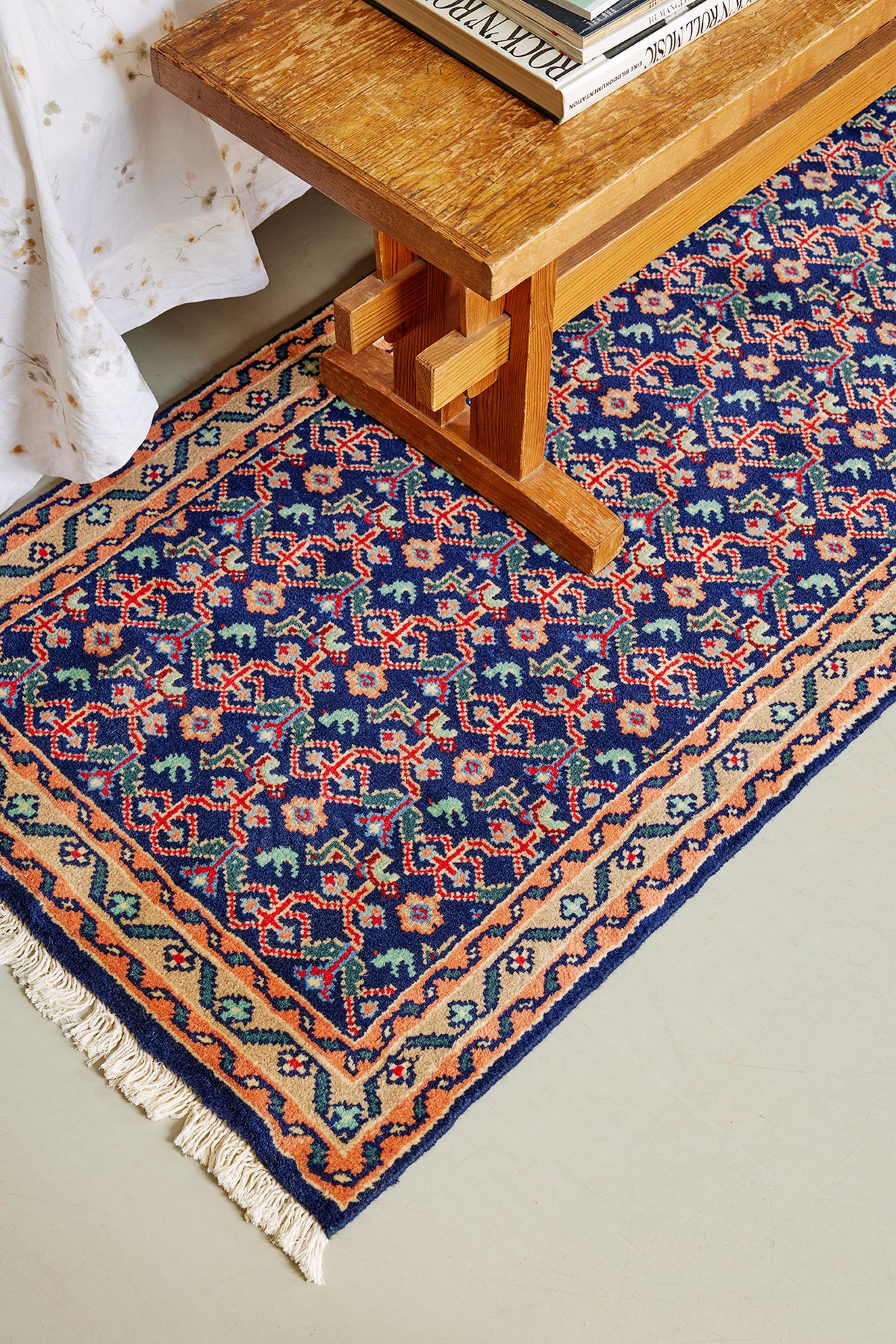
Before you make a decision, measure your hallway precisely and outline the planned runner size on the floor using masking tape. This gives you a true sense of the proportions. You can also use our AR visualizer on your smartphone: it lets you place our rugs virtually and to scale right in your hallway, so you can see instantly what works.
Theory is good, but visual testing is better. Before you make your final choice, take a moment for a reality check.
- Measure, measure, measure: Double-check your measurements.
- Tape it out with masking tape: This is the best trick for getting a feel for the size. Tape out the outline of your desired runner on the floor with masking tape. Walk past it a few times. Does it feel balanced? Is the walkway clearly defined? Does it block anything?
- Visualize with augmented reality: Unsure about color and pattern? With our AR visualizer on the website, you can use your smartphone to place any of our runners virtually in your own hallway. You can see to scale how the pattern looks, whether the colors suit your floor, and how the proportions feel. It is the most reliable way to make the perfect choice.
FAQ
How much space should you leave at the sides of a hallway runner? Ideally, leave 15 to 20 cm of space on each long side. This strip of exposed floor acts like a passe-partout around a picture: it frames the runner, lets it stand out, and prevents the hallway from feeling narrowed. This makes the space look more structured and generous.
Can you use two runners in a long hallway? Yes, absolutely! This is an excellent solution for very long or L-shaped hallways. You can place the two runners with a small gap of 10-15 cm to create an intentional separation, or place them end-to-end. Just make sure the patterns and colors harmonize to create a cohesive overall look.
Which material is best for a hallway runner? Hand-knotted virgin wool is unbeatable. Its natural lanolin content makes it dirt-repellent and exceptionally durable. The fibers consistently bounce back and last for decades. Flat-woven wool Kelim rugs are a particularly low-maintenance, robust option, ideal for high-traffic entryways.
How do I stop my hallway runner from slipping? A high-quality rug underlay is essential. It not only ensures safety by preventing slips, but also protects both the runner and your floor. The added cushioning also enhances walking comfort and can extend the lifespan of your rug.
My hallway is very dark. Which runner will brighten it up? Choose a runner with a light base color such as cream, beige, light gray, or pastel shades. These reflect available light and instantly make the space feel brighter and larger. A subtle, colorful pattern can help add character without overwhelming the room.
A well-chosen runner is more than just a piece of fabric; it is the soul of your hallway. It welcomes you, guides your steps, and tells the first story of your home. With the right dimensions and a material that withstands daily life, you create an inviting and stylish transition.
Are you ready to transform your hallway? With our AR tool, you can see right away which of our hand-knotted runners brings your entryway to life. Discover the perfect runner for your hallway now and find the piece that has been waiting for you.