Natural Dyeing in Rugs: Madder Red, Indigo, Walnut
TL;DR: Natural dyes in rugs come from plant or mineral sources like madder red, indigo, and walnut shells. They give the wool vibrant, harmonious tones and characteristic color variations known as Abrash. This traditional dyeing method is a sign of authentic craftsmanship and creates a unique depth that synthetic dyes cannot achieve.
What are natural dyes and why are they so special?
Natural dyes are colorants obtained from plants, insects, or minerals, as opposed to synthetically produced dyes. What makes them special are their subtle, vibrant nuances and their ability to gain beauty over decades. They create the so-called Abrash effect, a gentle color variation that makes every rug truly unique.
Imagine the colors of your rug telling a story older than the yarn itself. That is the magic of natural dyes. Instead of being produced in a laboratory, they have their origins in nature: in the roots of plants, the rinds of fruits, or the leaves of shrubs. For thousands of years, this method has been the foundation of rug art and is deeply rooted in the culture of weaving peoples.
In contrast to the often garish and uniform aniline dyes that emerged in the 19th century, natural dyes possess an incomparable vibrancy. They interact with light and the wool fiber in a way that creates depth and complexity. A central feature of this traditional dyeing process is the characteristic color variations known as Abrash. These gentle transitions occur because each batch of wool absorbs the dye slightly differently. Far from being a flaw, Abrash is the most beautiful seal of authenticity, proof of genuine handcraft and a promise that your rug has a soul.
Madder red (Rubia tinctorum): The fire of Persian rugs
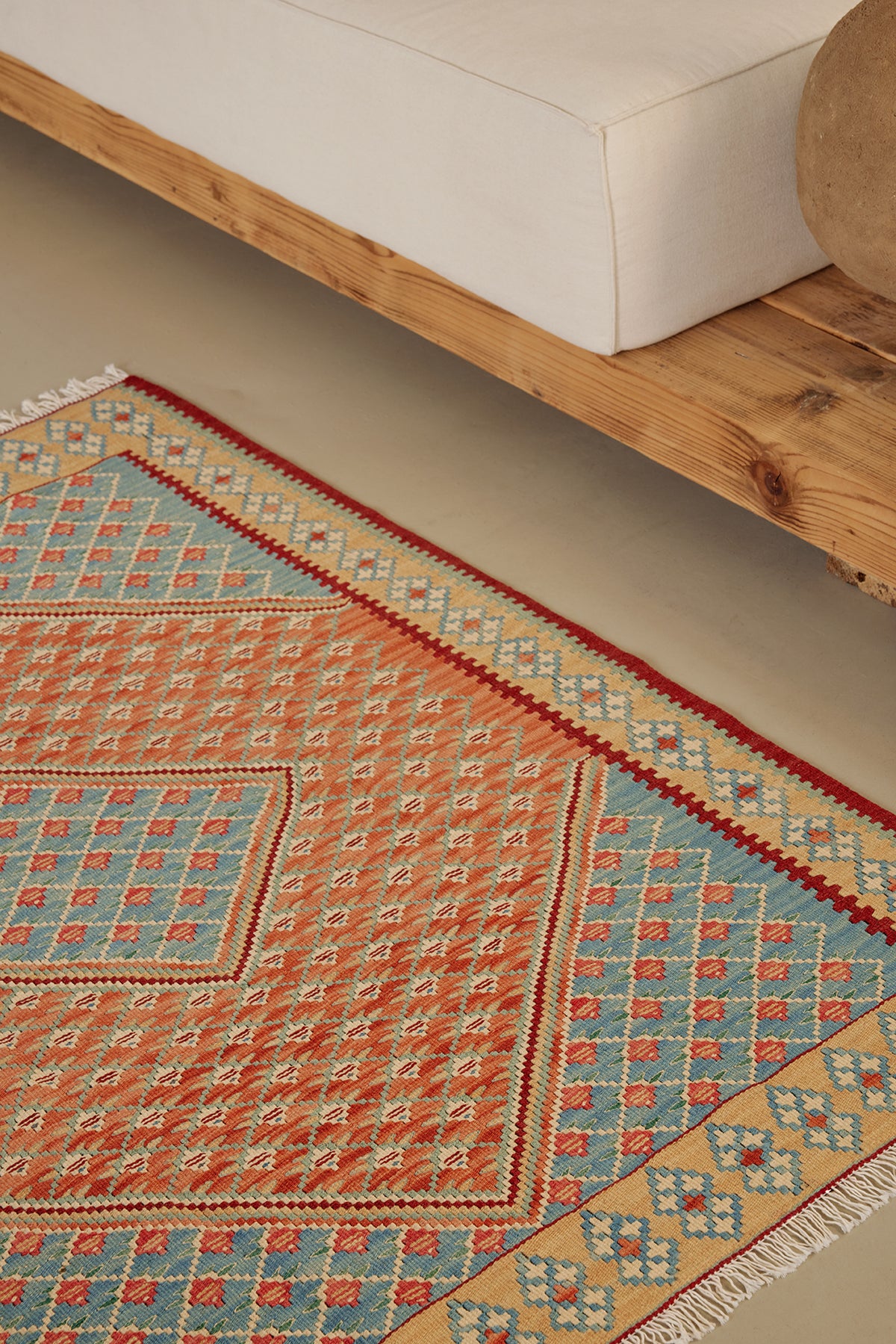
Madder red, obtained from the root of the madder plant, is the source of the iconic red tones in Persian and nomadic rugs. Depending on the mordant and the age of the root, the color varies from bright scarlet to deep burgundy. This red often symbolizes life, courage, and good fortune, and has been a central part of rug art for millennia.
When you think of a classic nomadic rug, you probably picture a deep, warm red in your mind's eye. This color almost always comes from the root of the madder plant, also known as Rubia tinctorum. For over 3,000 years, people have cultivated this unassuming plant for the precious dye sleeping in its roots. Only after three to five years of growth has the root developed enough dye to be harvested.
The dried and ground roots are boiled down in an elaborate process to release the color pigment alizarin. The result is an impressive spectrum of red shades. Depending on the mordant used (a natural fixing agent such as alum), water quality, and the exact dyeing duration, the result can range from a delicate orange to a fiery scarlet and a rich, dark wine red. In the symbolism of many nomadic tribes, such as the Gashgai, red stands for joie de vivre, bravery, and protection. It is the color of blood, fire, and passion, the vibrant heart of many traditional Gashgai Kelim.
Indigo (Indigofera tinctoria): The deep blue of the nomads
Indigo provides fascinating blue tones, from bright sky blue to almost black night blue. The dye is obtained from the leaves of the indigo plant through a complex fermentation process. Indigo is renowned for its exceptional lightfastness and is often used in combination with madder red for classic, high-contrast designs.
The blue in hand-knotted rugs is a color full of mystery and depth. It comes from the leaves of Indigofera tinctoria, a plant originally native to India. Unlike madder red, the dye is not water-soluble. To make it usable for wool, a complex process of fermentation in an alkaline bath is required. The skeins of wool are dipped into this yellow-green broth, and only when they meet the air and oxygen reacts with the indican does the magic happen: the wool transforms into a deep, rich blue.
This process can be repeated many times to increase color intensity, from a soft sky blue to a blue so dark that it appears almost black. Indigo is known for its remarkable durability. Time and again, we see that indigo colors lose hardly any of their brilliance even after more than a century. In rug symbolism, blue often represents the sky, infinity, inner peace, and wisdom. It is the perfect cool counterpart to fiery madder red and forms the foundation for countless timeless designs.
Walnut, pomegranate & co.: Nature's earthy and sunny tones
Along with red and blue, an entire palette of other plants provides rich color variety. Walnut shells yield deep brown and beige tones, while pomegranate rinds are responsible for vibrant yellow and gold shades. These earthy tones often form the foundation of many designs or set warm, sunny accents that ground the rugs and give them a natural harmony.
Nature offers a virtually endless color palette. Master weavers use their knowledge, handed down across generations, to extract an impressive variety of shades from local plants. These colors give the rugs their earthy, harmonious appeal and connect them directly to the landscape from which they originate.
Some of the most important plant dye sources include: * Walnut shells: They are the source of a broad spectrum of brown and beige tones. Depending on whether the green or dried brown shells are used, the color ranges from a light sandy shade to a deep, nearly black brown. * Pomegranate rinds: A bright, warm yellow is extracted from the dried rinds of this fruit. It recalls the sun of the Persian highlands and is often used for radiant accents in geometric patterns. * Onion skins: What ends up in our compost is a valuable raw material for weavers to create warm, golden yellow and orange tones. * Chamomile blossoms: They produce a softer, cooler yellow that blends wonderfully into calmer color compositions.
| Dye source | Result | Character |
|---|---|---|
| Walnut shells | Brown, beige, black-brown | Earthy, warm, grounding |
| Pomegranate rinds | Vibrant yellow, gold | Sunny, lively, radiant |
| Onion skins | Golden yellow, orange, rust | Warm, autumnal, spicy |
| Chamomile blossoms | Soft yellow | Delicate, cool, soothing |
The true mastery of the dyers reveals itself in the interplay of these colors. They create compositions that always feel harmonious because they all share the same natural origin.
The dyeing process: An ancient craft full of patience
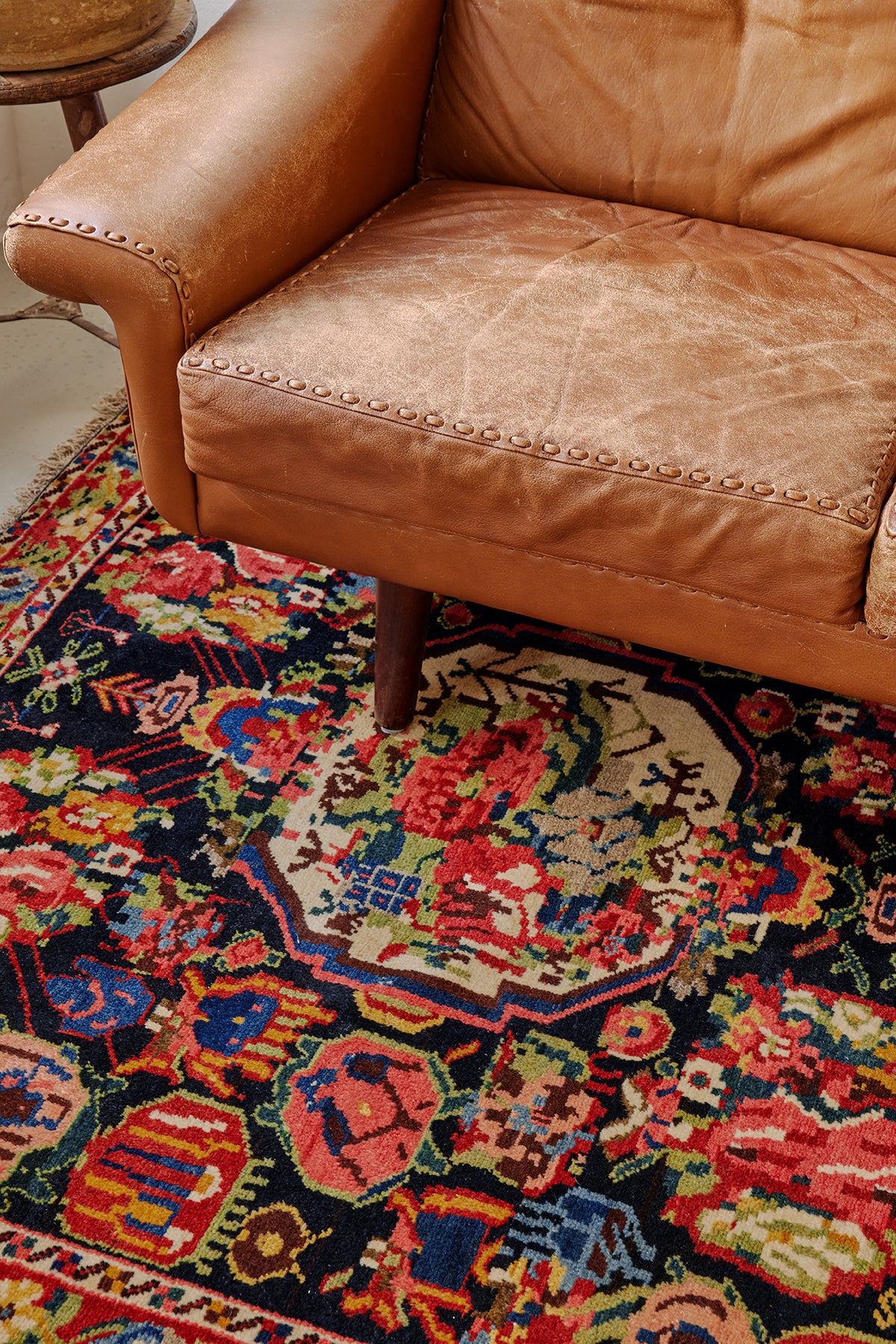
Dyeing wool with natural dyes is a lengthy process that requires extensive experience. The wool is first boiled in a mordant of alum or iron so the dye adheres. Afterwards, it is dyed for hours or days in the dye bath, rinsed, and dried in the sun. Every step influences the final result and makes it unique.
The journey from raw sheep's wool to colored yarn is an act of alchemy that requires patience and deep knowledge. First, the hand-spun wool is washed thoroughly to remove dirt and the natural wool grease (lanolin). Only clean wool takes up the dye evenly.
The next crucial step is mordanting. The wool is boiled in a solution of natural mineral salts such as alum or iron sulfate. This "mordant" opens the fibers and ensures that the dye pigments can bind permanently to the wool later on. Without this step, the color would simply bleed out during the first wash.
Only then does the actual dyeing begin. In large cauldrons, often over an open fire, the dye bath is prepared from the crushed plants. The mordanted skeins of wool are added and must steep there for hours, sometimes even days. The dyer must keep the temperature constant and move the wool regularly to achieve an even result, though a certain unevenness, the Abrash, is precisely what is desired. After the dye bath, the wool is rinsed thoroughly and hung out in the sun to dry. Sunlight has the final influence on the ultimate shade, fixing it permanently.
I remember visiting a weaving family in the Zagros region. The scent of boiling walnut shells was in the air. The master dyer pulled a skein of wool from the cauldron. It was not just brown. It had dozens of nuances, from light caramel to dark earth, depending on how the light hit it. Such a skein is not an industrial product; it is a piece of nature.
Recognising natural dyes: How to check for authenticity
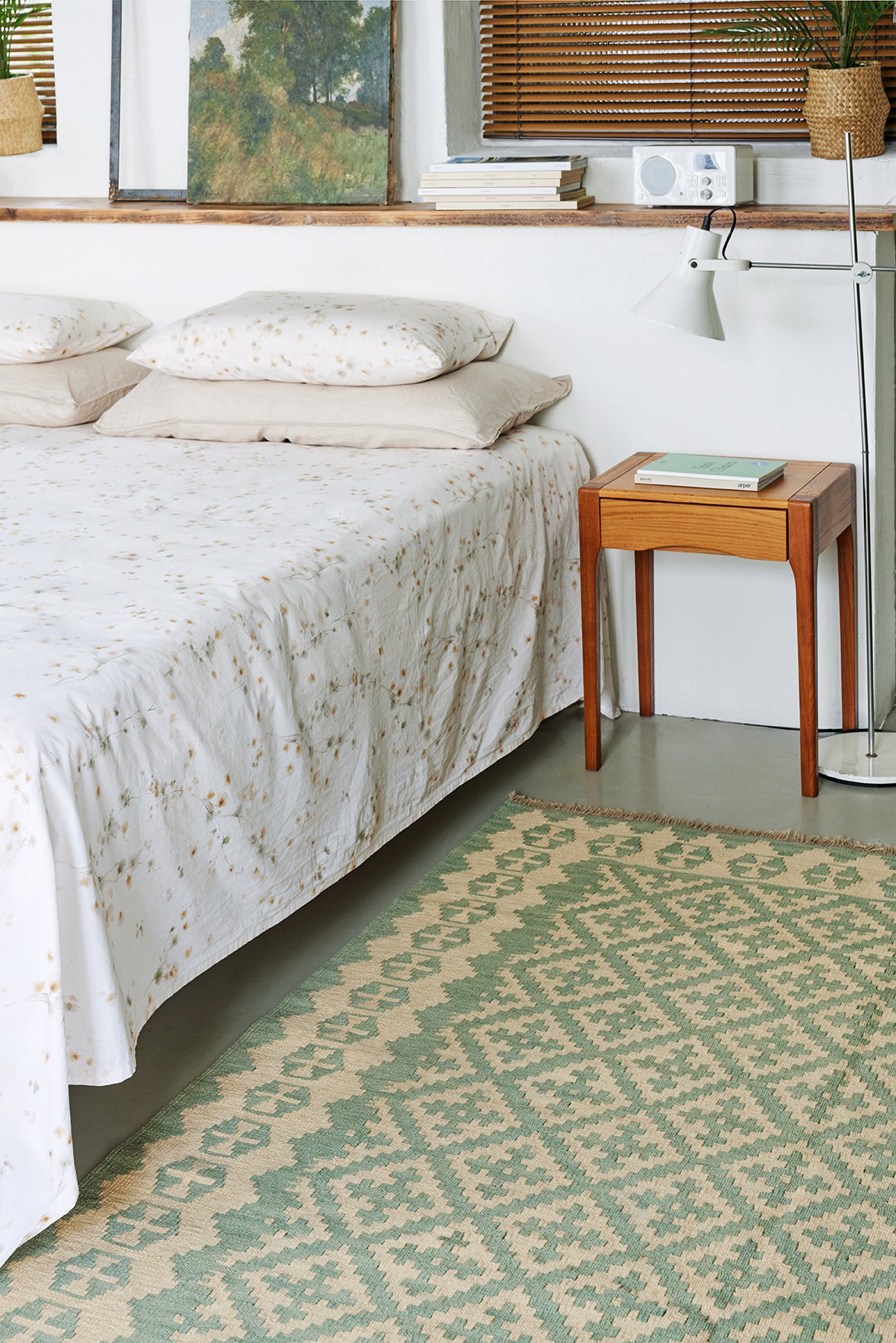
You can recognise genuine natural dyes by their harmonious, never garish tones and the characteristic Abrash effect, gentle color variations within a single color area. Synthetic dyes often look flat and too uniform. A look at the back of the rug can help: with natural dyes, the color often has not penetrated 100% evenly.
To the untrained eye, it is not always easy to distinguish genuine vegetable dyes from good synthetic dyes. But there are a few features you can look out for:
- The Abrash effect: This is the most reliable sign. Look for gentle, stripy color variations within a single color. A rug dyed with synthetic colors usually has an entirely uniform, almost "dead" color surface.
- Color harmony: Natural dyes possess an inner harmony. Even strong contrasts, such as red and blue, never appear jarring or unnatural. The colors seem to converse with each other rather than shout at one another.
- Looking at the reverse side: Turn the rug over and take a close look at the knots. With hand-dyed yarn, the dye often does not penetrate into the innermost core of the thread. If you gently separate a knot, you might see a lighter core. Synthetic dyes usually penetrate the fiber completely.
- Rely on experience: The safest way is to buy from a dealer who stands behind their expertise. In our family history, which dates back to 1952, we have learned to understand the language of colors.
Choosing a rug with natural dyes is choosing a piece of living history and sustainable craftsmanship that you can see and feel every single day.
FAQ
Are rugs with natural dyes lightfast? Yes, most traditional natural dyes, especially indigo and madder red, are astonishingly lightfast and last for generations. Early synthetic dyes often fade much faster. Nevertheless, we recommend not exposing your hand-knotted rug to intense direct sunlight on an ongoing basis in order to preserve its beauty for the future.
What exactly is the Abrash effect? Abrash refers to the natural, often stripe-like color variations within an area of color in a rug. It occurs because wool is dyed by hand in small batches, and each batch absorbs the dye slightly differently. Far from being a flaw, Abrash is a highly prized characteristic that proves the authenticity and handcrafted nature of a rug.
Why are rugs with vegetable dyes often more expensive? The higher price reflects the immense manual effort involved. Harvesting and processing the plants, the lengthy and skill-intensive dyeing process, and the additional time required make vegetable-dyed yarn considerably more costly than industrially produced alternatives. You are investing in time, knowledge, and genuine handcraft.
How do I clean a rug dyed with natural dyes? The rule of thumb is: gently and quickly. Blot fresh stains immediately with a clean, slightly damp cloth; never rub. For deeper cleaning, we strongly advise against home remedies. Contact a professional rug cleaning service with experience in hand-knotted pieces, and explicitly mention the natural dyes. You can find more tips in our guide to proper rug care.
Can I be sure that the colors at Rugtales are genuine? Our expertise spanning six generations helps you with that. If you have questions about a specific piece, write to us at hello@rugtales.com. As a Label STEP Partner and through our commitment to CARE & FAIR, we also stand for fair production conditions, which include the preservation of ancient artisanal techniques.
The world of natural dyes is fascinating and profound. Through its tones, every rug tells its own story of its origins and the people who created it. Discover the vibrant beauty of these unique pieces in our collection of traditional nomadic rugs.