



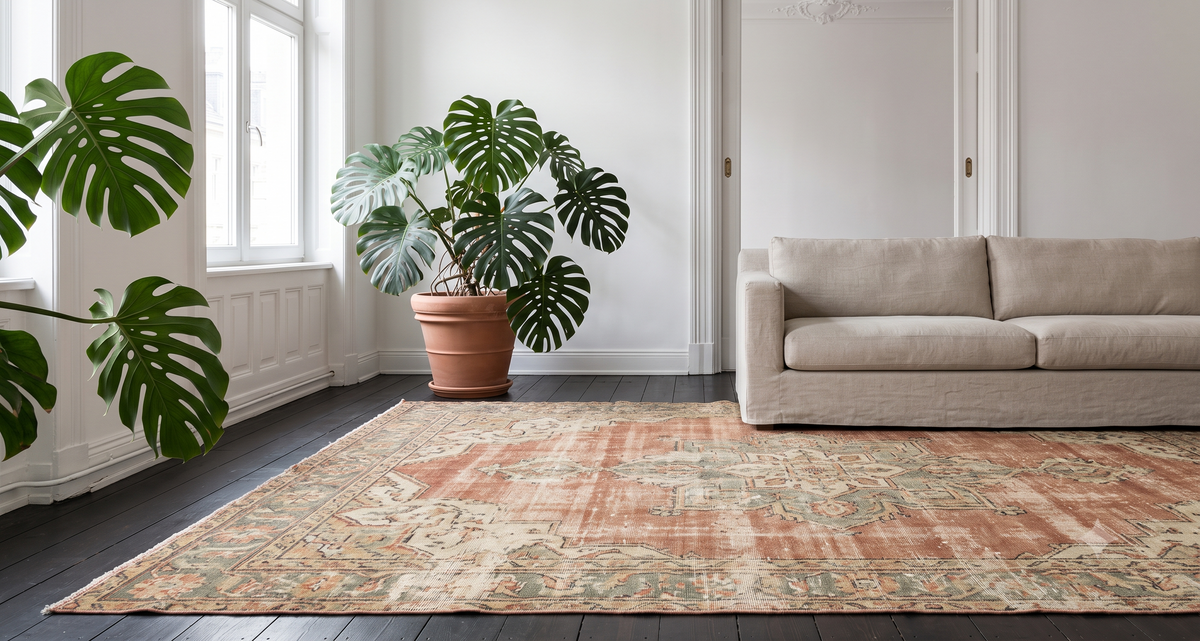
What Does Vintage Mean for Rugs?
TL;DR: A vintage rug is a hand-knotted piece between 20 and 100 years old. Unlike "antique" (over 100 years) or simply "used", a vintage rug is distinguished by its distinctive patina, the history of its origin, and an aesthetic representing a past design era. It is not an old rug, but one full of character.
The exact definition: When is a rug "vintage"?
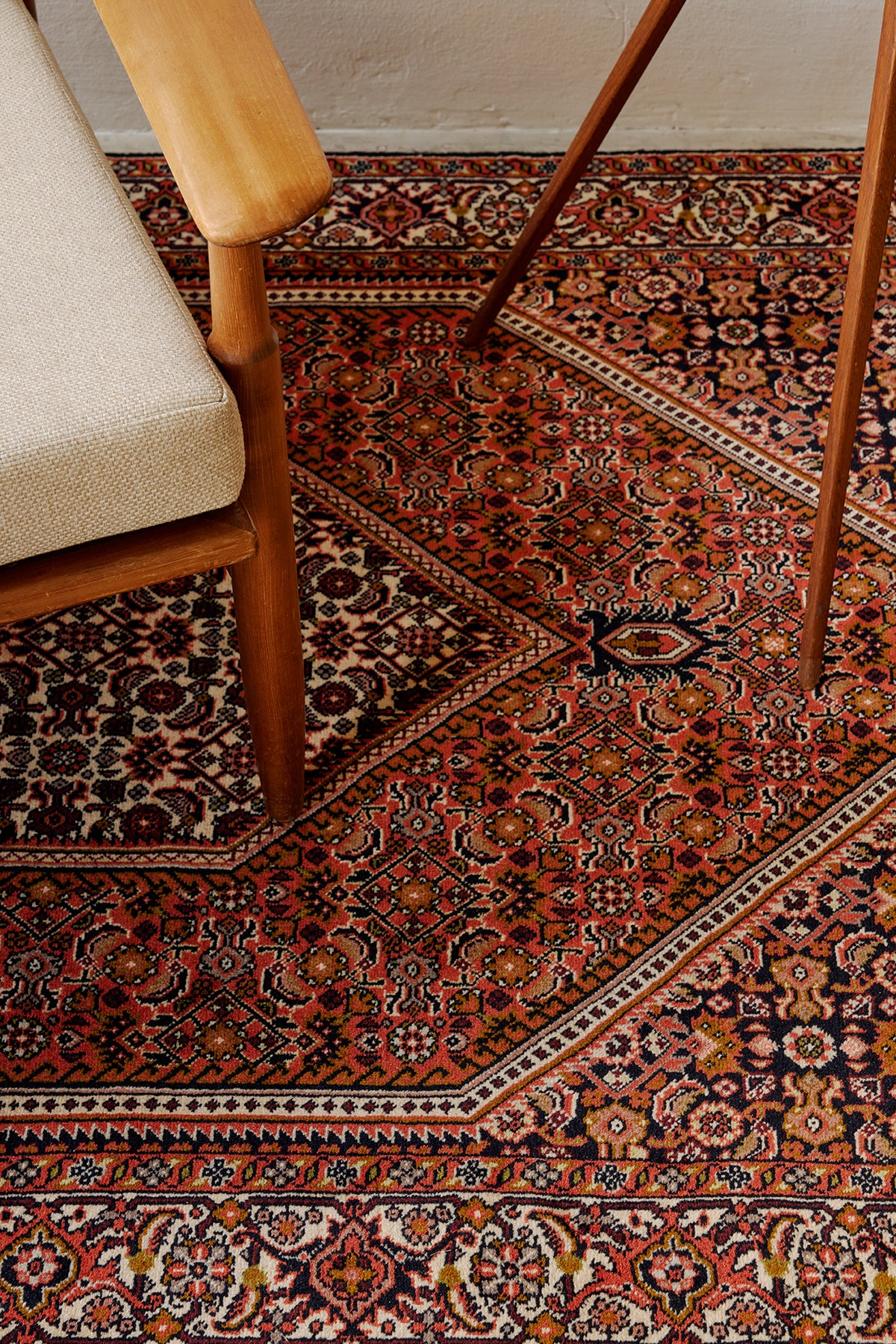
A rug is considered "vintage" when it is between 20 and 100 years old. This classification clearly distinguishes it from antique rugs (over 100 years) and new or used pieces. The term implies not just age, but also exceptional craftsmanship and a style characteristic of the era in which it was created.
The term "vintage" is often overused, yet in the world of hand-knotted rugs, it holds a clear and important meaning. It describes a timeframe long enough for a rug to develop its own history and visible character, while not yet being so old that it qualifies as a museum-grade collector's piece.
The age thresholds are more than just numbers; they define a category of rugs that build a bridge between past and present.
- Under 20 years: These rugs are considered new or modern, even if they have already been in use. They lack the patina developed over decades.
- 20 to 100 years: This is the golden middle ground for vintage. These pieces often date from the mid to late 20th century. They embody the craftsmanship and design trends of their era, from geometric nomadic patterns to floral motifs from city workshops.
- Over 100 years: Here we speak of "antique" rugs. These are often rare and valuable pieces considered an investment or collector's item, carrying particular historical significance.
A vintage rug is therefore not simply "old". It is a curated piece selected for its aesthetics, craftsmanship, and the story it carries. It is about the soul of the rug, which has developed over decades. You can learn more about the different types of rugs and their origins on our overview page.
Genuine patina: How to recognize an authentic vintage rug
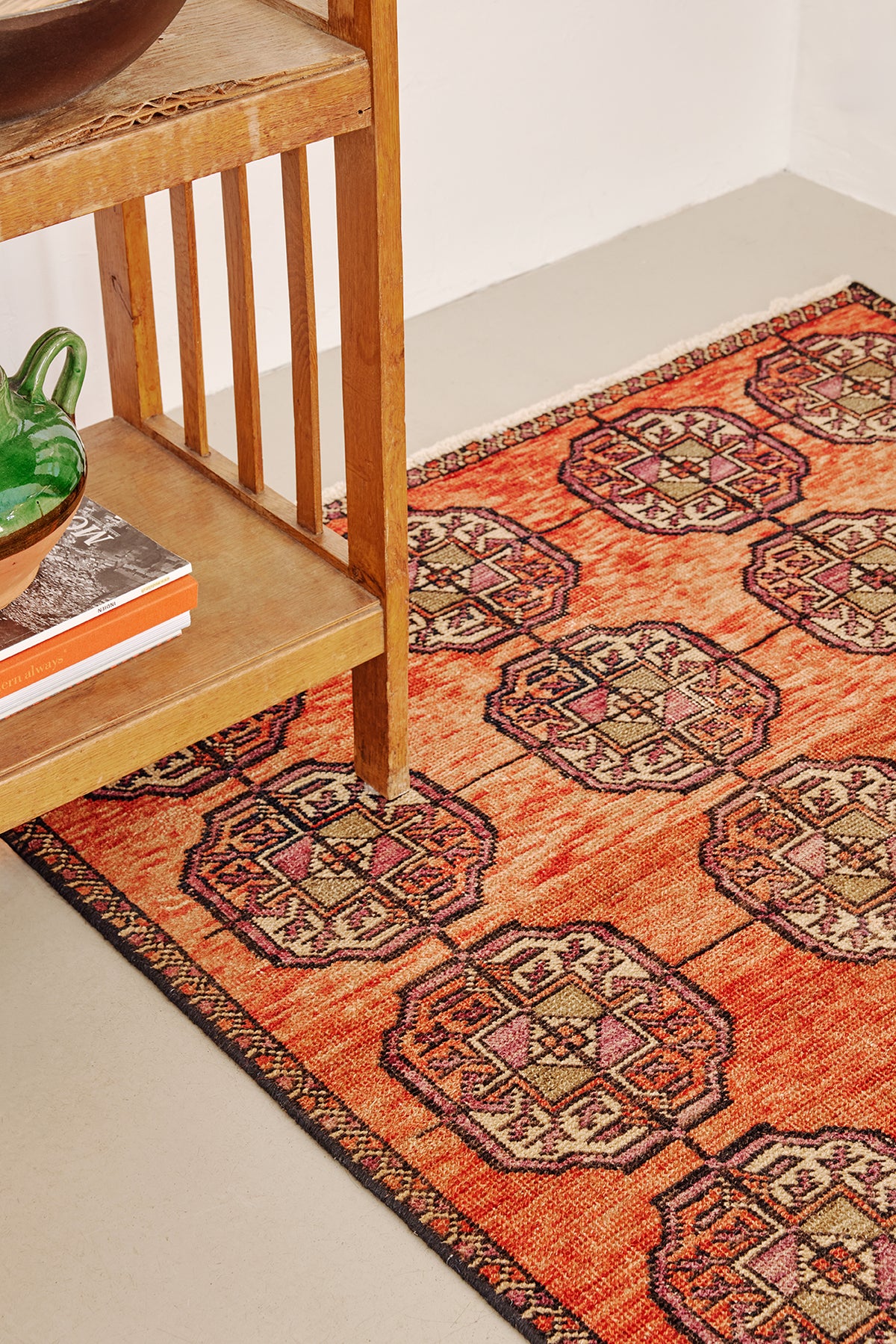
You can recognize an authentic vintage rug by its natural patina. This includes softly faded colors from sunlight, softer wool fibers from decades of use, and subtle color variations (Abrash) from hand-spun, naturally dyed wool. These traces are not flaws, but certificates of authenticity that tell a rich story and bear witness to handcraftsmanship.
Patina is the heart of every vintage rug. It is visible proof of a life lived and cannot be artificially manufactured. When you learn to read these signs, you can assess the authenticity and character of a piece much better. Look out for the following features:
- Gentle color variations: Genuine wool dyed with vegetable dyes responds to sunlight over decades. The colors do not fade unpleasantly; instead, they become softer, more muted, and gain an almost powdery depth. Especially in areas most exposed to light, you will often notice a gentle lightening.
- Soft, supple pile: New wool can sometimes be slightly stiff. Through years of walking and care, the wool fibers of a rug become polished. As a result, the pile becomes incredibly soft, dense, and takes on a silky sheen. When you run your hand over it, it often feels more supple than a brand-new piece.
- Abrash as proof of authenticity: One of the most beautiful characteristics is what is known as Abrash. These are visible, often stripe-like color variations in the pile. They occur because the wool was dyed by hand in small batches. No two batches are 100% identical. For the weavers, this was completely normal; for us today, it is a clear sign of authentic handcraftsmanship. You can read more about what Abrash in a rug actually is in our article.
- Even wear: A rug that has spent 50 years in a living room will show traces. The pile may be slightly shorter in high-traffic areas. As long as this is even and the underlying structure (warp and weft) remains intact, this is not a flaw, but part of its story.
Amin Ipektchi, Co-Founder: "To me, patina is like a person's face. The fine lines around the eyes tell stories of laughter and life. With a rug, it is the gently lightened spots that tell of sunny afternoons, or the softer wool walked on by generations. That is not wear and tear; that is living history you can feel."
From find to one of a kind: How a vintage rug is restored
A vintage rug undergoing restoration goes through a meticulous process. After an initial inspection, it is washed organically by hand to refresh the colors and condition the fibers. The edges and fringes are then repaired to ensure the longevity of this one-of-a-kind piece.
A vintage rug rarely arrives in perfect condition. It has completed a journey that often spans decades. Expert restoration brings its beauty back to light and prepares it for its next life.
First, the piece is carefully inspected: wool, knots, edges, and fringes, along with minor damage that may have occurred over the years. Then comes the most important step: the organic hand wash. Using special pH-neutral soaps and plenty of clear water, dust and dirt are washed from the fibers. This is a gentle process that preserves the natural wool fats (lanolin) and allows the colors to shine brightly once again.
Experienced restorers then take care of the repairs. A loose edge is re-bound, and a worn fringe is secured. The key here is preserving the original character of the rug. The goal is not to make it look "brand new", but to secure its stability and beauty for the future. For your own vintage rug, you can request washing and repair through our washing and repair service.
More than just old: The value of a vintage rug
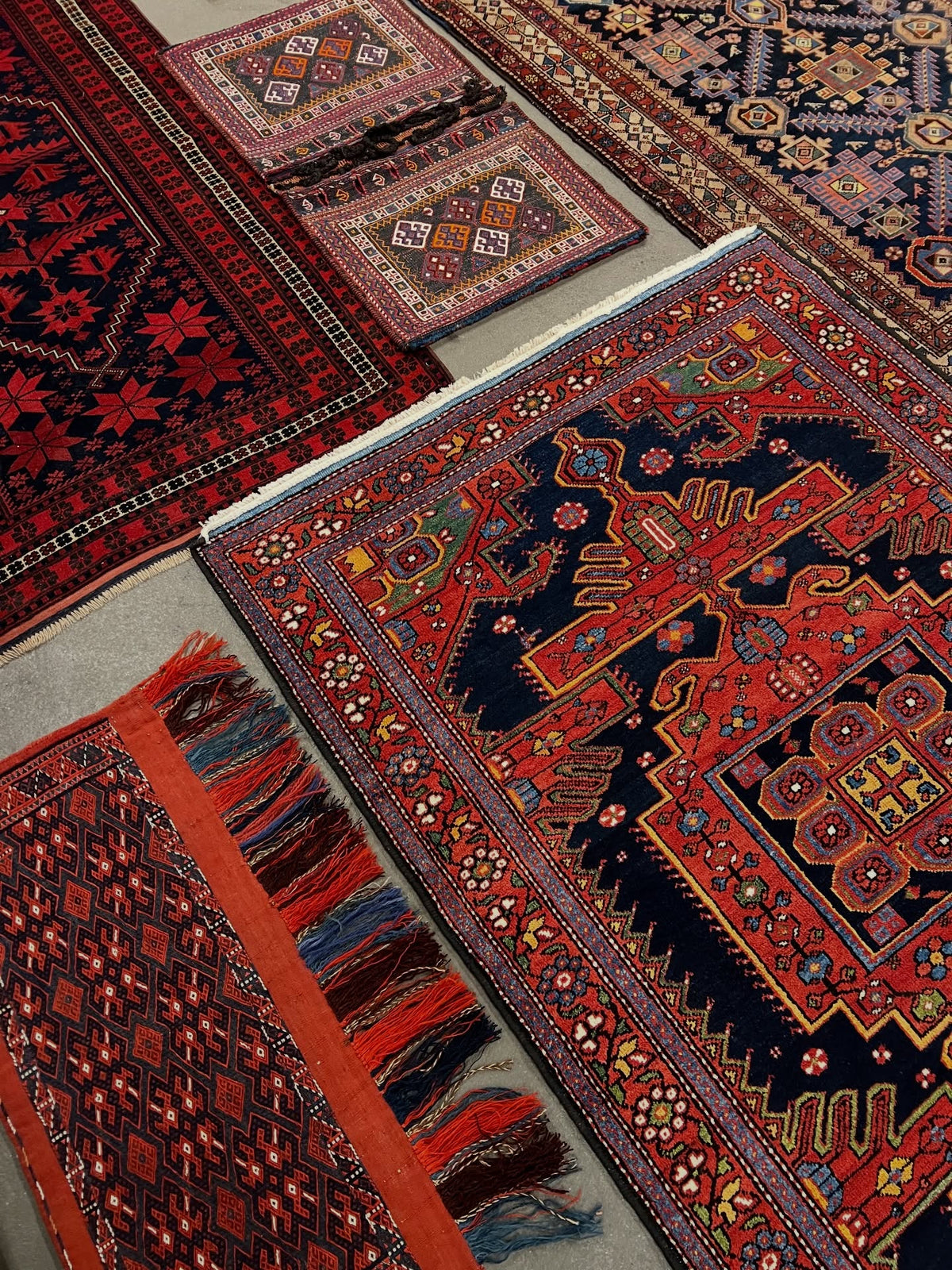
The value of a vintage rug is determined by a combination of age, provenance, condition, rarity of the design, and craftsmanship. A piece woven by Gashgai nomads with natural dyes is often more valuable than a mass-produced rug of more recent origin. In addition, every vintage rug is a sustainable statement that gives a work of art a second life.
Why choose a vintage rug when you could buy a new one? Its value lies not only in material worth, but also in intangible value. A vintage rug is a conscious choice for sustainability and individuality. You give a high-quality, handcrafted piece a second life and prevent it from ending up discarded. That is a powerful statement against throwaway culture.
The value-determining factors are diverse: * Origin & rarity: A rug from a renowned weaving region or a specific nomadic tribe may be rarer and thus more sought after. * Material & dyes: The use of hand-spun highland wool and natural vegetable dyes is a clear sign of quality. * Condition: A well-preserved rug with intact structure and beautiful patina is more valuable than a damaged or heavily worn piece. * Craftsmanship: The knot density and complexity of the design also play a major role.
In our family tradition dating back to 1952, every piece teaches us something new about origin, craft, and the stories woven into the fibers. This wealth of experience allows us to recognize the true value and character of each vintage piece and preserve it for you. If you would like to learn more about our story and philosophy, we warmly invite you to do so.
Vintage, Antique, or New: A direct comparison
Vintage rugs (20 to 100 years) offer a lived-in patina that new rugs lack, yet are more accessible than antique pieces (>100 years). While new rugs are pristine, vintage rugs tell a story through their soft colors and subtle signs of use. Antique rugs are rare collector's items of the highest value and historical importance.
Choosing between a new, vintage, or antique rug depends entirely on your priorities. Each type has its own merits. The following table helps you grasp the differences at a glance:
| Feature | New rug | Vintage rug | Antique rug |
|---|---|---|---|
| Age | 0 to 20 years | 20 to 100 years | Over 100 years |
| Aesthetics | Pristine, vibrant colors | Soft patina, Abrash | Pronounced patina, historical designs |
| Feel | Firm pile | Soft, polished pile | Often very thin, silky touch |
| Character | Blank slate | Tells a story | Historical record |
| Price | Affordable to high | Mid-range | High-end, collectible value |
| Ideal for | Modern, crisp looks | Interiors full of character and sustainability | Connoisseurs, collectors, display as art |
A new rug is perfect if you are looking for a flawless look and vibrant colors. An antique rug is a statement piece for collectors and enthusiasts. A vintage rug is the ideal compromise: it brings the warmth and soul of the past into your home, yet remains durable enough for everyday life and is often more accessible in price than an antique piece.
How to integrate a vintage rug into your home
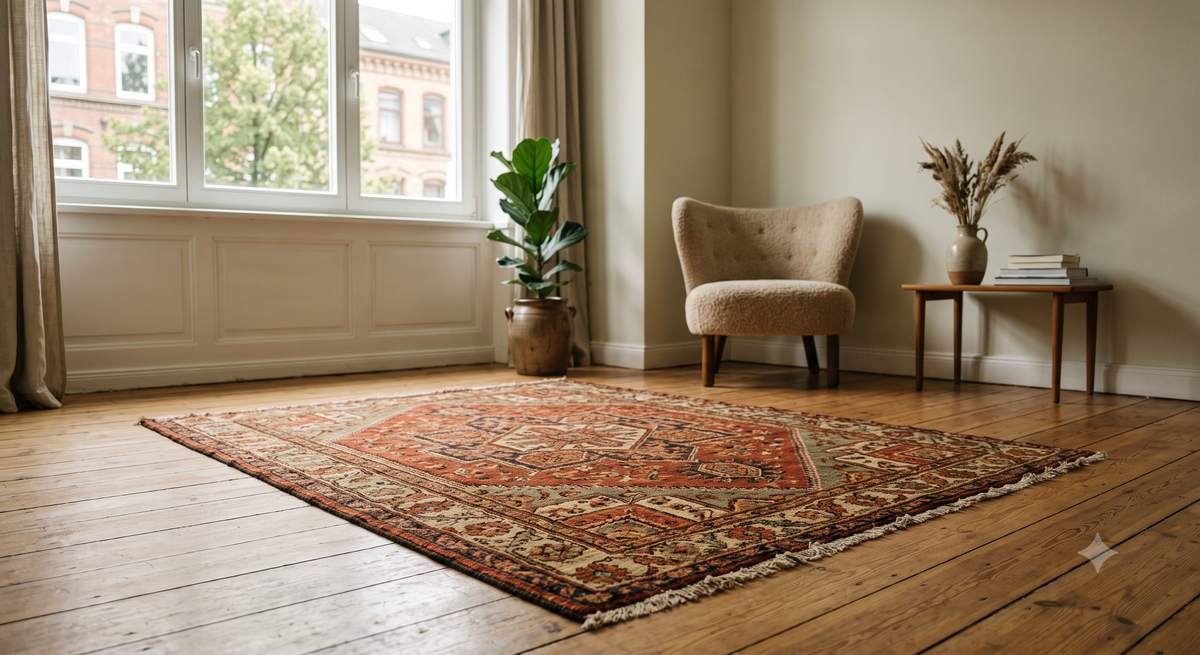
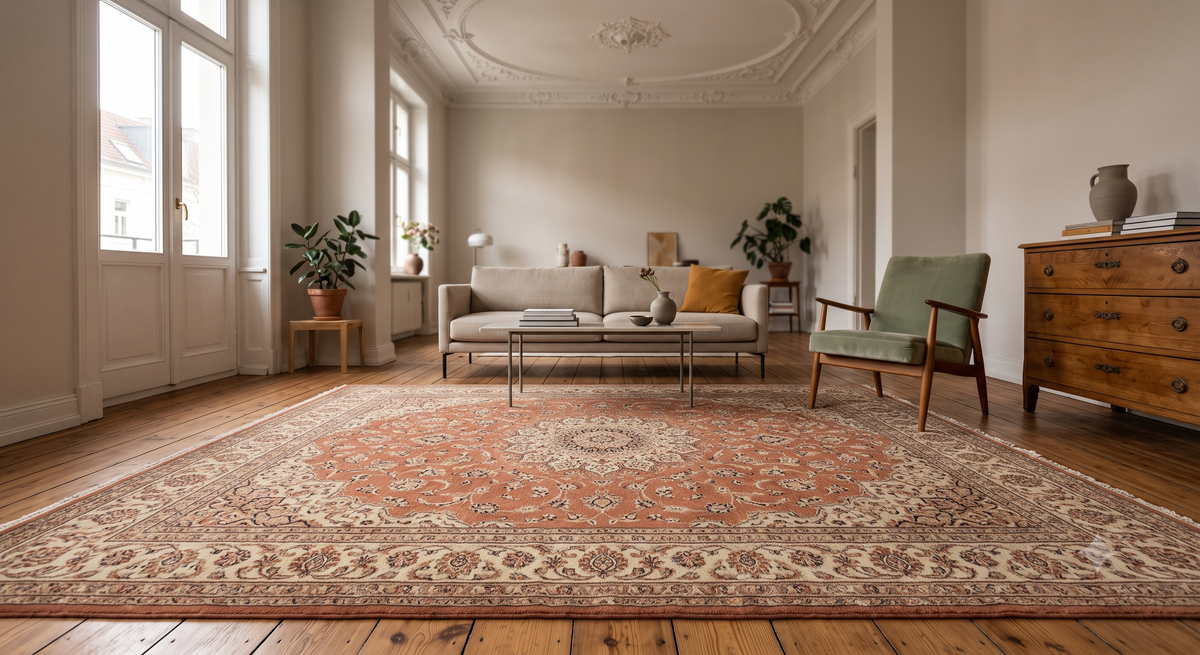
Integrating a vintage rug means giving your space character. In modern, minimalist interiors, it creates a warm, texture-rich counterpoint and becomes an eye-catching focal point. In classic or eclectic decors, it blends harmoniously, highlighting the room's story. Use our AR visualizer to test the effect directly in your room.
A vintage rug is an incredibly versatile design element. Its lived-in aesthetic can completely transform the atmosphere of a room.
- In modern minimalism: A Persian vintage rug with its warm colors and intricate patterns can ground a cool, minimalist setting. It becomes a work of art on the floor, keeping the room from feeling sterile. The contrast between the clean lines of modern furniture and the organic texture of the rug creates a fascinating harmony.
- In boho or eclectic styles: Here, a vintage rug feels right at home. It perfectly complements other natural materials like wood, linen, and rattan, blending effortlessly into a mix of different styles and eras.
- In classic interiors: In a traditionally furnished room, a vintage rug enhances the elegance and timelessness of the decor. It looks as if it has always been there, creating an atmosphere of enduring value and permanence.
A practical tip: pick up one or two secondary colors from your vintage rug's pattern and echo them in smaller decor accents like cushions, vases, or artwork. This creates a cohesive look and ties the room together seamlessly. To find the right size for your space, you can consult our detailed guide.
FAQ
Is a vintage rug less durable than a new one? No, often quite the opposite is true. A vintage rug has already proven its exceptional durability over decades. The hand-spun wool used at the time is often naturally sturdier and richer in lanolin. Professional restoration also stabilizes it for a long second life.
Can any old rug be called "vintage"? No, there is an important difference. A simple second-hand rug is merely used. In contrast, a curated vintage piece is chosen specifically for its exceptional craftsmanship, the quality of its materials, and its distinct aesthetic value. It is a carefully preserved piece of rug history.
How do I properly care for a vintage rug? Maintenance is straightforward. Regular vacuuming on a low setting without a rotating brush is the foundation. Blot stains immediately with a damp cloth, never rub. Every few years, we recommend a professional hand wash to clean the fibers thoroughly. You can find detailed guidance on our page dedicated to rug care.
What do color variations (Abrash) mean in vintage rugs? Abrash is a clear mark of quality and a sign of authenticity. These subtle color variations occur because the wool was dyed by hand in small batches using natural dyes. They prove that your rug is a genuine, handcrafted unique piece, not a mass-produced product.
Does a Persian vintage rug fit into a modern interior style? Absolutely! It is precisely the contrast that creates the charm. A vintage rug with an intricate pattern and warm patina can lend soul and unexpected depth to a minimalist, modern space. It softens strict lines, adds texture, and becomes the emotional centerpiece of the room.
Every vintage rug in our collection has a past and is waiting to become part of your future. If you are ready to bring a piece with soul and history into your home, explore our handpicked selection. With our AR visualizer, you can even see right on your smartphone how a unique piece looks in your space. Find the piece whose story you want to continue in our collection of all hand-knotted rugs.
%20or%20simply%20%22used%22,%20a%20vintage%20rug%20is%20distinguished%20by%20its%20distinctive%20patina,%20the%20history...)