What is a Gabbeh Rug?
TL;DR: A Gabbeh rug is a hand-knotted nomad rug that originally comes from the Gashgai nomads of the Persian Zagros Mountains. Its name means "raw" or "natural". It is characterized by a thick, high pile made of hand-spun virgin wool, minimalist geometric patterns, and a robust, durable structure that makes it ideal for high-traffic living areas.
The Origins of the Gabbeh: More than Just a Rug
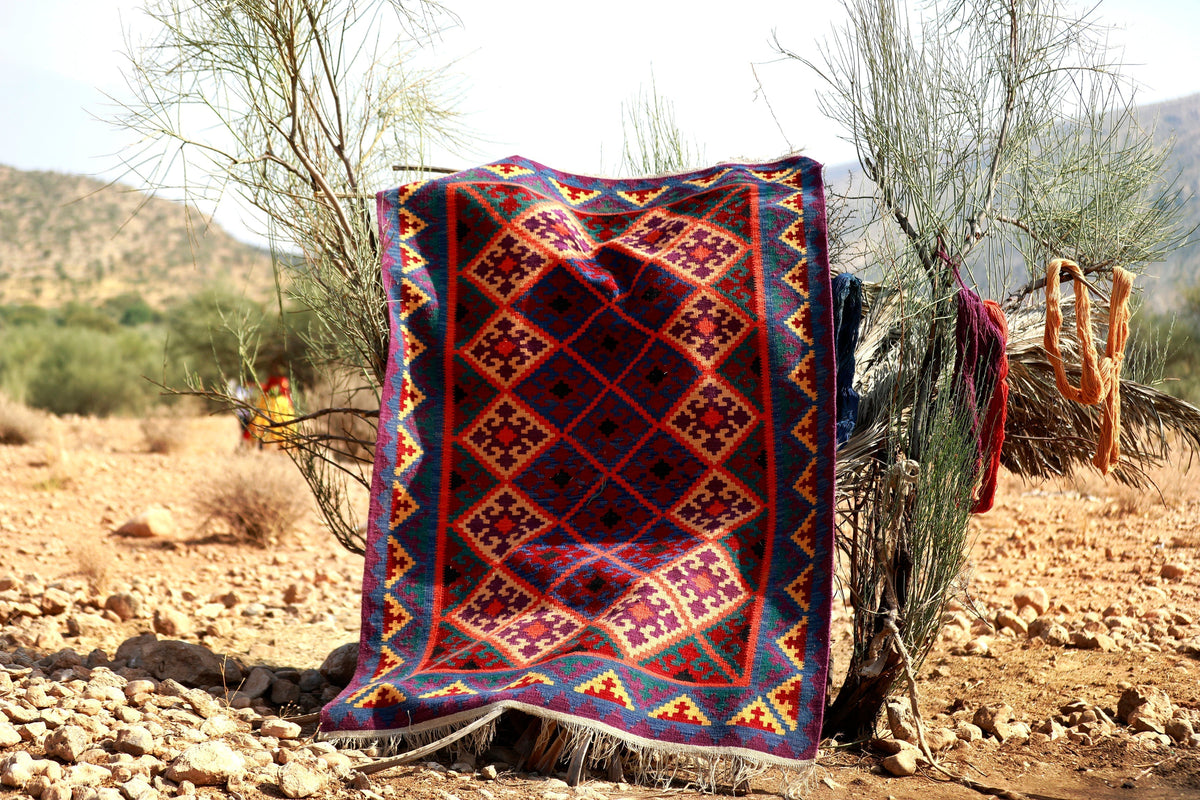
The origins of the Gabbeh lie with the Gashgai nomads in the Persian Zagros Mountains. Originally, it did not serve as decoration, but as a functional sleeping and sitting mat to protect against the cold. Knotted on horizontal looms, the simple patterns reflect daily life and the weavers' deep connection to nature.
At its heart, a Gabbeh is a piece of living history. Its name is derived from the Persian word gabbat, which means "raw", "natural", or "uncut". This term perfectly describes its original character: a rug without frills, created for daily use. The Gashgai and Lori nomads, who migrated across the rugged plateaus of the Fars region, knotted these rugs not for sale, but for their own tents. They were bed, blanket, and floor covering all in one, a soft, warming protection against cold nights in the mountains.
This functionality still defines its design today. Gabbeh rugs are traditionally knotted on simple, horizontal looms that are easy to transport. The weavers often sit directly on the finished part of the rug. This traditional method leads to the charming irregularities that make every Gabbeh truly one of a kind. The patterns are not drawn from complex templates, but emerge from the imagination and surroundings of the weavers. They tell stories of the landscape, animals, and the simple life of the nomads. When you look at a Gabbeh, you see a piece of the soul of Persian nomad rugs.
Characteristic Features: How to Recognize a Genuine Gabbeh
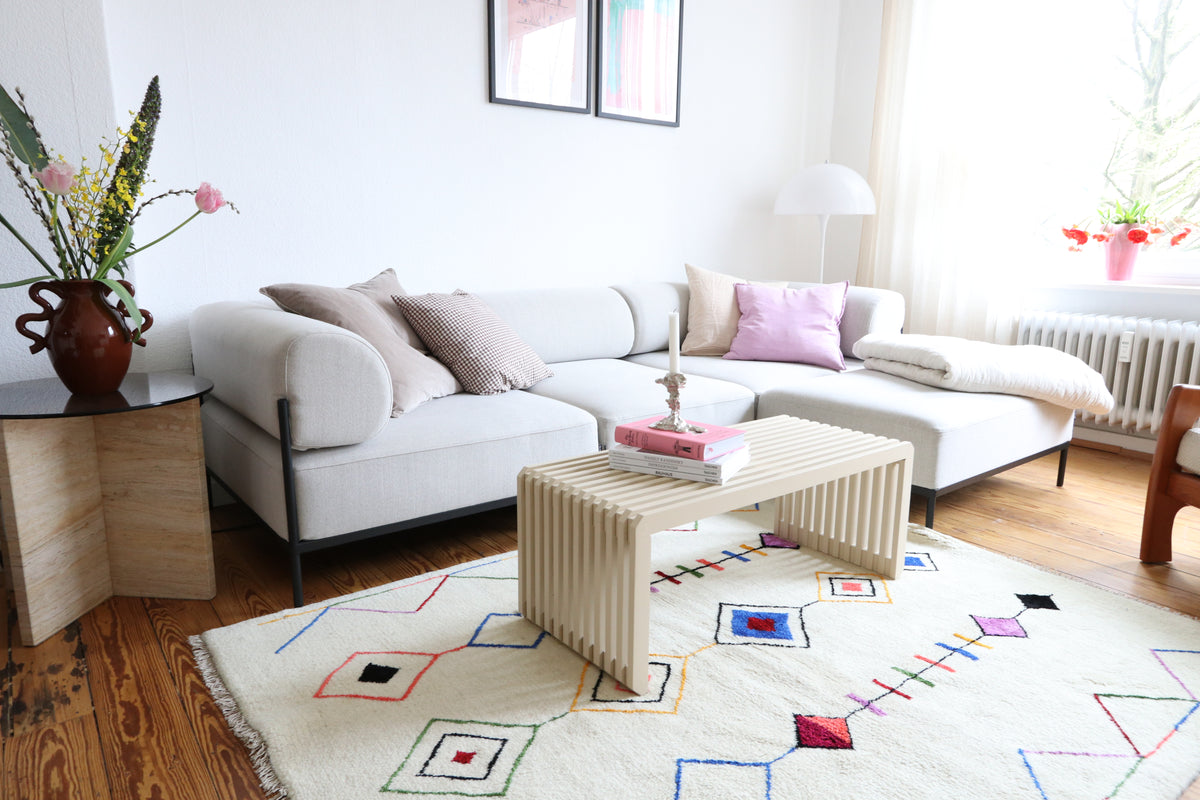
You can recognize a genuine Gabbeh by its thick, soft pile made of high-lanolin, hand-spun mountain wool. The knotting is relatively coarse, yet dense. Typical features include minimalist, often asymmetrical geometric patterns and Abrash, natural color variations in the yarn that testify to hand-dyeing with vegetable dyes and serve as a mark of authenticity.
A Gabbeh speaks a clear, honest language. Its features stem directly from its function and origin. If you want to learn how to identify a genuine Gabbeh, pay attention to these four key aspects:
-
The Material: High-Quality Virgin Wool The heart of every Gabbeh is its wool. It comes from sheep in the Persian highlands, whose fleece is especially dense and rich in lanolin. This high content of lanolin (wool grease) makes the rug naturally extremely durable, dirt-repellent, and long-lasting. When you run your hand over a Gabbeh, you not only feel the softness, but also a certain "grip", a sign of the untreated, natural quality of the fiber.
-
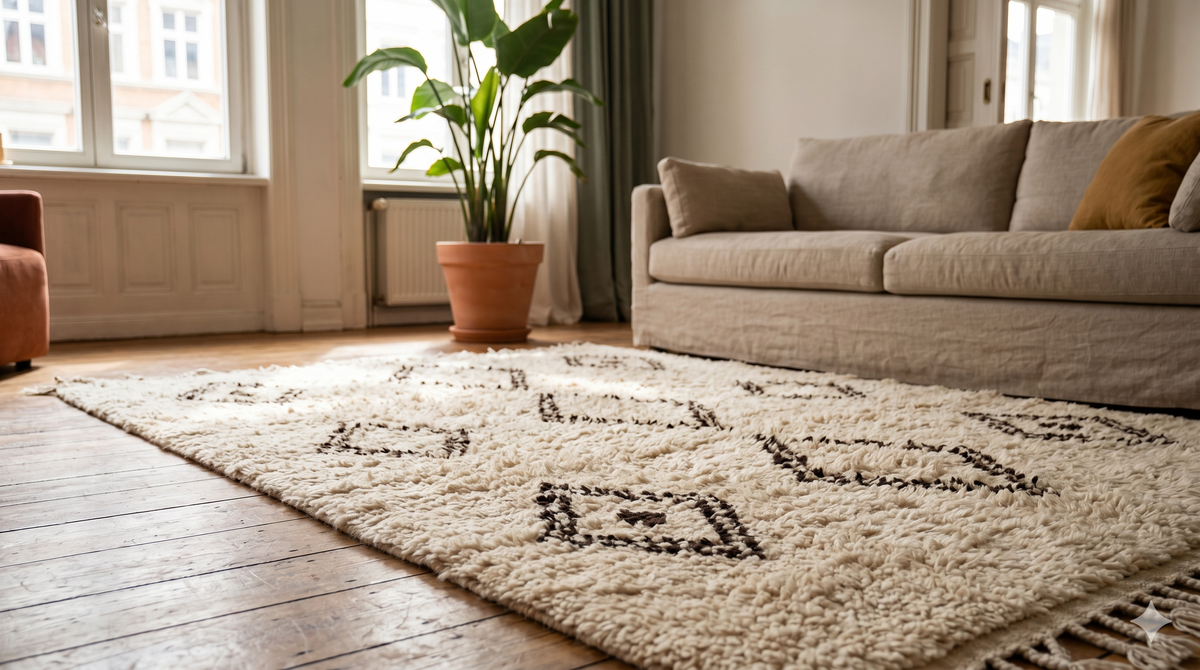
The Pile: Thick, High, and Soft Unlike fine city rugs, a Gabbeh has a deliberately high and dense pile. The wool yarns are longer and stand upright, giving it its characteristic, almost shaggy look and incredible coziness. It is literally a rug made to be touched and lived on, radiating warmth and comfort.
-
The Patterns: Minimalist and Symbolic The designs are mostly minimalist and geometric. Instead of opulent medallions and floral vines, you often find large, calm fields of color interrupted only by simple lines, squares, or small, stylized figures. These motifs often depict animals such as goats or camels, sometimes people, or simple symbols for water and mountains. Every symbol carries a meaning deeply rooted in nomadic culture.
-
The Colors: Vibrant and Natural Traditionally, Gabbeh rugs are dyed using pure vegetable dyes. Madder root for red, indigo for blue, pomegranate peels for yellow. Because hand-spun yarn never absorbs dye 100% evenly and different dye baths show slight variations, subtle color shifts emerge across the rug. This phenomenon is called Abrash and is not a defect, but a valuable badge of authenticity. It lends the rug a vibrant, almost painterly depth. If you would like to learn more about this, read our article about what Abrash really means.
| Feature | Classic Gabbeh | Modern Designer Rug |
|---|---|---|
| Wool | Hand-spun virgin wool, high lanolin content | Often machine-spun, heavily processed wool |
| Pile | High, dense, very soft, and "lively" | Usually shorter and trimmed extremely evenly |
| Pattern | Minimalist, geometric, asymmetrical | Perfectly symmetrical, often computer-designed |
| Colors | Natural color variations (Abrash) | Completely uniform, synthetic colors |
| Back | Slightly irregular knots visible | Perfectly smooth, often grid-like structure |
The Different Types of Gabbeh: From Loribaft to Kashkuli
Not all Gabbeh rugs are the same. While the classic Gabbeh stands out with its coarse knotting and simple patterns, finer variations exist. The Loribaft and Rizbaft are more densely knotted and more detailed. The Kashkuli is considered the finest type, featuring exceptionally soft wool and more complex designs that build a bridge to fine rug art.
The world of Gabbeh is more diverse than you might think at first. Over the decades, the craft has evolved and produced different styles that differ primarily in the fineness of their weave and the complexity of their patterns.
- Classic Gabbeh: This is the most original form. With a relatively low knot density (approx. 80,000 knots per square meter), it is robust, the pile is high, and the patterns are kept very simple. It embodies the rugged, authentic soul of nomad rugs.
- Loribaft & Rizbaft: These terms denote a finer weave. The knot density is significantly higher here, allowing for more detailed patterns and a silkier, denser pile. They are often called "modern Gabbeh" because they combine traditional aesthetics with a refined technique. The designs remain minimalist, but are often executed with greater clarity and precision.
- Kashkuli: The Kashkuli is the pinnacle of Gabbeh knotting art. It is crafted by the most experienced weavers of the Kashkuli tribe, a subgroup of the Gashgai. The wool is extraordinarily soft; often, only the finest wool from the throat of lambs is used. With a very high knot density, almost pictorial, very intricate designs can be achieved. A Kashkuli combines the warmth of a Gabbeh with the elegance of a fine city rug.
Amin Ipektchi, Co-Founder: "The difference is truly fascinating, and you feel it immediately. When you close your eyes and let your hand glide over a classic Gabbeh, you feel the honest, strong texture of the mountain wool. It is a down-to-earth feeling. With a Kashkuli, by contrast, it feels almost like silk. The fibers are so fine and the pile is so dense that your hand virtually sinks into it. It demonstrates the full spectrum inherent in this single type of rug."
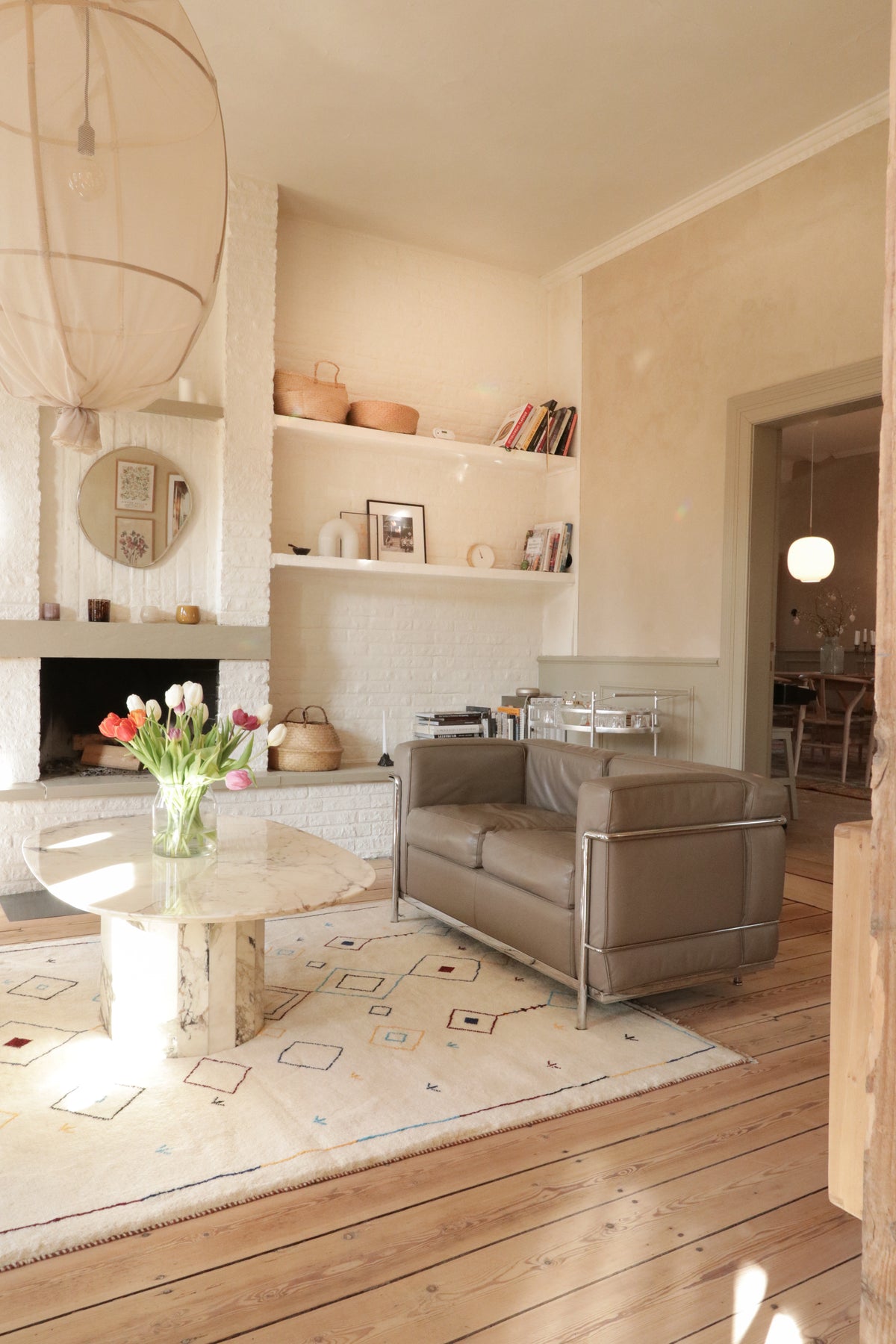
Each of these variations has its own charm. While a classic Gabbeh fits perfectly into a rustic or Scandinavian setting, a fine Loribaft or Kashkuli can also make a wonderful statement in a very modern, elegant room. Browse through the variety of our Gabbeh rugs to discover the differences for yourself.
Evaluating the Quality and Value of a Gabbeh Rug
The quality of a Gabbeh depends on several factors. Crucial is the quality of the wool; the higher the lanolin content, the more robust and self-cleaning the rug is. Knot density also plays a role, although a classic Gabbeh is deliberately coarser. Genuine vegetable dyes and clean side selvages are further important hallmarks of quality.
Evaluating a hand-knotted rug is an art in itself, but there are tangible criteria you can look out for as well. The value of a Gabbeh is not determined by knot count alone; on the contrary, a coarse Gabbeh can be more valuable than a finer rug of inferior quality.
The Three Pillars of Quality:
- Wool and Dyeing: Feel the wool. Does it feel lively and slightly oily? That is the lanolin, your guarantee of durability. Look at the colors. Do they appear deep and nuanced? That points to natural vegetable dyes. Synthetic dyes often look flatter and harsher. The traditional craftsmanship shows in the harmony of the materials.
- Knotting and Density: Even though a Gabbeh is coarse, the knotting should be firm and the pile dense. Bend a corner of the rug. If you can easily see the foundation (warp and weft), it may be knotted too loosely. With a dense rug, you only see the base of the wool knots.
- Workmanship: Examine the edges (selvages) and fringes. Are the edges cleanly and securely bound? Are the fringes a natural part of the rug (the ends of the warp threads) rather than sewn on later? Meticulous workmanship is a clear sign of the time and care invested into the piece.
Our experience as a family business since 1952 sharpens our eye for the details that define true quality, reaching far beyond what is written on a spec sheet. We do not just look at numbers, but feel the wool, examine the firmness of the knots, and check the brilliance of the colors.
Care and Cleaning: How to Keep Your Gabbeh Beautiful for Years to Come
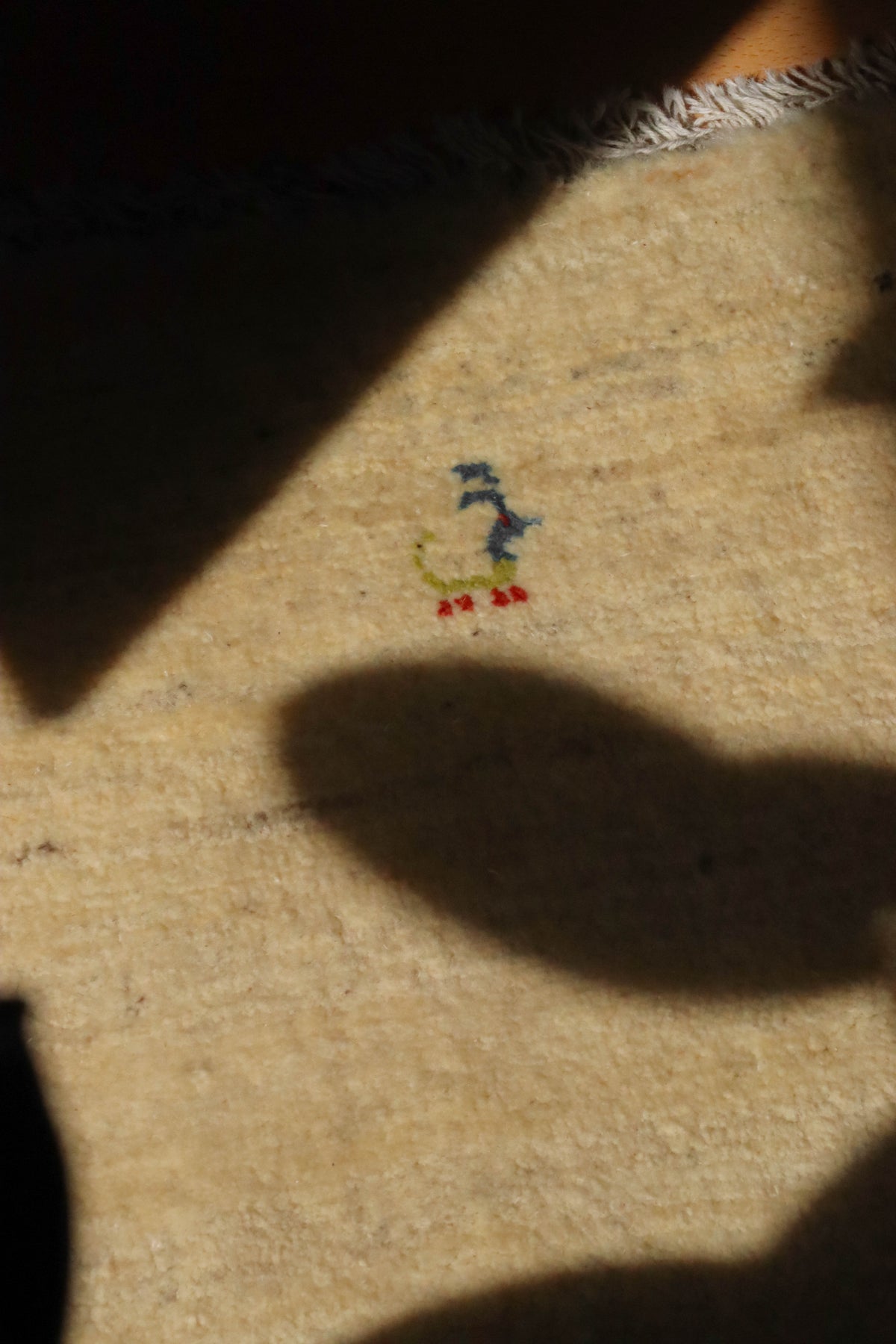
Caring for a Gabbeh is straightforward. Thanks to the high lanolin content, the wool is naturally dirt-resistant. Regular vacuuming without a brush attachment is sufficient. Stains should be blotted immediately with a damp cloth. Every few years, a professional, organic wash is recommended to deep clean and nourish the fibers.
A high-quality Gabbeh is a companion for life and surprisingly easy to care for. Its greatest advantage is the natural wool grease, lanolin, which acts like an impregnation. Liquids initially bead up, and dirt cannot easily penetrate deep into the fibers.
Our Care Tips for Your Gabbeh:
- Regular Vacuuming: Vacuum your rug once or twice a week using a flat nozzle in the direction of the pile. Avoid rotating brushes, as they can put excessive strain on the wool fibers over time.
- Rotating: Rotate the rug 180 degrees every six months. This ensures even wear and light exposure, preventing one side from fading more than the other.
- Treating Stains Immediately: If a mishap does happen, quick action is required. Soak up liquids immediately with an absorbent cloth (such as paper towels), blotting rather than rubbing! Gently lift solid dirt with a spoon. Most stains can then be removed with lukewarm water and a clean cloth.
- Professional Washing: Every five to seven years, depending on wear, we recommend professional rug cleaning. Here, the rug is washed by hand in the traditional manner with plenty of water and organic soap. This process not only cleans, but also conditions the wool and revives the colors. You can find more detailed instructions in our rug care guide.
You can request this organic hand wash via our cleaning and repair service. This way, your Gabbeh remains a treasure that enriches your home for many years.
FAQ
Is a Gabbeh rug suitable for underfloor heating? Yes, absolutely. Although virgin wool is a good thermal insulator, it still conducts the heat generated by underfloor heating very well and evenly. As a result, the rug becomes pleasantly warm underfoot without causing heat build-up. The natural fibers also foster a healthy indoor climate.
Why is my new Gabbeh rug shedding? Initial shedding is completely normal with high-quality, hand-knotted wool rugs and is actually a sign of quality. These are excess wool fibers from the knotting and shearing process. This phenomenon subsides on its own after a few weeks of regular vacuuming and is no cause for concern.
What is the difference between a Gabbeh and a Berber rug? The primary difference lies in their origin. Gabbeh rugs traditionally come from the Persian mountain regions, whereas Berber rugs are knotted by tribes in the Moroccan Atlas Mountains. This results in differences in wool types, knotting techniques, dyes, and the typical symbolism of the patterns.
Are Gabbeh rugs child- and pet-friendly? Definitely. Their robust, dense knotting and the natural dirt protection provided by lanolin make them extremely resilient and forgiving. The thick, soft pile is also a wonderful, warm play surface for children and a cozy resting spot for pets.
How do I recognize a hand-knotted Gabbeh? A simple trick is to look at the underside. On a hand-knotted rug, you will see the pattern of the front in reverse and can make out the individual knots as small, slightly irregular "pixels". A machine-made rug has a perfectly uniform, often grid-like, and stiff backing.
The warmth, the honest feel, and the timeless beauty of a Gabbeh are hard to put into words; you have to experience them. They bring not only style, but also a piece of nature and comfort into your home.
Curious to see more? Discover the variety of Gabbeh rugs in our collection. With our AR visualizer, you can "View in your room" each piece directly with your smartphone and get the perfect feel for size and effect. Find the Gabbeh that continues your story.