Why Hand-Knotted Rugs Are an Investment
TL;DR: A handmade rug is expensive because it is the result of months of highly skilled manual labor. The cost is made up of the quality of natural materials such as highland wool, the complex knotting technique, the unique design, and fair wages for the weavers. Every rug is one of a kind, preserving its value across generations.
Factor 1: Time, hundreds of hours of pure handcraft
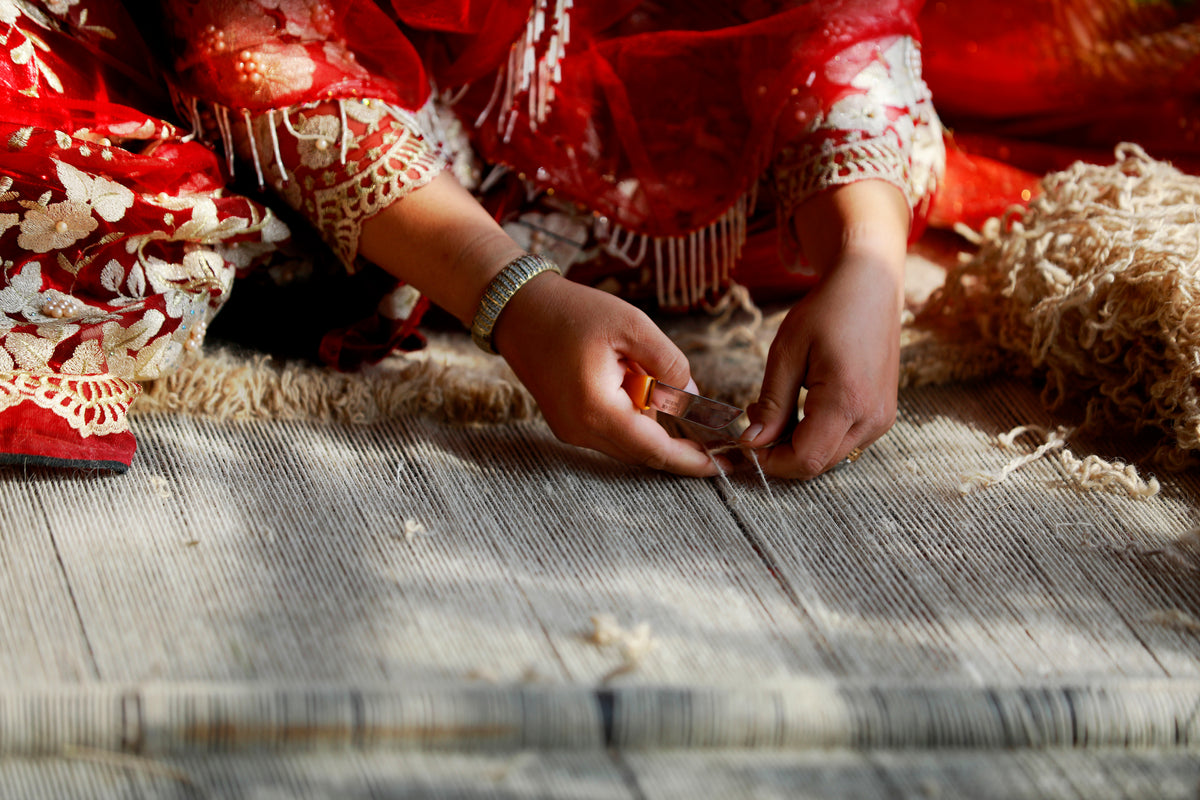
The main reason for the high price is the immense amount of time invested in each rug. An experienced weaver ties around 1,000 knots per hour. For a medium-sized rug with 250,000 knots per square meter, that means over 250 hours of pure knotting work. Weavers often work on a single piece for months or even years.
When you look at a handmade rug, you see not just a home accessory, but a document of time. Every single knot is looped by hand around the warp threads, tightened, and cut. It is a meditative yet incredibly labor-intensive process. A simple runner can take weeks to complete, while a large, finely knotted living room rug can represent over a year of work.
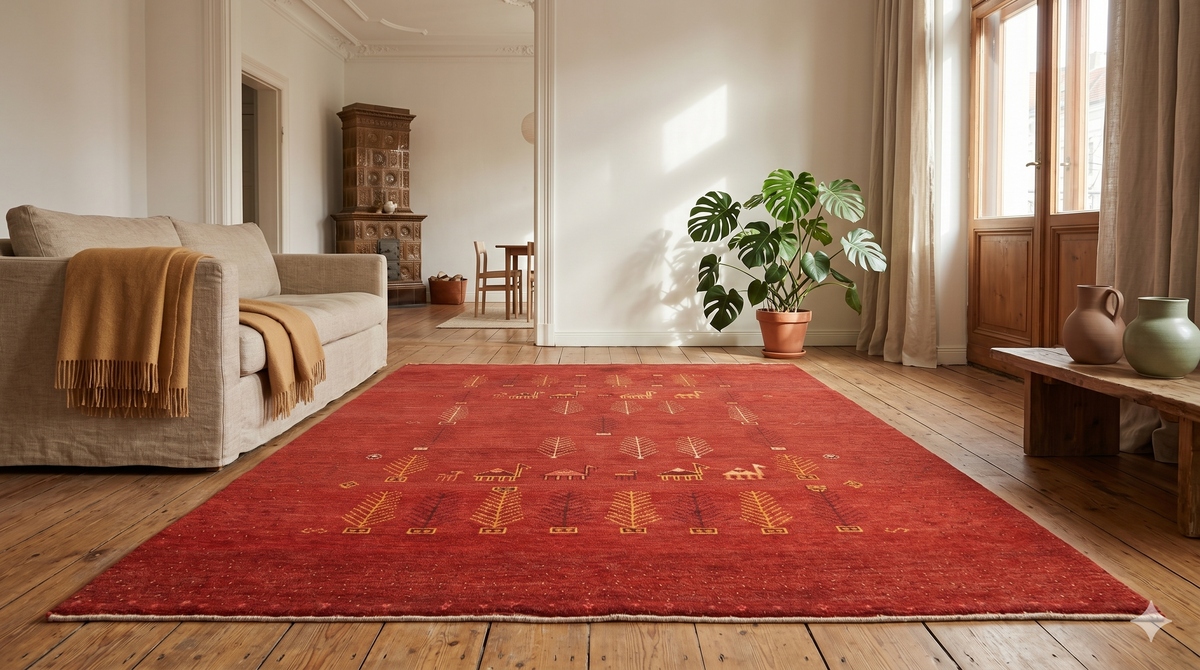
This calculation only accounts for the actual knotting process. Before that, the wool must be harvested, hand-spun into yarn, and often dyed with natural dyes; a process that itself takes days or weeks. While a rug with a lower knot density, such as a characterful Gabbeh, might take three months to make, a fine city rug from the region around Nain with over 500,000 knots per square meter can occupy the weaver for 12 to 18 months.
A simple calculation illustrates the effort: a rug measuring 2x3 meters (6 m²) with an average knot density of 250,000 knots/m² contains a total of 1.5 million knots. At a rate of 1,000 knots per hour, that amounts to 1,500 hours of pure manual labor. That equates to more than 37 workweeks based on a 40-hour week, just for the knotting. This immense investment of time is the most honest and significant cost factor.
Factor 2: The material, not all wool is created equal
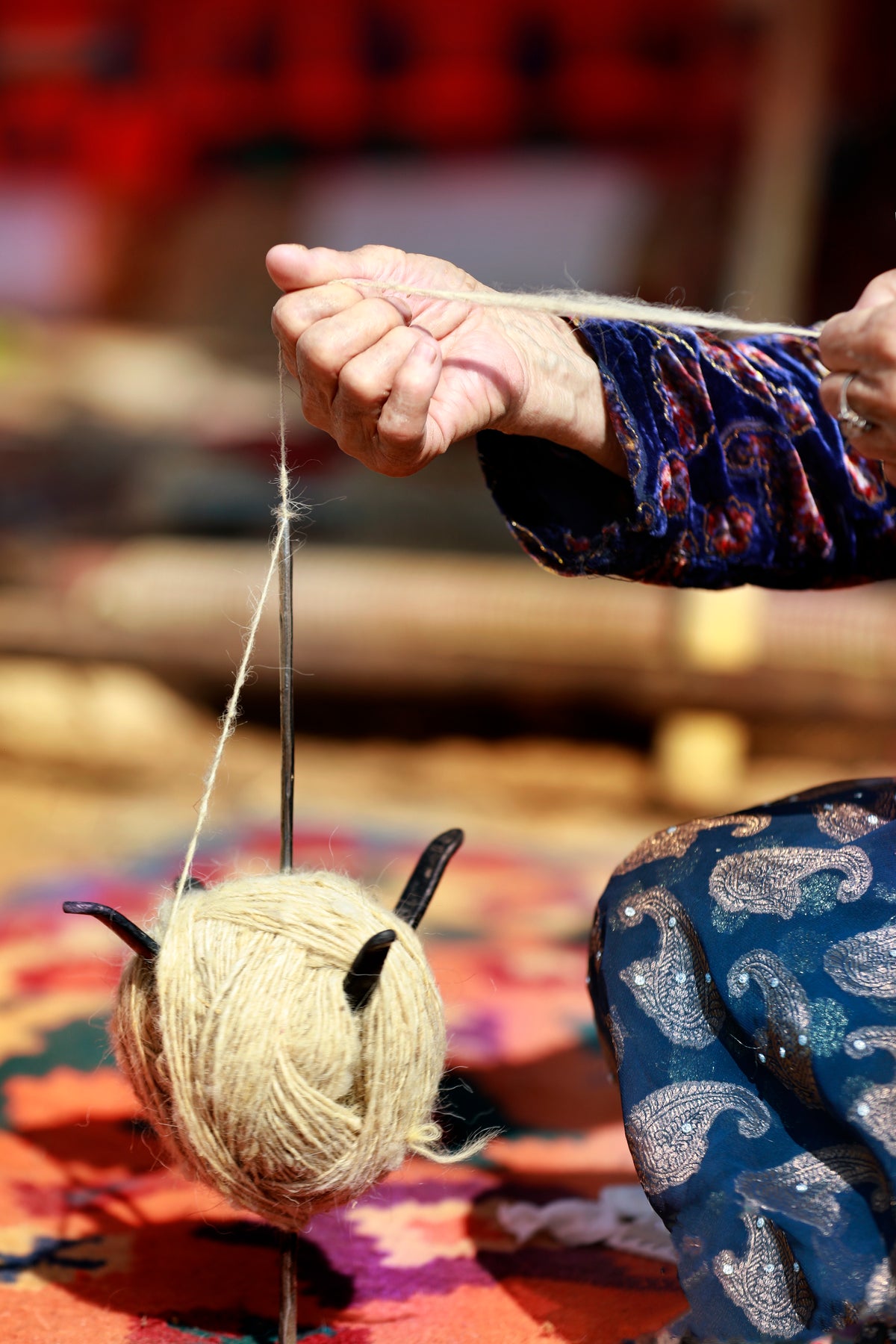
The quality of the wool largely determines both price and longevity. We use virgin wool from sheep raised in the Persian highlands. This wool has a higher lanolin content, making it dirt-repellent and extremely durable. Cheaper rugs often use inferior, dry wool that breaks and wears out much faster. Natural dyes are also far more labor-intensive.
The foundation of every durable rug is the fiber. We rely on virgin wool from sheep that graze in the harsh climates of the Persian highlands. The cold temperatures and sparse vegetation cause the animals to grow a particularly dense, robust, and oil-rich fleece. This natural wool grease, lanolin, acts like a protective seal: it keeps the fibers resilient, resistant to breakage, and naturally stain-resistant.
Dyeing also plays a decisive role. Extracting pigments from plants such as madder root (for red) or indigo (for blue) is an elaborate, traditional process. The result is vibrant, nuanced tones that only become more beautiful over time. These natural color variations, also known as Abrash, are a sign of genuine craftsmanship and high-quality materials. By contrast, synthetic dyes may be cheaper, but they often look harsh and fade more quickly.
| Characteristic | High-quality highland virgin wool | Inferior wool |
|---|---|---|
| Lanolin content | High (naturally dirt-repellent) | Low (dry, brittle) |
| Durability | Extremely high, fibers bounce back | Low, breaks easily, flattens out |
| Feel | Soft, elastic, with a subtle sheen | Often scratchy, dull, and lifeless |
| Dyeing | Absorbs natural dyes deeply and brilliantly | Often chemically dyed, colors fade |
| Origin | Persian highlands (e.g., Zagros Mountains) | Unknown, often made from scraps or "dead wool" |
The foundation of the rug, namely the warp and weft, is usually made of sturdy cotton. It provides stability and ensures that the rug lies flat. In particularly fine pieces, silk is sometimes used for accents or even for the entire pile, which raises the price further but allows for an unmatched level of detail.
Factor 3: Craftsmanship, an art handed down through generations
Knotting is an art passed down through families and tribes across generations. It requires years of practice to develop the necessary dexterity and deep understanding of patterns. This invaluable human element, the knowledge of traditional patterns and techniques, is a major part of the price and cannot be replaced by machines.
Knotting a rug is far more than a mechanical activity. It is a cultural heritage. Within weaving communities, knowledge is handed down from mother to daughter, father to son. A child grows up with the sound of the loom and learns the patterns and symbols of their tribe like a second mother tongue. It takes years for a weaver to develop the speed, precision, and artistic eye required to bring intricate designs to life.
Amin Ipektchi, Co-Founder: "With traditional nomadic rugs, weavers often work without any written template. The weaver knots the symbols and motifs of her family entirely from memory. Every line, every motif has meaning: protection, fertility, the story of a journey. This is not just a product; it is a woven narrative. No machine could ever replicate this human and cultural value."
This deeply rooted knowledge is priceless. It determines how a Persian Senneh knot is tied compared to a Turkish Gördes knot, which significantly influences the rug's fineness and texture. You are therefore paying not only for materials and time, but also for centuries of cultivated and preserved knowledge tied into every single knot.
Factor 4: Uniqueness, each piece is one of a kind
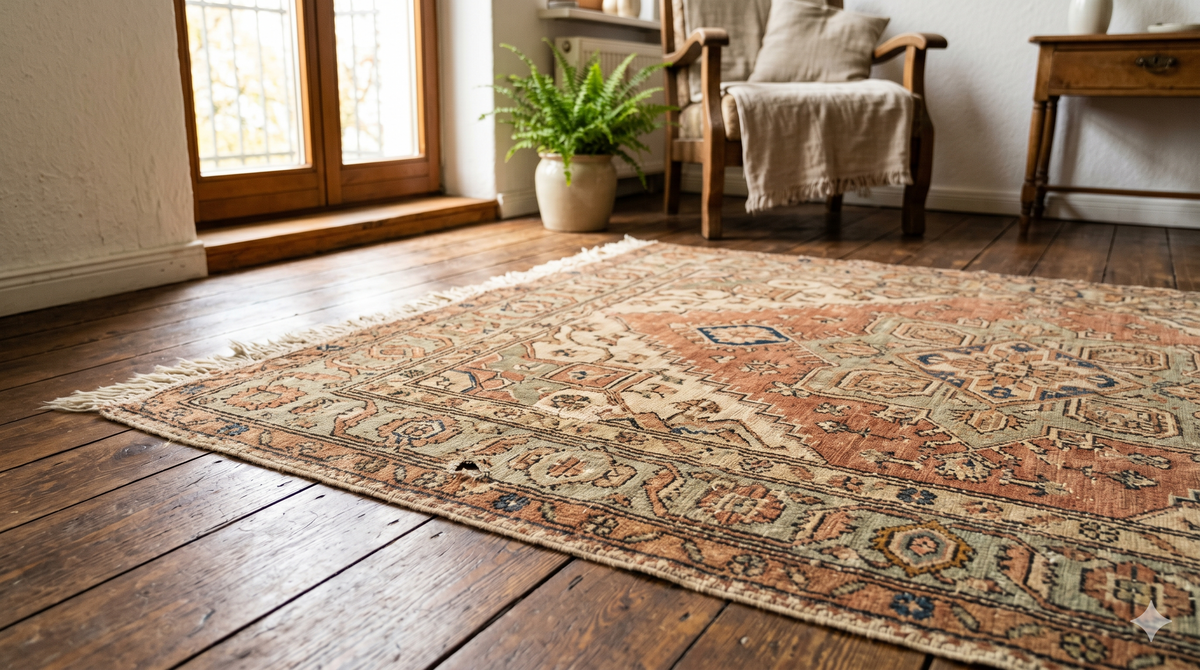
Unlike mass-produced machine-made goods, every handmade rug is unique. Slight irregularities in shape, color, and pattern are not flaws, but a certificate of authenticity. They tell the story of the weaver and the creation process. You are not just buying a rug, but a unique piece of art for your home.
Machine-made rugs are perfect. Too perfect. Their patterns are pixel-exact, their edges ruler-straight, their colors completely homogeneous. A handmade rug thrives on its perfect imperfection. Because it is often knotted on simple, horizontal looms that travel with nomadic families, slight variations in width or shape are completely normal and a sign of authenticity. The personal signature of the weaver reveals itself in every detail.
If the pattern shifts slightly for just a few centimetres in one spot, it often means another hand took over the knotting, perhaps an experienced master weaver taking over the loom from her apprentice daughter. Such an almost imperceptible jump is never a flaw; it is a signature. You are not purchasing an anonymous off-the-shelf product, but an individual piece imbued with soul.
Factor 5: Fair trade, a price for dignified work
A fair price ensures that weaving families are compensated fairly and work under safe conditions. Certifications such as STEP and CARE & FAIR guarantee compliance with social standards, the exclusion of child labor, and investments in education and healthcare for local communities. This ethical approach is an intentional part of our pricing.
As a family business that has been working with weaving families since 1952, now in its 6th generation, ethical responsibility is non-negotiable for us. A price that sounds too good to be true often carries a hidden human cost. It comes at the expense of the weavers, who work underpaid or under poor conditions.
That is why we prioritize transparency and fair trade. Rugtales is a Label STEP Partner; STEP conducts independent on-site audits to advocate for fair wages, safe working conditions, and the elimination of child labor. The CARE & FAIR initiative goes one step further, actively investing in education and medical care for weaving communities.
A portion of your rug's price goes directly into these programs. It ensures that the weavers' children can attend school instead of sitting at the loom, and that this artisan craft has a sustainable future under fair conditions. This is an integral part of our family tradition and our philosophy.
Factor 6: The journey to your home
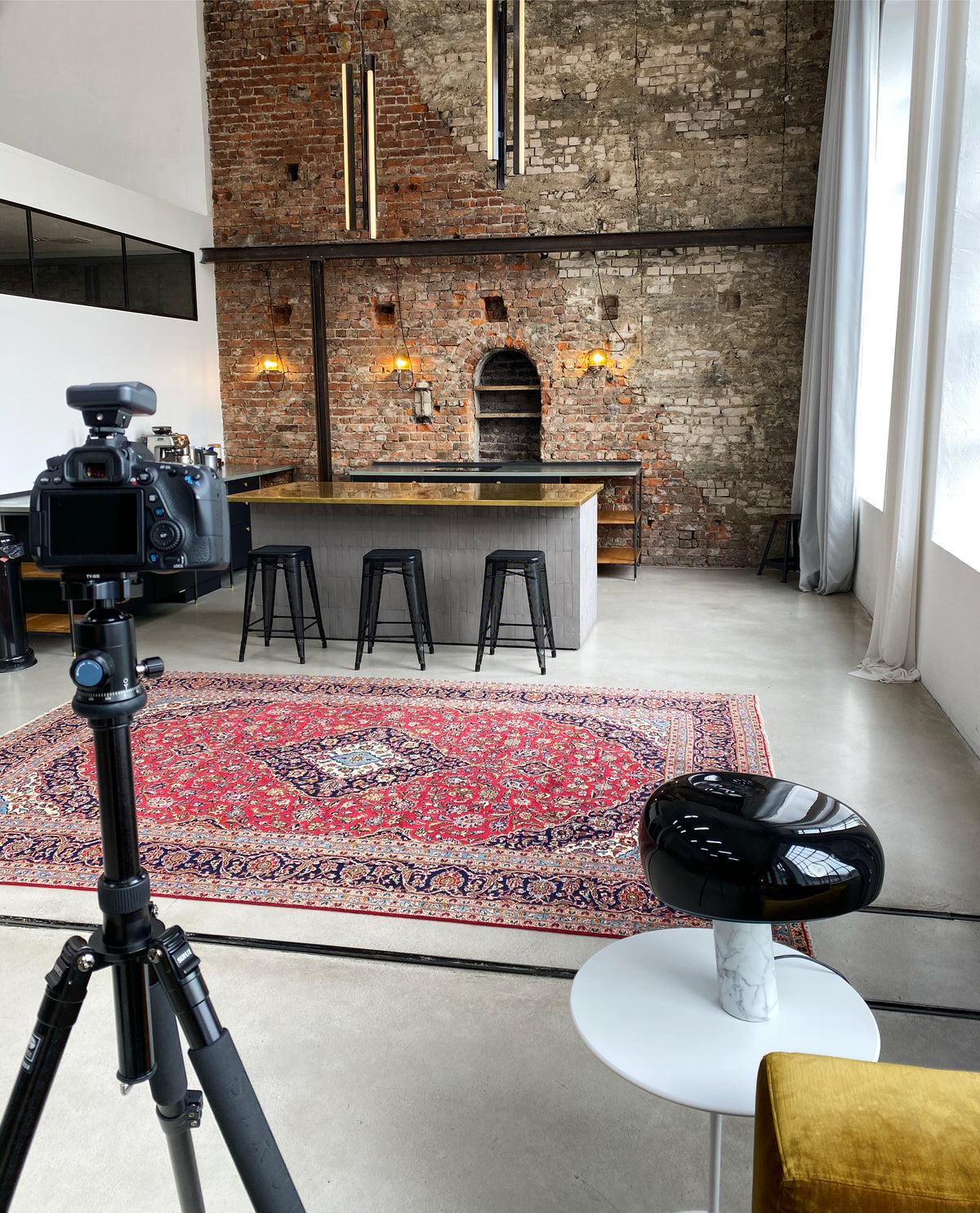
The price also reflects the rug's journey from the highlands of Persia to your living room. This includes transport, customs, storage, and expert advice from a family business that has traded in handmade rugs since 1952.
The journey of a rug is long. After knotting is complete, it embarks on a journey across thousands of kilometers, passing through merchants and markets before finally arriving with us in Hamburg.
Conclusion: A handmade rug is an investment, not a consumer good
A handmade rug is not expensive, it is valuable. Instead of a short-lived disposable item, you acquire an enduring piece of cultural heritage that, with proper care, lasts for decades and often even appreciates in value. It is an investment in craftsmanship, quality, and a story that you continue in your own home.
When you add up all the factors (the months of manual work, the premium natural materials, the knowledge handed down across generations, the guaranteed uniqueness, and fair compensation), it becomes clear that the price of a handmade rug is justified. It reflects the genuine value woven into it.
Unlike a machine-made rug, which is often worn out after 5 to 10 years, a handmade piece is built to last. It will accompany you for a lifetime, becoming more beautiful over the years, and can be passed on to the next generation. It is not an anonymous floor covering, but a central centerpiece of your home that radiates warmth, character, and an unmatched history. It is a conscious choice against throwaway culture and in favor of enduring value.
FAQ
How many knots per square meter does a good rug have? This is a common misconception. A high knot density alone does not define a good rug. Nomadic pieces like Gabbeh often have around 160,000 knots/m² and are of exceptional quality thanks to their thick, plush wool. Fine city rugs like Nain can have over 500,000 knots and impress with their intricate detail. Quality lies in the harmony of material, design, dyeing, and knotting technique.
Is a machine-made rug a good alternative? Machine-made rugs are cheaper, but they simply cannot compare in terms of longevity, feel, and character. They are mostly made of synthetic fibers such as polypropylene, rely on adhesives instead of knots, and last only a few years. A handmade rug is a unique creation crafted from natural materials that lasts a lifetime and tells a story.
Why is Persian wool so special? Wool from sheep raised in the Persian highlands, such as the Zagros Mountains, is unique due to the harsh climate. It is exceptionally dense, long-staple, and rich in lanolin (natural wool grease). This high lanolin content makes the fiber naturally stain-resistant and extremely hard-wearing, while giving the finished rug a subtle, silky sheen that deepens over the years.
How long does it take to make a rug? The production time varies enormously. A small, flat-woven Kelim can be completed in a few weeks. A medium-sized knotted rug measuring 2x3 meters takes anywhere between six and eighteen months, depending on the complexity of the design and the fineness of the weave. Very fine or large pieces can even take several years.
Can I determine the value of a rug myself? For non-experts, this is difficult, but there are telltale signs. Look at the back: on a handmade rug, you see the pattern clearly and distinctly, and the rows of knots show tiny irregularities. A perfectly uniform backing, often reinforced with a mesh or grid, points to machine manufacturing. Also, feel the material: genuine wool is soft, supple, and never scratchy.
Now that you know the story and true value behind every single knot, I invite you to discover the unique characters across our collections. With our AR visualizer, you can view many rugs directly in your room using "View in your room". Find the piece that carries your story forward.
Discover the variety of handmade rugs in our collection.