Valuing Antique Rugs: What You Need to Look For
TL;DR: To appraise an antique rug, you need to examine five core criteria: age and origin, material and knot density, condition including wear and repairs, the quality of colours and design, and verifiable provenance. Authentic craftsmanship, natural materials, and good preservation are the most important value drivers for collector's items and family heirlooms.
Step 1: Determining age and origin, when is a rug truly antique?
A rug is considered antique when it is over 100 years old. Pieces between 50 and 100 years of age are referred to as semi-antique, while rugs that are 20 years or older are considered vintage. The region of origin, such as the Persian Fars province or the Atlas Mountains, significantly influences the style, the techniques used, and thus the collector's value.
An heirloom from the attic, a flea market find; the journey often begins with the question: Is this rug truly old? Among experts, there are clear definitions that go beyond mere chronological age. A rug is only considered "antique" once it has passed the 100-year mark. These pieces are rare witnesses of a bygone era, knotted with techniques and materials that can hardly be found today.
We refer to pieces that are between 50 and 100 years old as "semi-antique". They often originate from the mid-20th century, combining traditional craftsmanship with the influences of their era. Anything between 20 and 50 years old falls into the popular "vintage" category. These rugs often possess great character and reflect specific design trends.
Just as important as age is origin. A rug always tells the story of its birthplace. Was it knotted by nomadic tribes in the Zagros Mountains on a horizontal loom, or in an urban workshop in the region around Isfahan? The answer determines everything: the design, the colours, the knotting technique. Nomadic Gabbeh rugs, for example, are known for their minimalist, geometric patterns and their thick, soft wool. In contrast, fine city rugs feature floral, medallion-adorned patterns that display an incredible attention to detail. Determining the origin is therefore always the first, crucial step toward understanding a rug's history.
Step 2: Analysing material and knotting, the DNA of the rug
The material is crucial to the value. Hand-spun virgin wool with a high lanolin content is robust and valuable, while silk allows for the finest details. Knot density, measured in knots per square metre, is a direct indicator of effort and quality. A higher density usually means a finer design and greater value.
When you hold an old rug in your hands, your senses often tell you the most. Feel the fibres. Smell them. Genuine, high-quality virgin wool from mountain sheep in the Persian highlands has a unique, earthy scent and a slightly waxy touch. That is due to lanolin, the natural wool grease that protects the fibre, makes it dirt-repellent, and ensures it is incredibly durable. The warp and weft, which form the structural foundation of the rug, are usually made of sturdy cotton. In particularly fine pieces or nomadic rugs, goat hair or silk may also be used.
Knotting is the heart of the craft. Every single knot is set by hand. The density of these knots, measured per square metre, is a clear hallmark of quality. A simple nomadic rug may feature around 160,000 knots, while a fine city rug from Nain or Tabriz can boast more than 500,000 knots. More knots mean not only more working hours (a skilled knotter manages about 1,000 knots per hour), but also the ability to create far more detailed and intricate patterns.
There are mainly two types of knots whose distinction indicates the origin:
| Feature | Persian knot (Senneh) | Turkish knot (Ghiordes) |
|---|---|---|
| Structure | Asymmetric, looped around one warp thread | Symmetric, looped around two warp threads |
| Result | Finer, more detailed patterns possible | More robust, durable, often more block-like |
| Distribution | Persian regions, India, China | Caucasus, Anatolia, parts of the Persian region |
| Pile | Often denser and more velvety | Rather thicker and firmer |
To see the knots, turn the rug over and look at the back. The small "pixels" reveal the care and effort that went into crafting the piece.
Step 3: Assessing the condition, between patina and damage
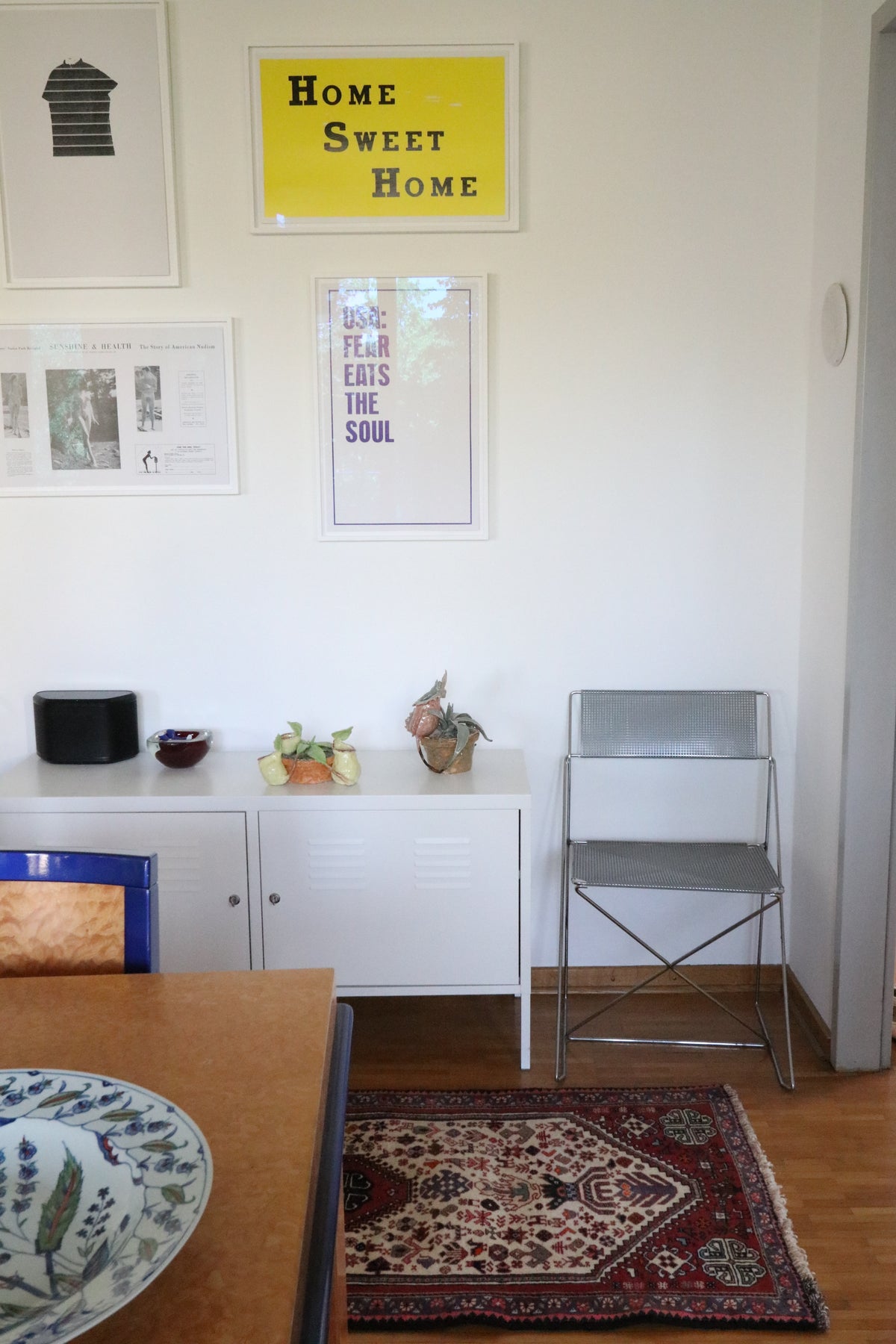
The condition of an antique rug is a balance between patina and damage. Even, honest wear can highlight its character and is perfectly acceptable. Large tears, moth damage, or improper repairs diminish the value considerably. A professional, organic wash and expert restoration, on the other hand, can preserve its value.
An antique rug can and should show signs of use. An evenly worn surface where the colours appear somewhat softer is what we call patina. It is like the wrinkles of a person's life, a sign of history and character that does not decrease value, but often even increases it. A rug that has 100 years under its belt yet looks brand new is often suspicious.
Genuine damage, on the other hand, reduces value. This includes tears in the fabric, moth holes, stubborn stains, or water damage that has made the fibres brittle. You should pay special attention to the edges (the selvedge) and the fringes. If they are intact, they protect the rug from unravelling. Frayed edges are a warning sign.
Look closely at past repairs as well: a tear mended with coarse synthetic thread becomes stiff, puckers the surrounding weave, and often diminishes value more than the original damage itself. A proper restoration relies on matching hand-spun wool yarn worked with original techniques. A professional rug wash and repair should always be entrusted to experts.
Step 4: Decoding colours and design, the soul of the piece
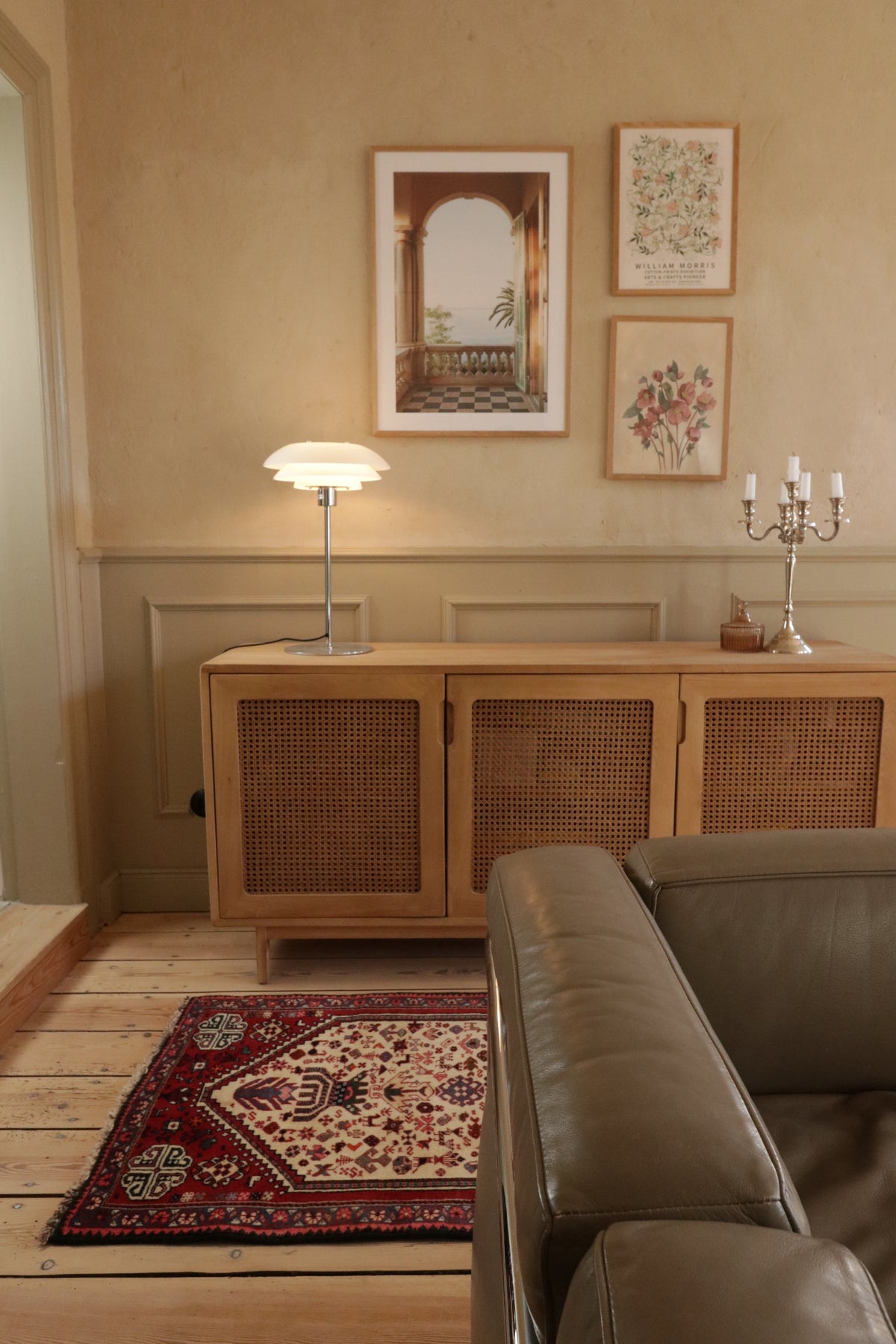
Genuine wool dyed with plants or minerals produces harmonious, deep colours and ages with grace. A characteristic feature is "Abrash", gentle colour gradients created by different dye lots that prove authenticity. The design, whether geometric-tribal or floral-urban, tells a story and serves as a central valuation criterion.
The colours of a hand-knotted rug are its emotional fingerprint. Before the widespread use of synthetic dyes in the late 19th century, only natural materials were used for dyeing. The deep red from madder root, the vibrant blue from indigo, the warm yellow from pomegranate rinds; these colours have a depth and brilliance that synthetic dyes can never achieve. They also age differently: they do not simply fade, but develop a softer, more harmonious tonality over time.
An unmistakable sign of the use of natural dyes and hand-spun yarn is what is known as Abrash. When a batch of yarn ran low, a new one was prepared in a fresh dye bath. Even with the greatest care, slight colour variations occurred. In the rug, this appears as a gentle, striated gradient within a colour field. What an untrained eye might consider a flaw is, to a connoisseur, a certificate of authenticity. You can learn more about what exactly Abrash is in our guide.
Amin Ipektchi, Co-Founder: "Abrash is nature's handwriting in a rug. It shows us that the yarn was dyed by hand in small batches, not in massive industrial vats. These gentle variations in colour give the rug a vibrancy that no machine-made piece could ever possess. To me, a beautiful Abrash is like a signature of the weaver and proof of authentic craftsmanship."
The design itself is a language. Geometric symbols in nomadic rugs are often centuries-old motifs representing protection, fertility, or the family's status. Floral patterns in city rugs often reflect the ornate gardens of Persian palaces. The rarity of a pattern, the complexity of the design, and the harmony of the composition are crucial factors in a rug's value.
Step 5: Verifying provenance and authenticity, the path to expertise
Provenance, the verifiable history of a rug, can significantly increase its value. Master signatures, vintage labels, or sales receipts are rare records. Without such documentation, authentication relies on the expertise of a specialist who analyses material, knotting style, and design features to distinguish originals from imitations.
Provenance is a rug's pedigree. Are there documents that attest to its history? Old purchase receipts, photographs in which it appears, or even a master's signature knotted directly into the rug? Such records are rare and can multiply the value of a piece by substantiating its authenticity.
In most cases, however, such seamless documentation is lacking. That is when the appraiser's expertise is needed. This is where our experience spanning six generations comes into play. When evaluating a rug, you have to bring all the previous steps together. Does the material suit the region? Does the knotting technique match the design? Does the age appear genuine or was it artificially accelerated, for example through bleaching or distressing? A trained eye recognizes these details.
Our family tradition, which dates back to 1952, forms the foundation of our knowledge. Our family history since 1952 is shaped by daily, hands-on experience with these works of art. This knowledge helps us distinguish originals from copies and recognize the true character of every single piece. For newer rugs, certifications such as the STEP label or CARE & FAIR also provide peace of mind regarding fair and ethical production conditions, which is likewise an important factor in value.
FAQ
What is the difference between an antique and a vintage rug? The difference lies in the age. A rug is considered antique when it is over 100 years old. The term vintage is used for pieces between 20 and 50 years of age. Both categories can hold high collector value, antique pieces due to their historical rarity and vintage rugs often due to their specific, era-defining design.
Can I clean an antique rug myself? We strongly advise against it. Household cleaners and improper moisture can cause irreparable damage to natural fibres and especially to vegetable dyes. An antique piece requires a professional, organic hand wash using pH-neutral products, followed by a slow, controlled drying process to preserve its structure and colours.
Do repairs always increase the value of an antique rug? Not necessarily. Only professional repairs carried out with authentic materials that are virtually invisible will preserve or enhance value. A poorly executed repair using the wrong yarn or technique can significantly reduce a rug's value. The goal is always careful conservation, not restoring it to a brand-new state.
Are moth holes a death sentence for a rug? Not necessarily. Smaller, isolated holes can often be repaired by an experienced restorer so that they are barely noticeable. However, extensive infestation that has destroyed the warp and weft threads, the basic foundation of the rug, represents a substantial and often irreparable loss of value.
How can I, as a layperson, recognize genuine vegetable dyes? Pay attention to the harmony and depth of the colours. Natural dyes often show subtle variations and have an inner glow, whereas synthetic dyes can appear harsher and flatter. A good indicator is "Abrash", meaning gentle colour variations within a single area. A look at the back, which has been less exposed to light, often reveals the original colour intensity.
Discover the stories behind the knots
Evaluating an antique rug is a fascinating piece of detective work that takes you deep into the culture and craftsmanship of its creators. If you apply the criteria from this guide, you will learn to look at these works of art with new eyes.
To get a feel for authentic pieces, I invite you to browse through our collection of nomadic rugs. Each piece is unique and tells its own story. With our AR visualizer, you can even see directly on your smartphone how such a rug would look in your own home.