Rug Size for an 8-Person Dining Table: The Right Dimensions
TL;DR: The ideal rug size for an 8-seater dining table depends on the table shape, but follows one rule: all chairs must remain on the rug even when pulled out. To achieve this, add at least 60 to 70 cm on each side of the table. For rectangular tables, dimensions such as 240x340 cm are ideal, while round tables work best with ø 300 cm.
The dining table is often the heart of our home. This is where we gather, eat, laugh, and share stories. A rug under the dining table can define this area and lend it warmth and character. Yet the wrong size can disrupt the entire harmony. Especially with a large table for eight people, choosing the right rug dimensions is crucial. I will show you what to look out for so that your dining area becomes an inviting oasis.
The golden rule: Why the chairs must always stay on the rug
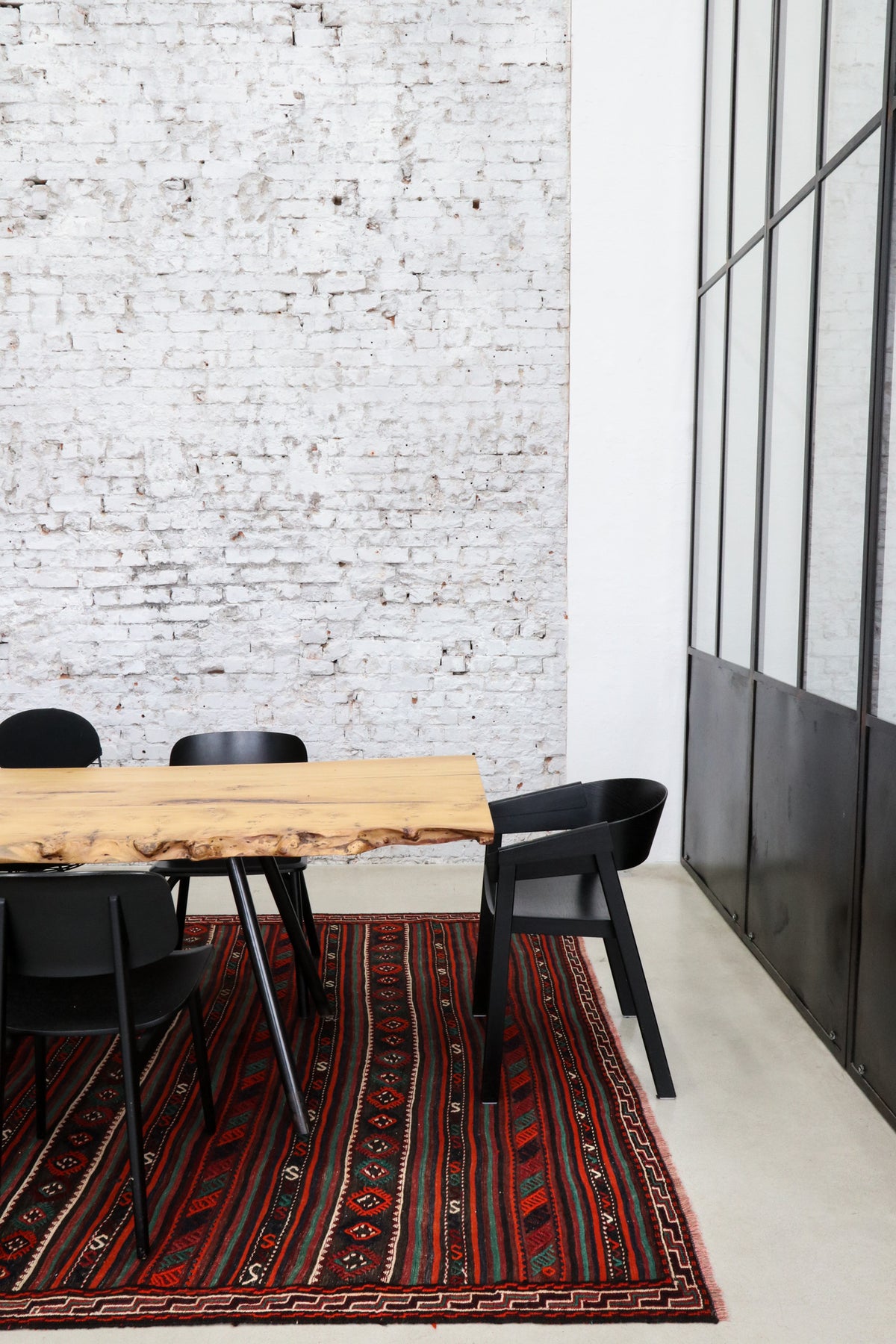
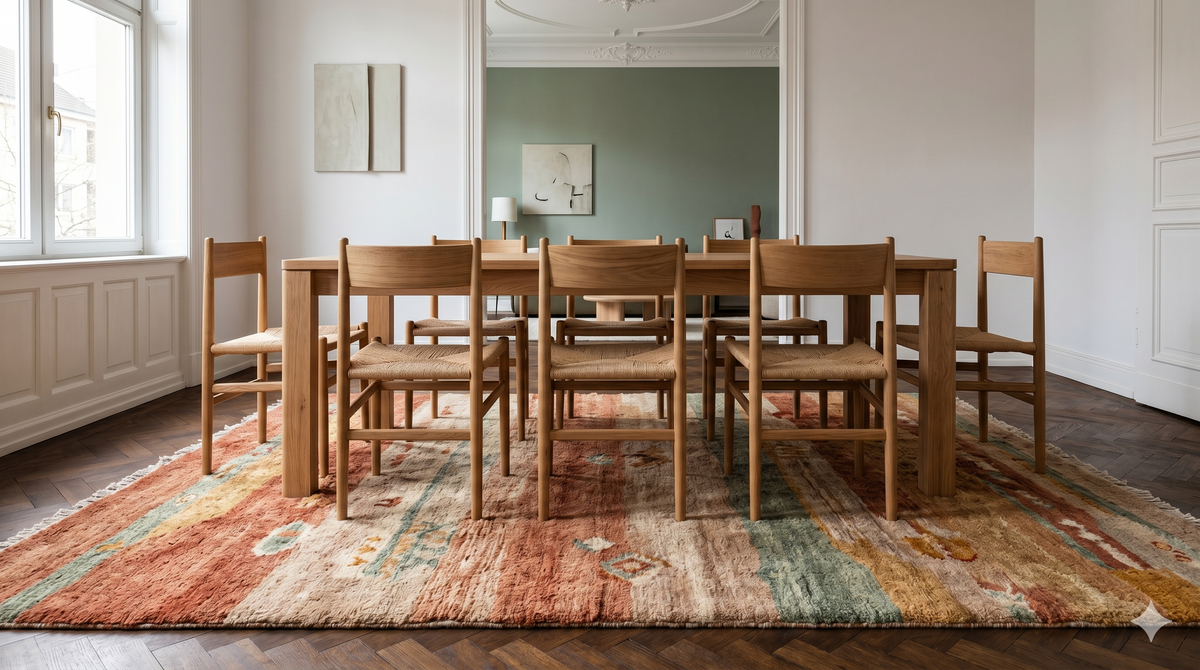
The most important rule for the rug size under the dining table is: the chair legs must remain on the rug even when pushed back. This prevents chairs from wobbling on the rug edge and creates a harmonious, self-contained dining island. Plan for at least 60 cm, or better yet 70 cm, of extra rug border around your dining table.
Imagine sitting down to a cosy dinner and wanting to get up. You push your chair back, and suddenly the rear chair legs catch on the rug edge. The chair wobbles; it is awkward and disrupts the relaxed atmosphere. That is exactly what we want to avoid. The so-called 'chair rule' is therefore less a question of aesthetics and much more one of functionality and comfort.
When all chairs, even in use, sit completely on the rug, a clearly defined zone emerges. Your dining area becomes a visual island in the room, conveying a sense of order and generosity. This clearly delineated space feels tidy and deliberately designed. The rule of thumb is: table length + (2 x 70 cm) and table width + (2 x 70 cm). This buffer of 70 cm per side gives you and your guests plenty of room to move without anyone catching on the edge.
Vida ter Hazeborg, Co-Founder of Rugtales: "To me, a dining table is a place of community. A generous rug underneath is like an open invitation for everyone to take a seat and linger. It is not just about looking beautiful. When the size is right, the entire room immediately feels warmer and more hospitable. It is an unconscious signal that says: 'You are welcome here; you can feel at home here.'"
A rug that is too small looks lost and makes the furniture seem out of proportion. A properly sized rug, on the other hand, connects table and chairs into a harmonious unit and anchors them in the space. In our rug buying guide, you will find more tips on finding the perfect balance for every room.
Specific dimensions: Standard sizes for rectangular and round 8-seater tables
For a typical rectangular 8-seater dining table (approx. 100x200 cm), a rug measuring 240x340 cm is ideal. For a round 8-seater table with a diameter of about 150 cm, a round rug with a diameter of at least 300 cm is recommended. These sizes ensure that the chairs have enough space and do not slide off the edge.
To put theory into practice, let us look at some common scenarios. Most 8-seater dining tables are either rectangular or round.
For rectangular tables: A standard dining table for eight people often measures around 100 cm in width and 200 cm in length. Applying our formula: - Length: 200 cm + (2 x 70 cm) = 340 cm - Width: 100 cm + (2 x 70 cm) = 240 cm
The ideal rug size would therefore be 240x340 cm. Common sizes like 250x350 cm are also perfectly suitable. These formats ensure that even the chairs at the head ends of the table have plenty of room completely on the rug.
For round tables: A round table that comfortably seats eight people generally has a diameter of around 150 to 160 cm. Here too, we add the buffer: - Diameter: 150 cm + (2 x 70 cm) = 290 cm
A round rug with a diameter of at least 290 cm, ideally 300 cm, is the right choice here. The round shape of the rug echoes the shape of the table and creates an especially harmonious, fluid look.
The following table gives you a quick overview:
| Table shape | Typical table size | Recommended rug size | Spatial effect |
|---|---|---|---|
| Rectangular | 100 x 200 cm | 240 x 340 cm or 250 x 350 cm | Classic, structured, generous |
| Square | 150 x 150 cm | 300 x 300 cm (square) | Modern, symmetrical, centring |
| Round | ø 150 cm | ø 300 cm (round) | Soft, fluid, communicative |
| Oval | 110 x 210 cm | 250 x 350 cm (rectangular) | Elegant, dynamic, welcoming |
No matter what shape your table has, the rule remains the same. A generously sized rug is always the better choice. Discover our selection of large rugs to find the right piece for your table.
Measuring like a pro: How to determine the perfect size for your home
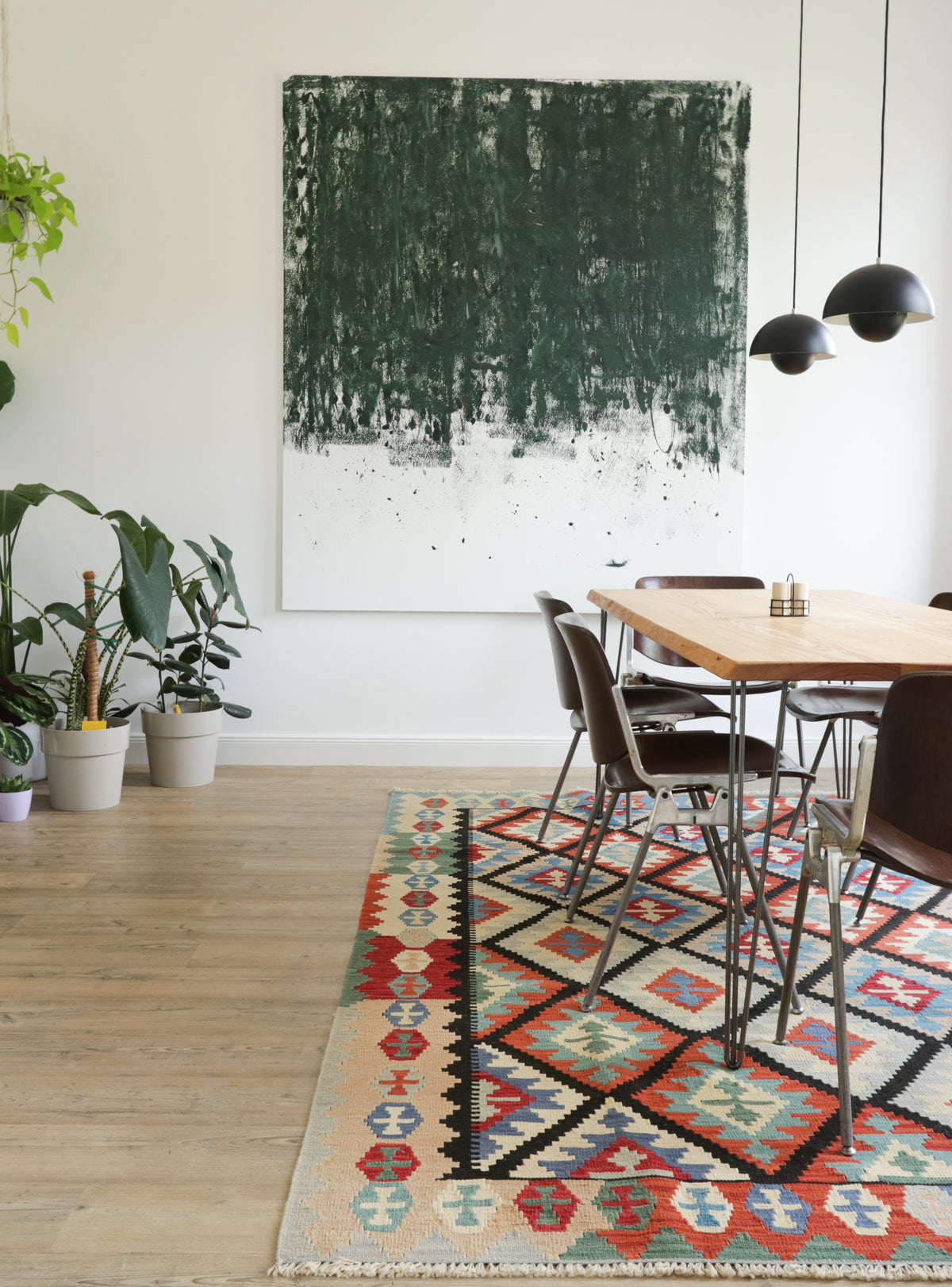
First, measure your dining table. Then mark the outline of the potential rug on the floor using masking tape, adding 60 to 70 cm on each side. Sit down at the table and push the chairs back to check whether they stay within the tape. Our AR visualizer also helps you see the effect directly in your room.
Before you fall in love with our collections, take a moment for a quick dry run at home. It is very easy and gives you absolute confidence in your decision.
Step-by-step guide: 1. Measure the table: Accurately measure the length and width (or diameter) of your dining table. 2. Add the buffer: Add the recommended 60 to 70 cm to each side. Note down the final dimensions of your ideal rug. 3. Visualize with masking tape: Grab a roll of masking tape and tape the rug's outline onto your floor. This is the best way to get a genuine feel for the proportions in the room. You will immediately see how much space the rug takes up and how it relates to other furniture or walkways. 4. The practical test: Place all chairs at the table. Sit at each seat and push the chair back just as you would when getting up. Do all four legs of the chair stay within your markings? Perfect! If not, you should expand the marked area.
If you are hesitating between two sizes, such as 200 × 300 cm and 250 × 350 cm, tape both outlines on your floor and place a chair on top. You will instantly see how much more comfort and visual calm the larger version brings. This quick exercise eliminates all doubt.
If you want to make it even easier, use technology. Our AR visualizer helps you project various rugs virtually into your dining room: open one of the dining room rugs and tap "View in your room" on the product page. You can see directly on your smartphone how different sizes and designs look in your home.
Material & structure: What a dining room rug must withstand
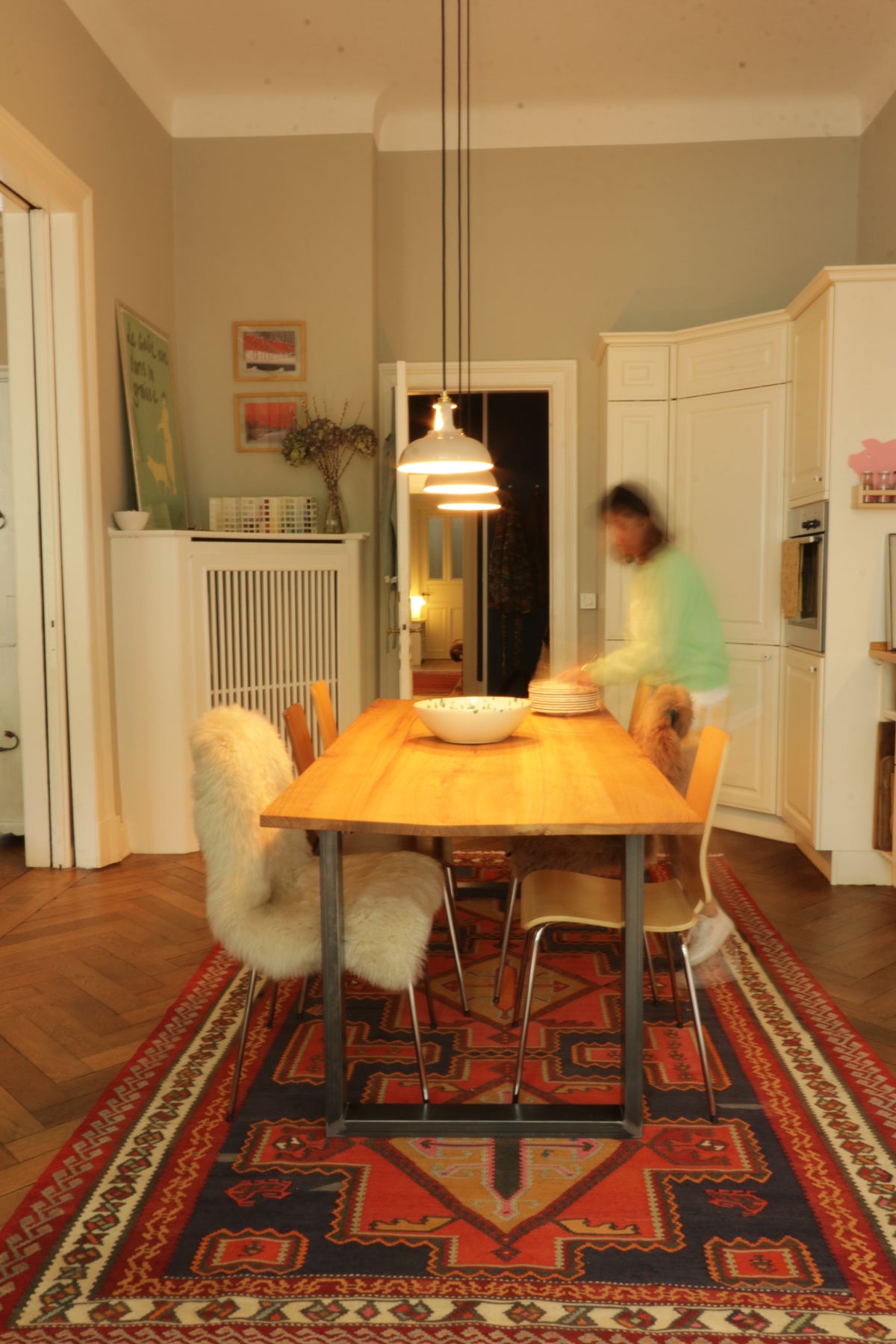
A rug under the dining table should be durable and easy to care for. Hand-knotted virgin wool is ideal, as its natural lanolin content makes it dirt-repellent. Flatweaves like Kelim are particularly practical because chairs slide easily over them and crumbs can simply be vacuumed up. A pile that is too high is rather unsuitable for the dining area.
A dining room is a high-traffic area. Here people eat, drink, and live, so spills can happen. Your rug's material should be up to the task.
Virgin wool: The natural all-rounder At Rugtales, we swear by hand-knotted rugs made from pure virgin wool. The wool of mountain sheep from the Persian highlands is naturally extremely resilient. Its secret is lanolin, the natural wool fat. It coats every single fibre and acts like a protective shield against dirt and liquids. A spilled glass of water often simply beads up before it can penetrate deeply.
Flatweaves: The practical choice Flatweaves such as Kelim are particularly well suited to the dining area. Because they have no pile, chairs can glide effortlessly over them without catching. Crumbs and dust can easily be vacuumed up and do not penetrate deep into the weave. Their often geometric patterns are also very forgiving and conceal minor stains. Take a look at our easy-care Kelim pieces.
What you should avoid: A high-pile or shaggy rug is less suitable for the dining room. Chair legs sink into it, making moving them difficult. In addition, food residue gets caught deep in the pile and is hard to remove. Instead, choose a rug with a low to medium pile or a flatweave. You can find more tips on proper rug care in our guide.
Style questions: How rug size influences the room's atmosphere
The right rug size accentuates the generous feel of your dining area. A rug that is too small makes the room feel cramped and unfinished, while a correctly sized rug creates a welcoming and luxurious atmosphere. It connects table and chairs into a single unit, echoes the colours of your interior, and can define the entire style.
The size of your rug is not just a practical choice, but also a design decision with a major impact. It influences the entire atmosphere of your dining room.
Creating a sense of space: A large rug that extends well beyond the table makes the whole room feel larger and more open. It creates a stage for your dining ensemble and gives it prominence. A rug that is too small, on the other hand, looks like a forgotten doormat and leaves even the most beautiful furniture looking lost. The proportions are off, which the eye perceives as discordant.
Creating unity: The rug is the visual foundation holding table and chairs together. It creates a coherent unit and prevents furniture from looking randomly scattered around the room. This is especially important in open-plan living concepts, where the rug clearly separates the dining area from other zones such as the living room.
Colour and pattern as a statement: A large rug offers ample surface area to bring colour, pattern, and texture into play. You can use it to enliven a neutral room or to echo and reinforce the colour palette of your decor. Whether you opt for a calm, tone-on-tone design or choose a colourful eye-catcher like our durable Gabbeh rugs, the size ensures that the design can unfold its full effect. Find the perfect style for your dining room and dare to make a statement.
You can find the basic rules for every table size in our guide Rug Size for the Dining Room.
FAQ
What should I do if my dining table falls between two rug sizes? When in doubt, you should always choose the larger option. A rug that is slightly too large almost always looks more harmonious and generous than one that is visibly too small. A rug that is too small makes the room look disproportionate and unfinished, whereas a larger rug confidently defines the dining area.
Can I place a round rug under a rectangular table? Yes, this is a popular styling technique to break up rigid, linear shapes and give the room a softer, more dynamic touch. However, make sure here as well that the diameter of the round rug is large enough to satisfy the 'chair rule'. All chair legs must still fit comfortably on the rug even when pushed back.
How much clearance should the rug have from the wall? As a rule of thumb, maintain a clearance of at least 30 to 50 cm from walls and other large furniture pieces such as sideboards or cabinets. This clear strip of floor around the rug makes the room feel airier and larger. The rug is then perceived as an island in the space without overwhelming it.
Is a high-pile rug suitable for the dining area? We generally advise against it. A low pile or a flatweave like a Kelim is much more practical under the dining table. Chairs are easier to move without sinking into the pile. Furthermore, crumbs and spills are much easier to remove from a short-pile rug, making cleaning and care significantly simpler.
Which material is best for a rug under the dining table? Pure virgin wool is our clear recommendation. It is naturally extremely durable, long-lasting, and dirt-repellent thanks to its lanolin content. A wool rug easily forgives minor dining mishaps and is easy to clean. It is an investment that brings joy for many years and withstands the daily demands of a dining space.
Choosing the right rug for your 8-seater dining table is a decision for more comfort, harmony, and hospitality. With the chair rule in mind and the courage to go large, you can transform your dining area into a place where everyone loves to gather. Each of our pieces is a unique, hand-knotted one-of-a-kind creation.
Are you ready to lay the foundation for countless shared moments? With our AR visualizer, you can test your favourite directly in your room. Discover the right pieces for your dining area now.