Isfahan: Persian Rugs with Palace History
TL;DR: An Isfahan rug is a hand-knotted masterpiece from the Persian city of Isfahan, which experienced its golden age under the Safavid dynasty in the 16th and 17th centuries. It is renowned for its extremely high knot density, the use of fine cork wool and silk, as well as its symmetrical floral patterns inspired by palace gardens.
The Golden Era: Where Does the Isfahan Rug Come From?
The Isfahan rug originates from the Persian city of the same name, which became the capital under Shah Abbas the Great in the 16th century. Royal workshops here produced the finest rugs of their era, uniting art, culture, and craftsmanship at the highest level, and establishing Isfahan's reputation as a center of rug art.
The history of the Isfahan rug is inextricably linked with the golden era of Persia. Imagine a time when Isfahan was not just a city, but the vibrant heart of a world empire. Under the rule of the Safavid dynasty, particularly under Shah Abbas I in the late 16th and early 17th centuries, the city experienced a cultural flowering that resonates to this day. Shah Abbas moved the capital here and created a melting pot for artists, architects, and artisans from across the world.
Royal rug workshops flourished in this creative climate. Unlike nomadic pieces knotted on simple horizontal looms, Isfahan rugs were crafted in organized workshops based on precise design templates, known as cartoons, drawn by court artists. These rugs were not intended for everyday use; they adorned the Shah's palaces, served as gifts for European monarchs, and stood as symbols of power, wealth, and supreme artistic expression. The tradition established back then lives on today in the hands of a few master knotters who preserve this craftsmanship passed down through generations.
Amin Ipektchi, Co-Founder: "When you touch a genuine Isfahan rug, you feel more than just wool and silk. You feel history. Every knot is an echo from the workshops of Shah Abbas. It is this connection to the past, this technical perfection, that turns an Isfahan from a mere floor covering into a work of art. This reverence for the craft is deeply rooted in our family history in Persian rug art."
The designs mirrored the splendor of Safavid architecture and garden design. The famous Lotfollah Mosque or the Ali-Qapu Palace in Isfahan, their domes, mosaics, and gardens are reflected in the rug patterns. In this way, every rug became a miniature version of paradise as envisioned by Persian rulers.
Patterns & Motifs: The Design Language of an Isfahan Rug
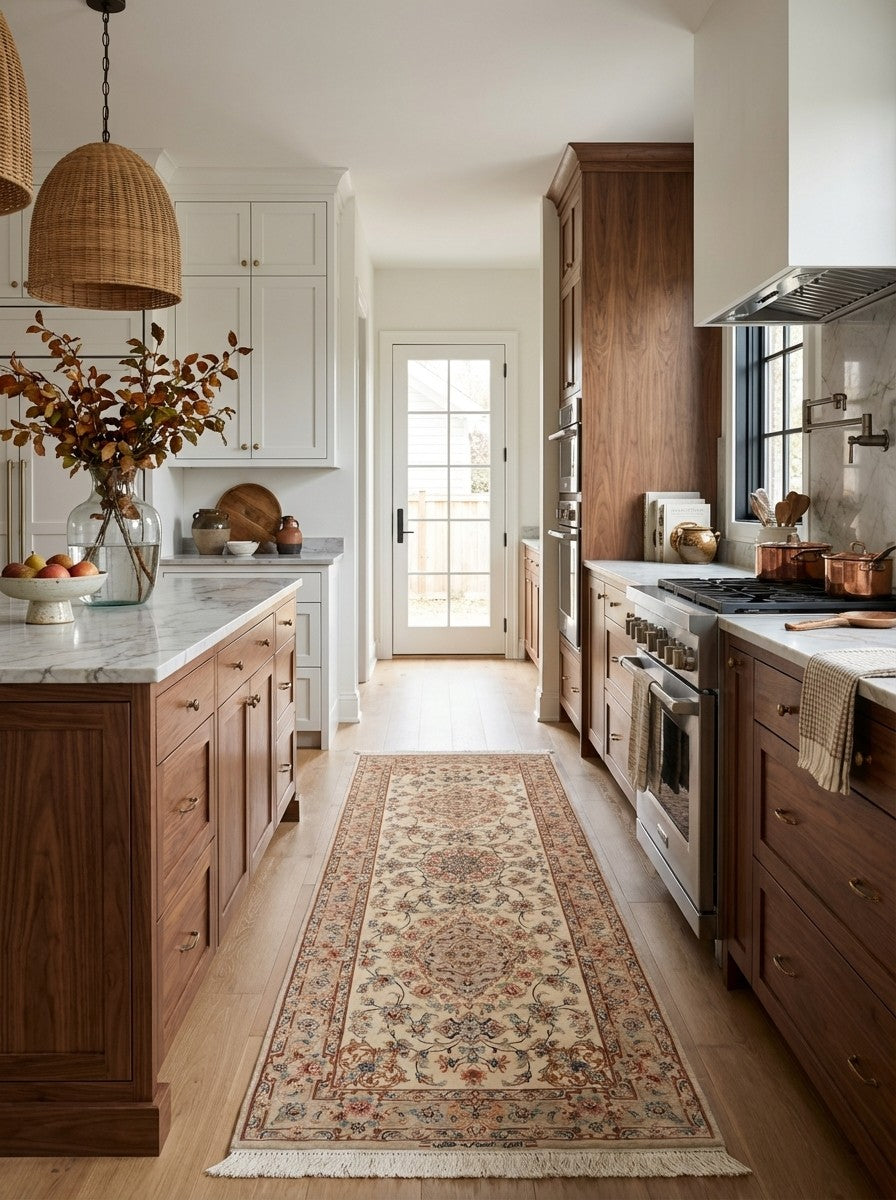
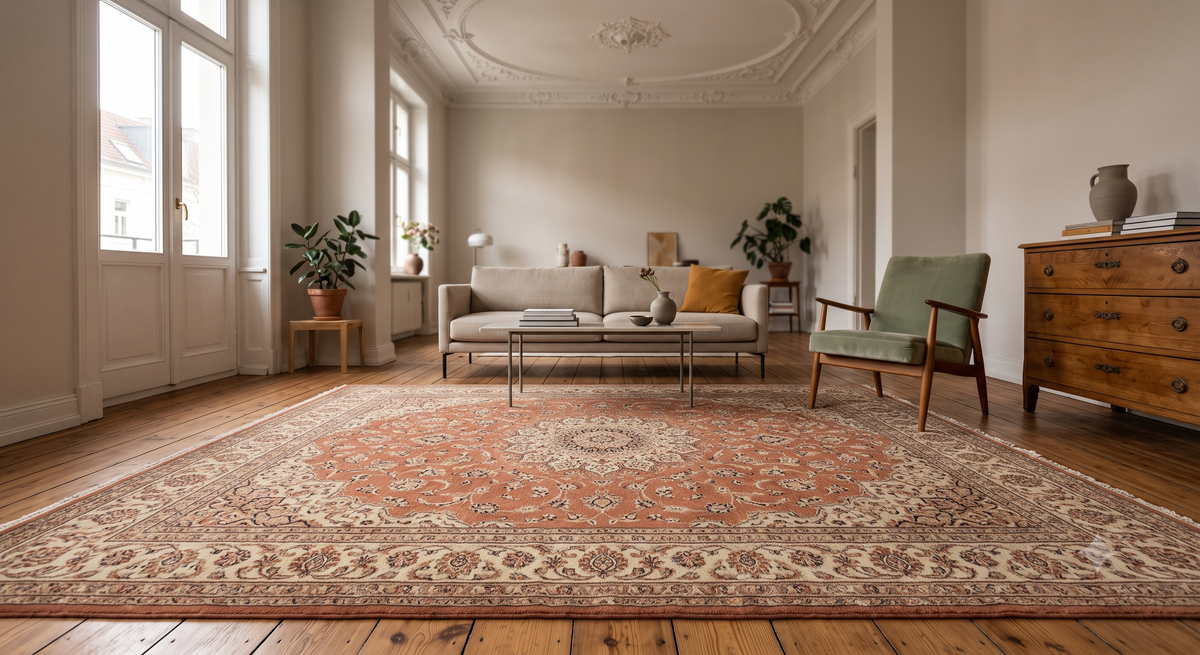
The design language of an Isfahan rug is defined by symmetry and elegance. Characteristic features include a central medallion surrounded by floral tendrils, known as Eslimi, and palmettes (Shah-Abbasi patterns). These patterns reflect the aesthetics of Persian gardens and tell stories of harmony and paradise on earth.
An Isfahan rug unfolds its visual impact through a consummate and harmonious composition. The patterns are never random; they follow a strict, classical order rooted in symmetry and balance. Perhaps the most famous design feature is the central medallion. It often symbolizes the sun or a pool in a Persian garden, from which life flows outward in all directions. From this center, a field rich with filigree detail unfolds.
The main motifs populating this field are the Shah-Abbasi and Eslimi patterns. The Shah-Abbasi motif consists of stylized palmettes, lotus blossoms, and rosettes that are artfully interconnected. Eslimi patterns, also known as arabesques, are curved, interlaced tendrils carrying leaves and delicate blossoms. They lend the rug a dynamic yet calming movement, as though you were strolling through an endless garden. The entire design is framed by one or more borders that enclose the central field like an ornate picture frame, often repeating the motifs of the main field on a smaller scale. You can discover the incredible depth of detail in these patterns for yourself in the variety of fine city rugs.
| Motif | Description & Symbolism | Visual Characteristic |
|---|---|---|
| Central Medallion | Symbolizes unity, the sun, or the center of the universe. Often surrounded by 16 smaller "pendants". | Symmetrical, often star- or flower-shaped element at the center of the rug. |
| Shah-Abbasi | Stylized palmettes, blossoms, and buds. Named after Shah Abbas, who favored this pattern. | Floral, fan-like shapes repeating rhythmically across the field. |
| Eslimi (Arabesque) | Intertwined, spiral- or S-shaped tendrils with leaves. Symbol of the eternal flow of life. | Flowing, continuous lines that connect the entire design. |
| Border | The "frame" of the rug. Separates the inner world of the rug from the outer world of the room. | One or more bands enclosing the main field, often featuring their own motifs. |
Material & Knotting: The Secret of Its Fineness
The secret of its fineness lies in the materials and the technique. Fine cork wool from the first shearing of young lambs is predominantly used for Isfahan rugs. Silk is used to accentuate the patterns. Knotting is done using the asymmetrical Persian knot on a cotton or silk warp, enabling extreme knot densities of over 500,000 knots per square meter.
The exceptional quality of an Isfahan rug begins with the raw materials. Knotters traditionally use "cork wool", a particularly fine and soft virgin wool. It is obtained from the shoulders and neck of lambs during their very first shearing. This wool is not only extraordinarily soft, but also rich in lanolin, the natural wool grease. This makes the pile resilient and gives it a subtle, silky sheen. Sometimes, hand-dyeing small batches of wool creates the typical, gentle color variations that you might know as Abrash. You can learn more about this in our article What is Abrash in a rug.
For the warp and weft, the foundation of the rug, fine yet exceptionally tear-resistant cotton is usually used, or even silk in the most precious pieces. A stable foundation is essential to withstand the immense tension required for a high knot density. Silk is also incorporated into the pile itself, though usually sparingly and intentionally to highlight the contours of the patterns and add light reflections.
The true secret, however, lies in the knotting technique. It is knotted using the asymmetrical Persian knot, also known as the "Senneh knot". This knot is smaller and can be packed more tightly than the symmetrical Turkish knot. As a result, knotters are able to create incredibly detailed and curved lines. Knot density is a crucial quality indicator: while a good hand-knotted rug might have around 200,000 knots per square meter, Isfahan rugs often start at 500,000 and can exceed the 1,000,000 knots/m² mark in masterworks. This extreme density makes the rug not only rich in detail, but also extremely durable. You can often see an example of such fineness in the delicate details of a Nain rug, which is closely related to the Isfahan in its technique.
Recognizing a Genuine Isfahan Rug: What You Should Look For
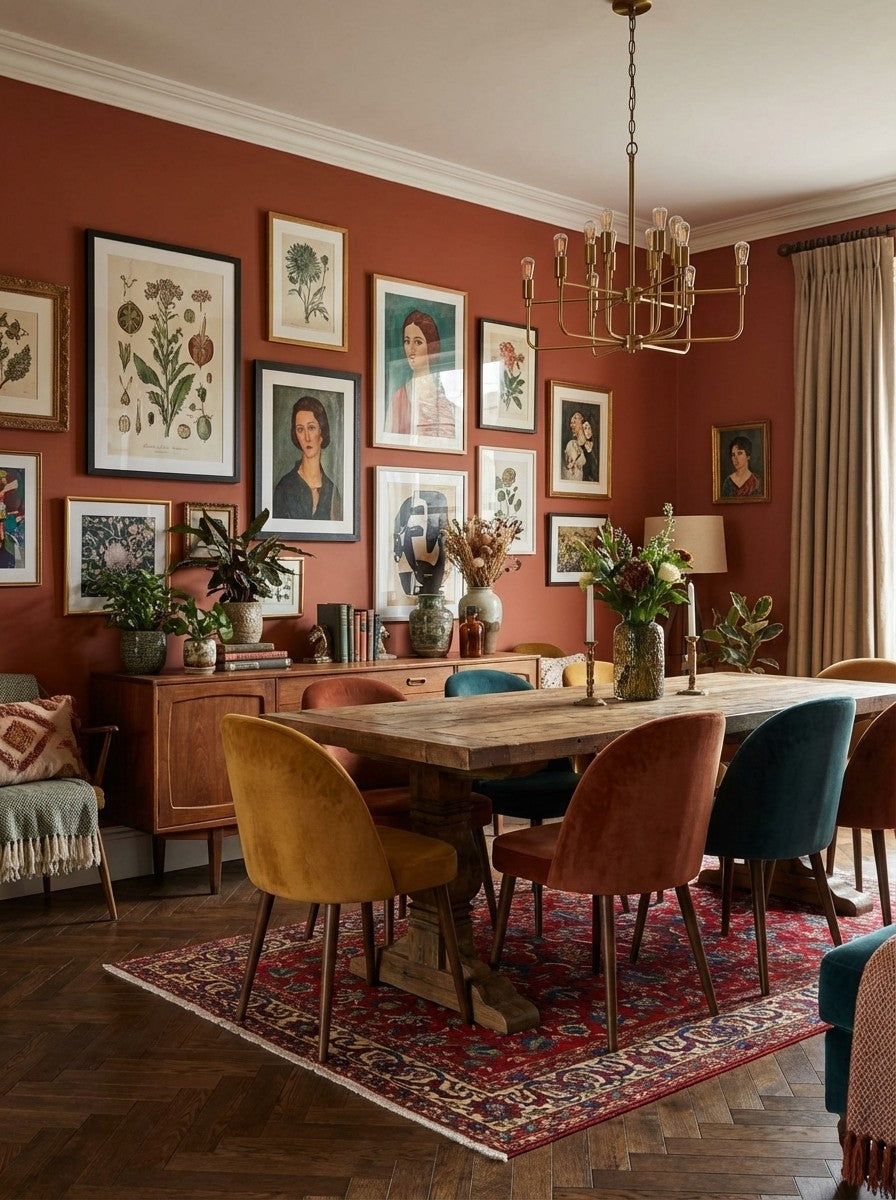
You can recognize a genuine Isfahan by its extremely fine and dense knotting on the reverse side. Look for precise pattern details, which may be highlighted with silk, and the superior quality of the wool. Many masterworks also feature the knotter's signature knotted into the border, a clear mark of authenticity.
Distinguishing an authentic Isfahan from a replica requires a trained eye, but there are several clear indicators you can look out for. The first and most important test is examining the back. Flip over a corner of the rug. On a genuine Isfahan, you will see a perfectly clear mirror image of the front design. The knots are tiny, extremely dense, and even. You should be able to make out every single knot as a tiny dot. In machine-made rugs, the pattern is often blurred or obscured by a glued backing layer.
Another characteristic is the signature. Many renowned Isfahan master knotters, such as Serafian, Dardashti, or Emami, sign their finest works. This signature is artfully knotted into the border of the rug and is an unmistakable hallmark of provenance and quality. Also, feel the pile: cork wool feels dense, velvety, and cool, not fluffy or synthetic. The colors are harmonious and clear, never garish or washed out.
You can tell the difference from an imitation the moment you lift it: a genuine Isfahan feels substantial and possesses a firm, almost board-like structure created by its exceptionally dense knotting; an imitation feels light and limp. This tangible presence is what defines an authentic Isfahan. The proper care of your treasured piece ensures this quality endures for generations. Discover this exquisite artistry in our collection of fine city rugs.
FAQ
What makes an Isfahan rug so special? What makes an Isfahan rug special is the combination of three elements: its rich historical origin from the golden age of Persia under the Safavids, the use of the finest materials such as cork wool and silk, and its extraordinarily fine knotting. This enables the elegant, symmetrical palace garden motifs that turn it into a work of art for the floor.
Are Isfahan rugs a good investment? High-quality, well-preserved, and particularly signed Isfahan rugs can be a stable investment due to their artistry and rarity. Their value can even appreciate over time. However, the primary value lies in daily aesthetic enjoyment and the pleasure of owning a piece of living history. A rug should always bring joy to your heart first.
What is cork wool? Cork wool is an exceptionally high-quality and fine virgin wool. It is sheared from the shoulders and neck of lambs during their very first shearing. This wool is remarkably soft, rich in natural lanolin, and has a subtle sheen. These qualities make it ideal for the dense, velvety, yet hard-wearing pile of Isfahan rugs.
How high is the knot density in Isfahan rugs? The knot density is extraordinarily high. In fine pieces, it starts at around 400,000 knots per square meter and can reach well over 1,000,000 knots in masterworks by renowned knotters. This extreme density accounts for the rug's fine details and longevity.
Do all Isfahan rugs have a medallion? The central medallion is the classic and most common design. However, there are also other, rarer patterns. These include all-over designs, where a repeating pattern covers the entire surface without a central focal point, or even pictorial depictions of hunting scenes, poems, or historical events that showcase the knotters' supreme artistry.
How do I properly care for an Isfahan rug? An Isfahan rug requires gentle care. Regular vacuuming in the direction of the pile and without a rotating brush is essential. Spills should be blotted immediately with a clean, damp cloth, not rubbed. Every five to seven years, we recommend professional hand washing through our cleaning and repair service to refresh the colors and protect the fibers.
The elegance and centuries-old tradition of an Isfahan rug are incomparable. If you would like to experience the fascination of these works of art yourself, I invite you to explore our collection of fine Persian city rugs. With our AR visualizer, you can even see directly on your smartphone how such a masterpiece would look in your own home.