Lori and Loribaft: Tribal Rugs from the Zagros Mountains
TL;DR: A Loribaft rug is a hand-knotted unique piece crafted by the Lori nomads of the Persian Zagros Mountains. It is characterized by an exceptionally fine knotting, high-quality highland wool, and minimalist geometric patterns. Compared to the better-known Gabbeh, the Loribaft is denser, softer, and often calmer and more modern in its design.
What exactly is a Loribaft rug?
A Loribaft, literally "Lori weave", is an evolution of the Gabbeh rug, knotted by the Lori tribe. It uses the same high-quality Zagros wool, but is knotted much more finely and densely. This enables more detailed yet minimalist designs and a velvety soft surface, setting it apart as a modern, durable, and at the same time tradition-rich floor covering.
A Loribaft is more than just a rug; it is a piece of living history carrying the essence of nomadic craftsmanship. Imagine a Gabbeh refined through the hands of generations; that is the Loribaft. It originates from the same tradition and the same hands as the well-known Gabbeh rugs, but stands out through significantly higher quality and fineness. The name itself provides the decisive clue: "Lori", the name of the tribe, and "baft", the Persian word for "knotted" or "woven".
For the Loribaft, the Lori weavers use an especially fine, hand-spun virgin wool from their own sheep that graze in the high altitudes of the Zagros Mountains. This wool is rich in lanolin, the natural wool grease, which makes the rug naturally resistant to dirt and moisture. The decisive difference lies in the knot density. While a Gabbeh is rather coarse and rustic, a Loribaft is crafted with a much higher knot count per square meter. The result is a denser, lower pile with an almost velvety touch and a clarity in design not found in a Gabbeh in this way. The patterns remain faithful to nomadic tradition: geometric, understated, and inspired by nature, yet executed with greater delicacy. This combination makes the Loribaft a perfect link between traditional craft and contemporary living. It belongs to the family of authentic nomadic rugs, but represents, so to speak, the refined, elegant evolution.
| Feature | Loribaft rug | Gabbeh rug |
|---|---|---|
| Knot density | High (up to 250,000 knots/m²) | Low to medium |
| Pile height | Short to medium-high, very dense | High, rather loose |
| Touch and feel | Soft, velvety, compact | Soft, but rustic and shaggy |
| Design | Fine, minimalist, geometric | Coarse, abstract, often with animal motifs |
| Effect | Elegant, calm, modern | Original, earthy, cozy |
The origin: Life of the Lori in the Zagros Mountains
The Lori are one of the oldest nomadic peoples of Persia, native to the rugged, majestic landscapes of the Zagros Mountains. Their semi-nomadic life, shaped by the cycles of nature and sheep farming, is directly reflected in their rugs. The designs are inspired by mountains, rivers, and the vast, open land.
To truly understand a Loribaft, you have to embark on a journey into the Zagros Mountains, a mighty mountain range running through the western part of the Persian plateau. Here live the Lori, a people with a history spanning thousands of years, whose culture and way of life are inextricably linked with their environment. They do not live in permanent towns, but migrate with their herds between summer and winter pastures, a rhythm dictated by the seasons. This close connection to nature is the primary source of inspiration for their art.
For Lori women, rug knotting is not simply a means of livelihood, but a central part of their identity and a medium for storytelling. On simple horizontal looms that can be transported easily, they knot the patterns of their homeland into the wool of their sheep. A straight-line pattern can symbolize a river, a small square a tent, and diamond shapes the rugged peaks of the mountains. It is an abstract, minimalist visual language born of direct observation and daily experience. Every rug is thus a personal diary of the weaver, a reflection of her world. This deep cultural heritage of knotting art is passed down from mother to daughter, preserving a tradition that goes far beyond simply producing a floor covering.
Characteristics of a genuine Loribaft: Wool, knots, and colors
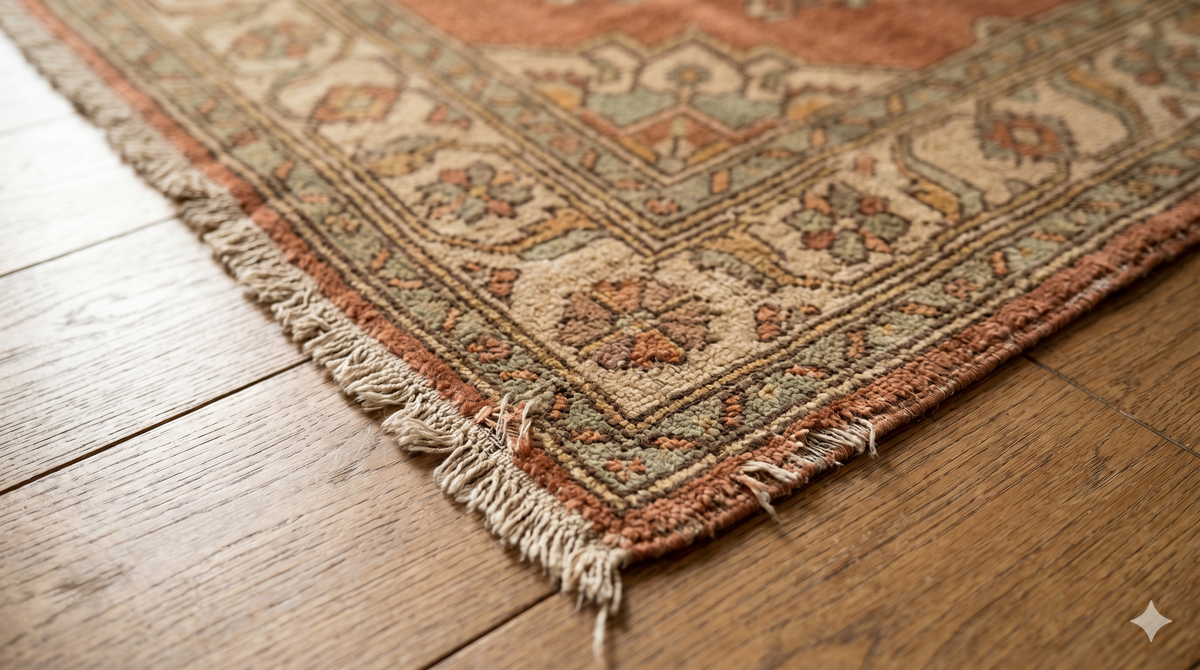
A genuine Loribaft impresses with its excellent material quality. The foundation is hand-spun virgin wool from Zagros mountain sheep with a high lanolin content, making it robust and dirt-repellent. The knot density, reaching up to 250,000 knots per square meter, is significantly higher than that of a Gabbeh, which explains the soft touch and clear pattern definition.
An authentic Loribaft can be recognized by a combination of three key characteristics: the material, the knotting, and the colors. These elements are so closely intertwined that together they create a work of art of remarkable quality and durability.
The wool: It all begins with the wool of the Zagros sheep. These animals live at high, barren altitudes, making their fleece exceptionally dense, robust, and rich in natural grease. The high content of lanolin (wool grease) acts as a natural protective shield: it makes the fiber elastic, dirt-repellent, and remarkably easy to care for. The wool is traditionally spun by hand. This process gives the yarn an irregular thickness, which later creates a vibrant, organic texture in the rug.
The knotting: This is where the biggest difference from the Gabbeh lies. A Loribaft is crafted with a significantly higher knot density of up to 250,000 knots per square meter. This dense packing of knots results in a lower, but extremely compact pile. The result is a surface that feels velvety and soft, yet remains enormously hard-wearing. This fineness also allows the weavers to create clearer lines and more detailed geometric patterns that would be lost on a coarser weave.
Amin Ipektchi, Co-Founder: "When you run your hand over a genuine Loribaft, you feel the difference immediately. Thanks to the lanolin, the wool feels cool and almost slightly waxy, not dry or scratchy. And the density of the knots gives you a sense of substance and longevity. That is a quality you cannot describe; you have to feel it."
The colors: Traditionally, natural dyes derived from regional plants, roots, and minerals are used for Loribaft rugs, such as pomegranate rinds for yellow tones, walnut shells for brown, or madder root for red. Because the hand-spun yarn absorbs the dye with varying intensity and is often dyed in small batches, subtle color variations emerge in the finished rug. These characteristic color variations, also known as Abrash, are not a defect, but a sought-after hallmark of authenticity that testifies to genuine handcraft. Our commitment to ethical production is also reflected in the fact that we are a Label STEP Partner; STEP is dedicated to fair working conditions for weavers.
Loribaft vs. Gabbeh: The subtle difference
Although both can originate from the same tribe, the primary difference is the fineness. A Loribaft is essentially a premium-quality Gabbeh. It has a shorter pile, a much higher knot density, and therefore a more velvety surface. While Gabbehs often appear coarse and rustic, the Loribaft radiates a calmer, more modern elegance.
At first glance, Loribaft and Gabbeh rugs might seem similar. Both come from the nomadic tradition of Persia, use geometric patterns, and are crafted from the same high-quality wool. Yet on closer inspection, the subtle but decisive differences emerge, placing them into two distinct categories. You could say that the Gabbeh is the soul of raw, wild nature, while the Loribaft represents its cultivated, refined interpretation.
The Gabbeh is known for its high, shaggy pile and its often very simple, almost childlike patterns. It is the epitome of coziness and rustic charm. Its weave is relatively loose, which gives it its soft, plush character. The designs are often large-scale and heavily abstracted, sometimes featuring stylized animals or human figures. A Gabbeh brings a warm, earthy, and very relaxed atmosphere into a room.
The Loribaft, on the other hand, is the disciplined, elegant evolution. Its pile is significantly shorter and, due to the high knot density, much more compact. The surface is not shaggy, but velvety and smooth. This allows for far more precise pattern delineation. The designs are still minimalist and geometric, but often arranged more delicately and symmetrically. The color palette is frequently more restrained, often in monochrome tones or with gentle contrasts. While a Gabbeh can be loud and cheerful, a Loribaft is quieter, meditative, and radiates a timeless modernity. If you want to compare the two styles directly, it is best to explore the differences in our Gabbeh rugs and place the images side by side with a Loribaft. The difference in presence is immediately noticeable.
How a Loribaft fits perfectly into your home
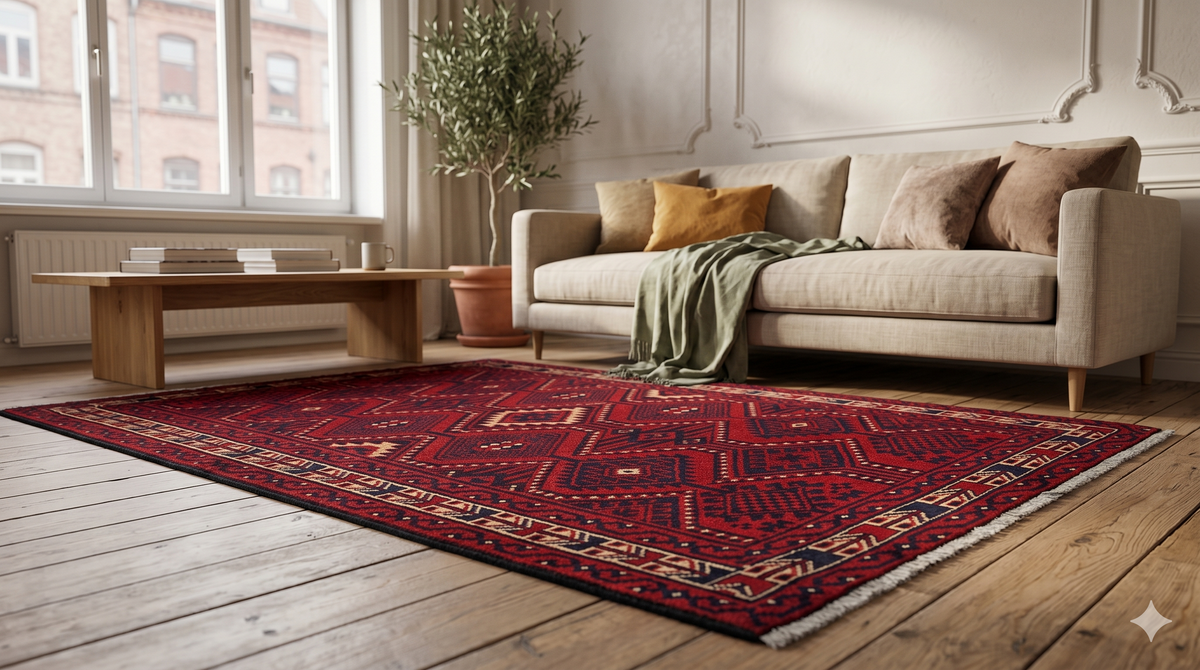
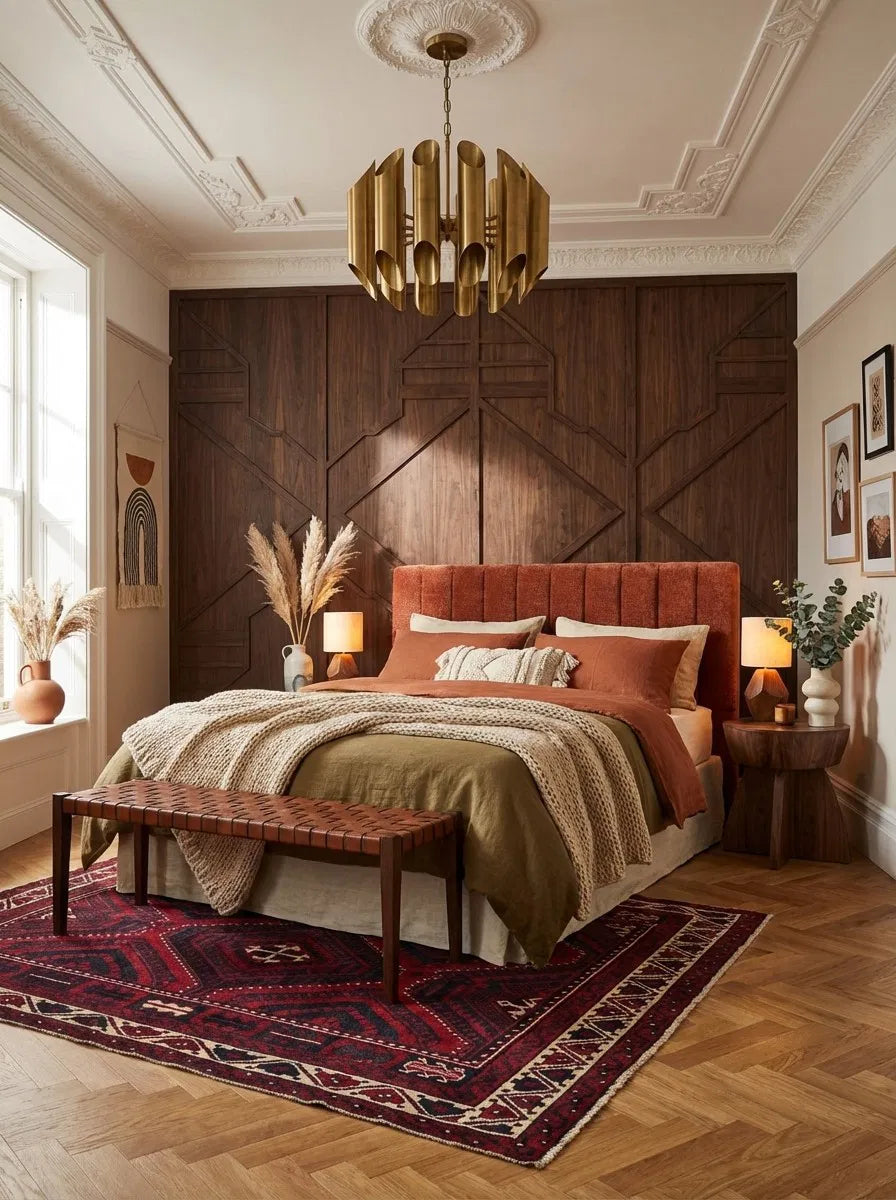
Thanks to its minimalist aesthetic and often monochrome color palette, a Loribaft blends seamlessly into modern, Scandinavian, or minimalist interior styles. It grounds the room without dominating it. Its dense wool creates a warm, cozy atmosphere and improves room acoustics. A timeless classic for living rooms, bedrooms, or home offices.
A Loribaft is a true master of transformation, fitting into many living concepts thanks to its understated elegance. Its strength lies in adding character and warmth to a room without pushing itself into the foreground.
For modern and Scandinavian styles: In a minimalist or Scandinavian-inspired setting dominated by clean lines, light colors, and natural materials like wood and linen, a Loribaft acts as the perfect anchor. Its geometric patterns echo the linear feel of the furniture, while its soft wool texture breaks the often cool austerity and provides welcoming coziness. A cream-colored or gray Loribaft can visually open up a room while simultaneously lending it structure.
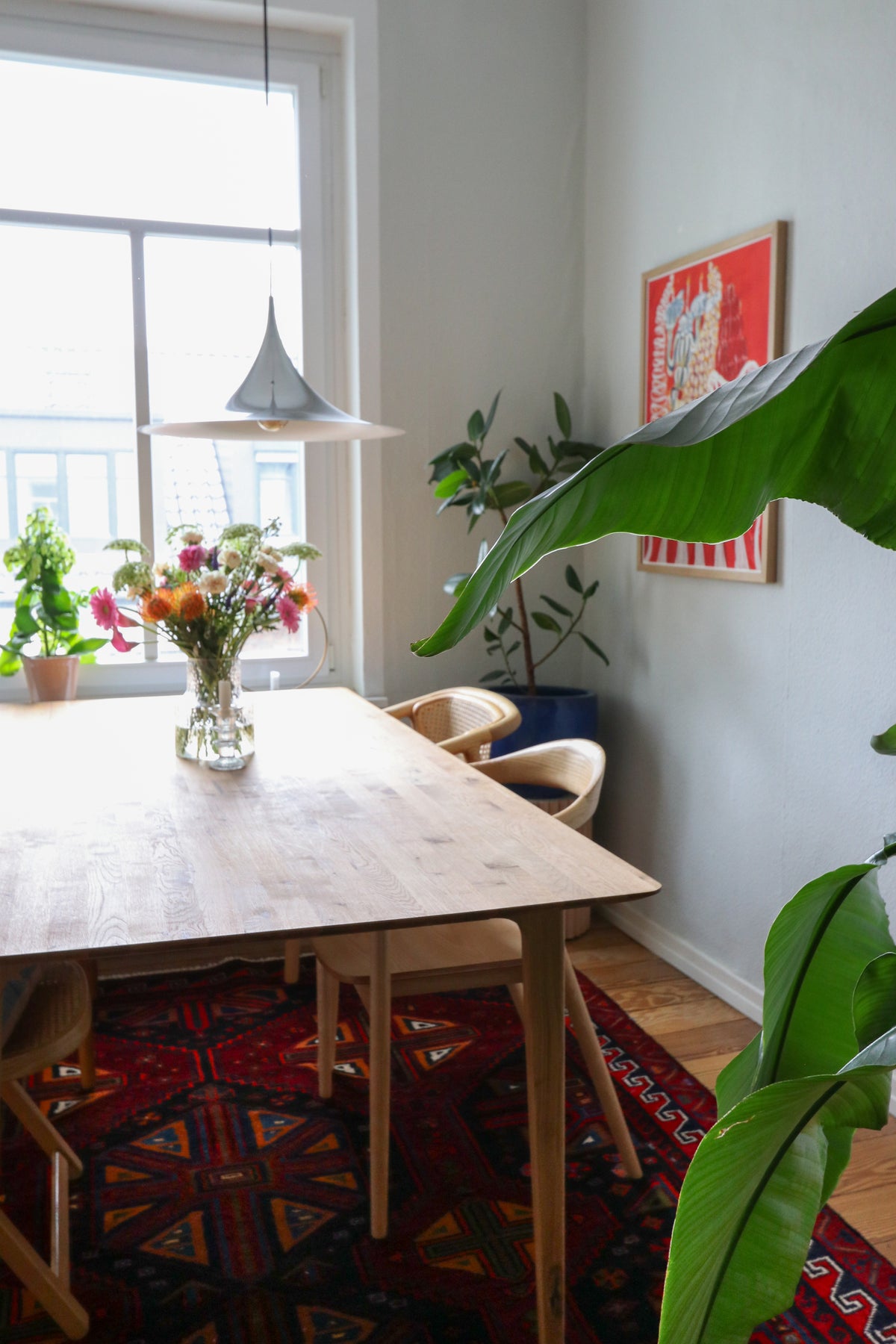
As a calm element in eclectic interiors: Even in a more colorful, eclectic mix of different styles, a Loribaft can work wonders. Choose a model in a calm, monochrome variant to create a visual link between different pieces of furniture and give the room a harmonious foundation. It becomes a tranquil element that balances the vibrancy of its surroundings.
Functional benefits: Beyond its aesthetics, a Loribaft also offers very practical advantages. Its dense wool pile is an outstanding sound absorber and noticeably improves acoustics in rooms with hard flooring such as parquet or tile. In addition, it insulates naturally and provides pleasant warmth underfoot. Since it is extremely durable and easy to care for, it is wonderfully suited for high-traffic areas such as the living room or hallway. To make sure your new rug fits perfectly, it is important to find the perfect size for your room.
FAQ
What is the difference between Lori and Loribaft? "Lori" is the name of the semi-nomadic tribe from the Persian Zagros Mountains known for their extraordinary knotting art. "Loribaft" is the name of the rug itself and literally means "knotted by Lori" or "Lori weave". It describes the product crafted by this specific people, emphasizing its origin and artisanal tradition.
Are Loribaft rugs soft? Yes, they are exceptionally soft. This softness results from two factors: the use of fine, lanolin-rich highland virgin wool and the very high knot density. The many knots tied closely together produce a compact, velvety surface that feels wonderfully soft and luxurious underfoot, yet remains extremely robust.
How do I recognize a genuine Loribaft? You can recognize a genuine Loribaft by a combination of several features. Feel the wool: it should feel slightly "waxy" and cool, indicating a high lanolin content. Inspect the back: the knots should be dense and even. The rug should be flexible, not stiff. Look for subtle color variations (Abrash) in the pile, a clear sign of natural dyeing and handcraft.
Are Loribaft rugs durable? Absolutely. They are among the most durable hand-knotted rugs. The high natural lanolin content of the Zagros wool acts like an impregnation, making the fibers naturally dirt- and water-repellent. Paired with the extremely high knot density, this creates a very long-lasting weave that withstands decades of heavy use.
Where does the name Loribaft come from? The name is a direct designation of origin. It is composed of the name of the people, the "Lori", and the Persian word "baft", which means "woven" or "knotted". The name Loribaft is therefore a promise of quality that points directly to the master weavers of this tribe and their centuries-old tradition.
How do I care for my Loribaft rug? Caring for it is uncomplicated. Regular vacuuming with a flat nozzle (without a rotating brush) is usually sufficient. In case of stains, you should act immediately: dab liquids with a clean cloth, do not rub. For a thorough deep clean every few years, we recommend a professional organic rug wash, which you can request through our wash and repair service.
The world of the Lori and their Loribaft rugs is a fascinating example of living tradition and timeless design. Each piece tells a story of the mountains, the life of the nomads, and the artistry of its creator.
Curious to discover the subtle differences and velvety touch for yourself? Browse our collection of handpicked nomadic rugs. With our AR visualizer, you can even see directly on your smartphone how such a rug would look in your own space.