



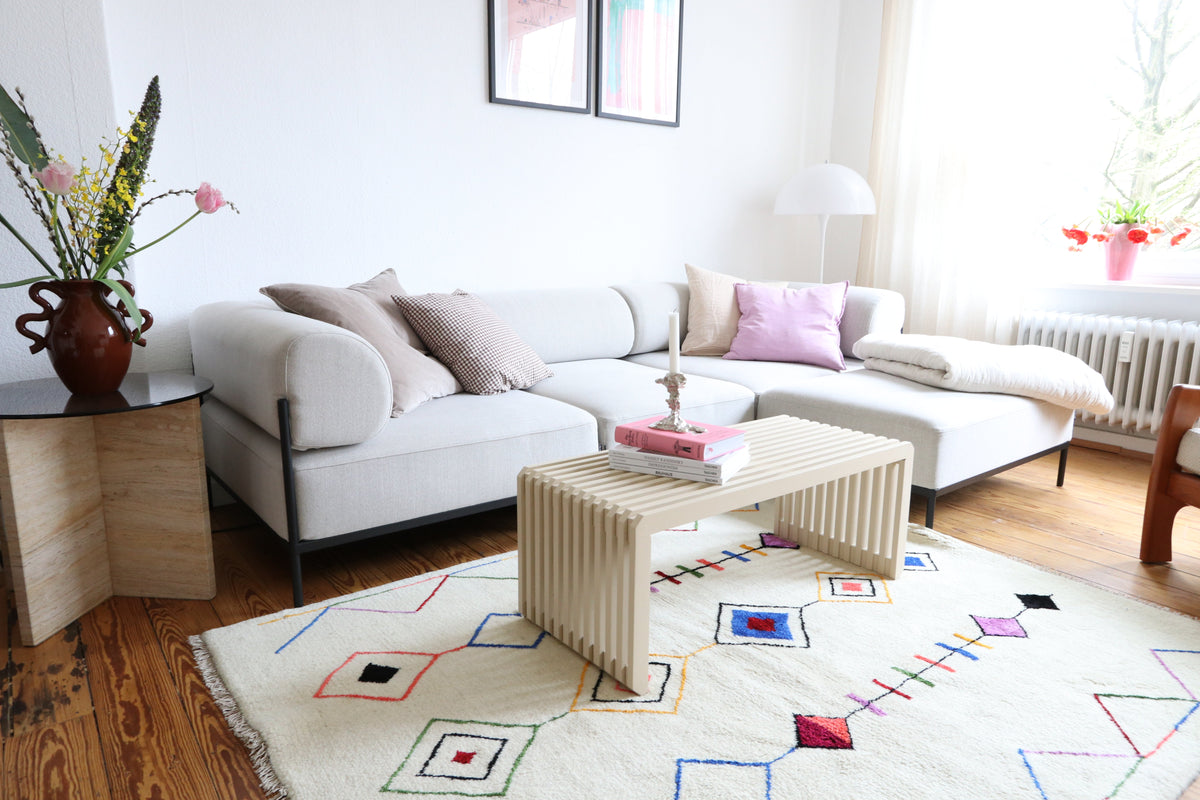
Placing a Rug in Front of the Sofa: 3 Layout Rules
TL;DR: To place a rug correctly in front of your sofa, follow one of three rules: "The Anchor" (only the front furniture legs rest on the rug), "The Island" (all furniture sits completely on it), or "The Accent" (the rug sits freely in front). The choice depends on your room size and creates a harmonious, cohesive seating area.
Why the Right Rug Placement Transforms Your Living Room
Proper rug placement is essential because it visually connects pieces of furniture and creates a cohesive, inviting zone. A well-placed rug defines the living area, gives it structure and warmth, and can make a room feel larger or cozier. It is the foundation that brings harmony and character to your living room.
A rug is so much more than just a soft surface underfoot. It is the stage where your living room unfolds, the visual anchor bringing sofa, armchairs, and coffee table together into an inviting unit. Without it, even the most beautiful furniture can feel lost and disconnected, floating aimlessly in the room. Proper placement is no coincidence; it is an intentional design tool that can transform the entire atmosphere of a room.
Picture your living room as a blank canvas. The sofa and armchairs are the main focal points, but it is the rug beneath them that provides a frame and a foundation. It does not just add color and texture; it also creates a perceived boundary, a cozy island in the center of the room. This zoning is particularly essential in open-plan living spaces to give the living area a clear identity. A rug can highlight the natural color variations of a hand-knotted piece, known as Abrash in a rug, telling a story of craftsmanship and authenticity.
Vida ter Hazeborg, Co-Founder: "A rug is the soul of a room. It has the power to connect all individual elements (furniture, colors, light) into a harmonious melody. The right placement is the decisive beat. It turns a collection of objects into a place where you immediately feel at home."
The effect is immediate: a generously placed rug makes a room look more expansive and luxurious, while a deliberately chosen smaller rug can create an intimate, cozy corner. It is all about finding balance and telling a visual story. Are you ready? Discover the perfect rug for your living room and let us explore the rules for the perfect layout together.
Rule 1: "The Anchor", Front Furniture Legs on the Rug
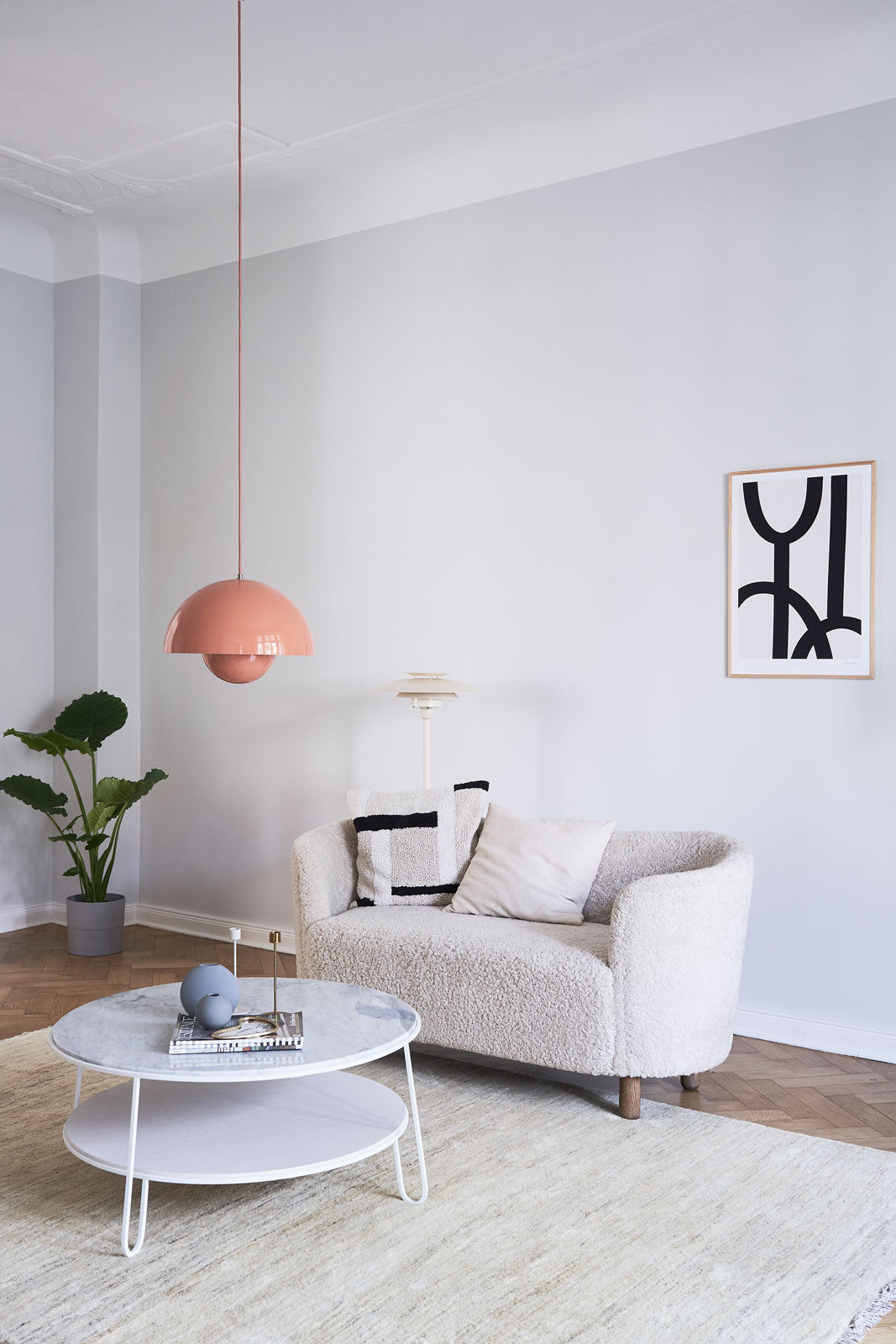
The "Anchor" method is the most popular and versatile rule. The front legs of your sofa and armchairs are placed about 20 to 30 cm onto the rug. This anchors the furniture group, creates a visual connection, and prevents the rug from looking like an isolated island. Ideal for most room sizes.
This is the golden mean and our clear recommendation for most living situations. The "Anchor" method is elegant, practical, and almost always the right choice. It creates an effortless link between flooring and furniture without overwhelming the space. With the front legs of the sofa and armchairs resting securely on the rug, a sense of unity emerges. The furniture feels grounded and intentionally placed.
It is easy to implement: slide the rug under your sofa so that the front legs sit about 20 to 30 centimeters on it. The same applies to any armchairs or chairs that are part of your seating area. Width is equally important: ideally, the rug should extend about 20 centimeters beyond both sides of the sofa. This ensures a balanced look and prevents the rug from feeling "pinched." This method works wonderfully with various rug types, from plush Berber rugs to sturdy Gabbeh rugs, whose thick pile creates an especially inviting foundation. If you are unsure about dimensions, you can find detailed help in our comprehensive rug size guide.
When deciding between two sizes, place both virtually in your home using our AR Rug Visualizer: open the product page on your smartphone and tap "View in your room". A rug that is too small leaves an awkward gap, whereas a larger piece placed according to the "anchor" rule pulls the entire seating area into one cohesive, harmonious setting.
Rule 2: "The Island", the Entire Seating Group on the Rug
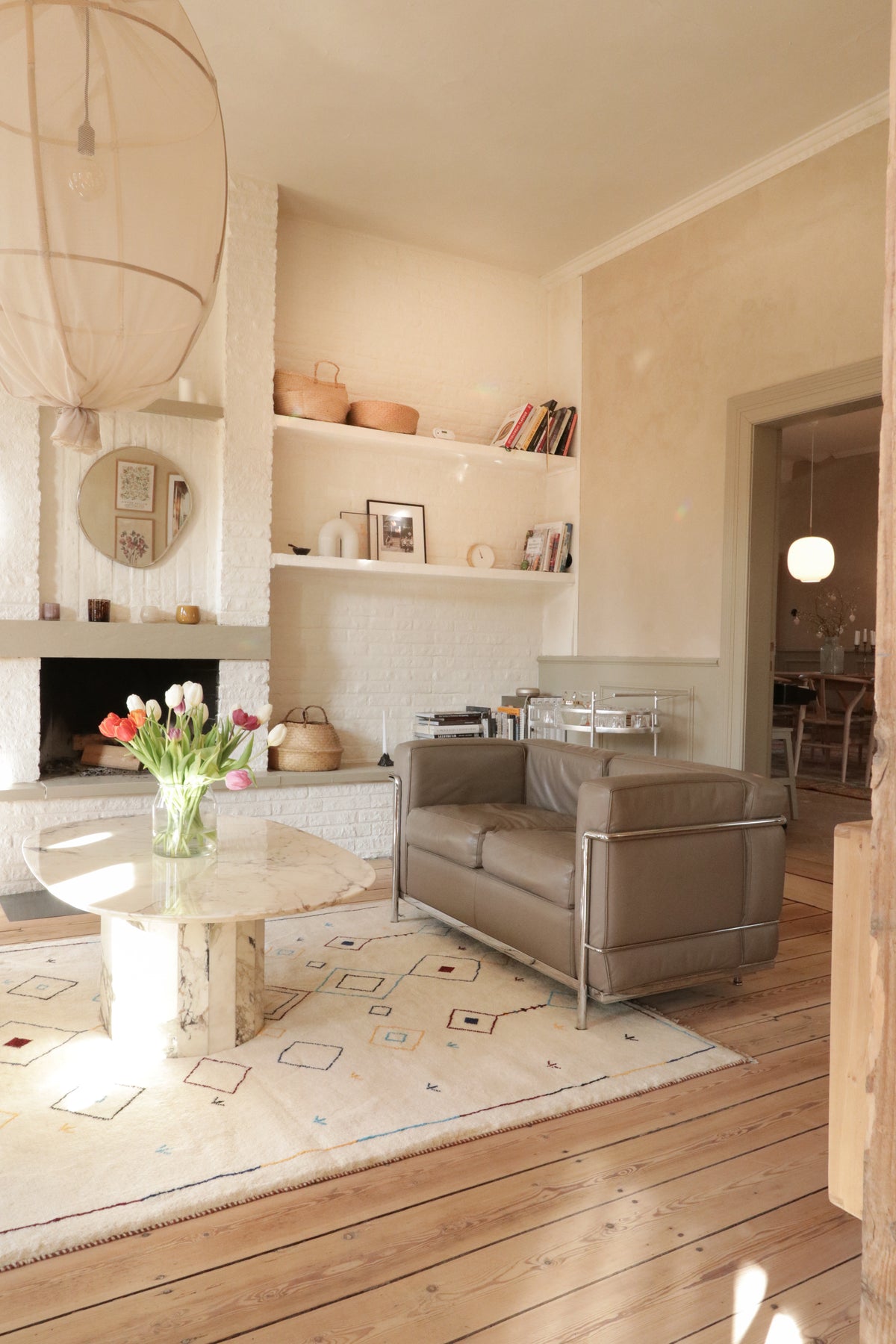
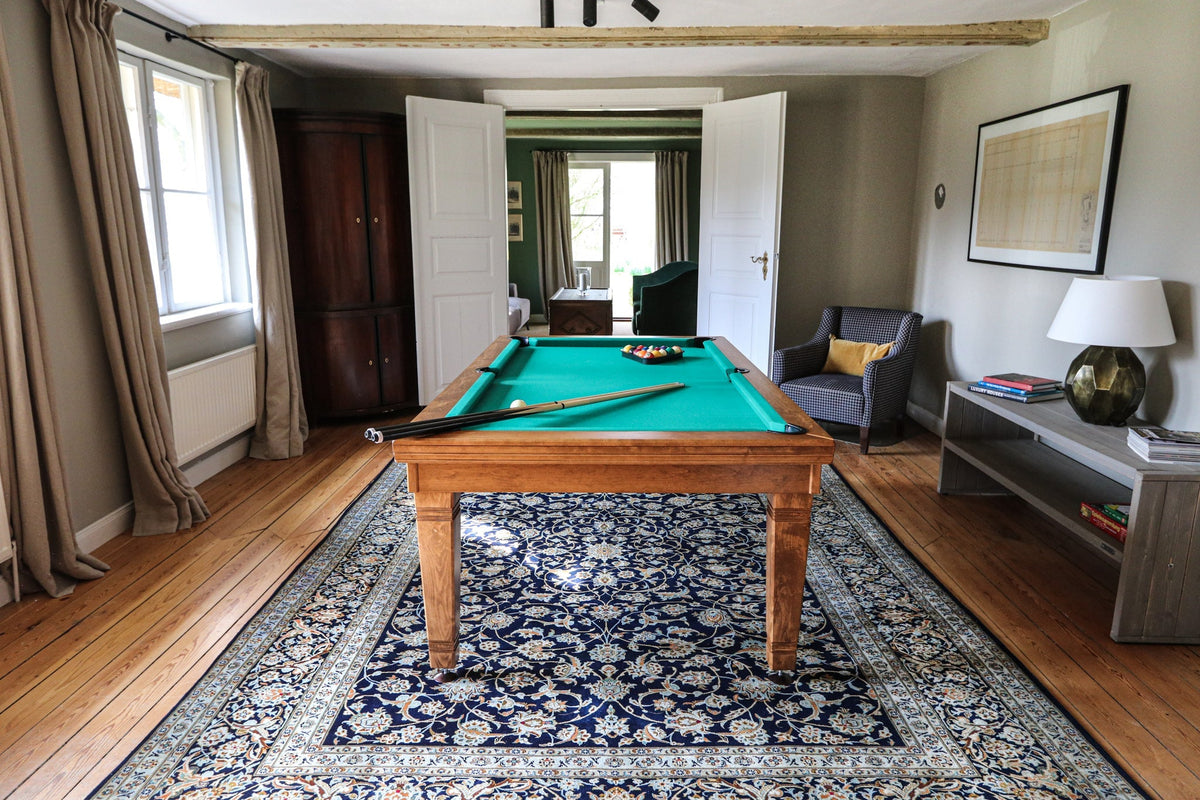
The "Island" method is ideal for large, open-concept living spaces. Here, all pieces of furniture (sofa, armchairs, side tables) sit completely on a very large rug. This creates a clearly defined, luxurious island and visually separates the living area from other zones such as the dining space. It brings a sense of generosity and completeness.
If you are lucky enough to have a spacious living area, the "Island" method is your chance to make a real statement. Here, the rug becomes not just an anchor, but the entire stage. All the furniture in your seating group (the sofa, armchairs, coffee table, and even side tables and floor lamp) fits entirely onto the rug.
This method creates a clearly defined zone. It functions like a room within a room and elegantly separates the living area from adjacent spaces such as the dining room or an open kitchen. The result is an exceptionally tidy, spacious, and harmonious look reminiscent of a high-end hotel lobby. The rug becomes the foundation that holds everything together and radiates calm. In our experience, achieving this generous effect for a true "island" often requires rugs measuring 300x400 cm or larger.
The key to success lies in the size. The rug needs to be large enough to leave a border of at least 20 to 30 cm clear around all pieces of furniture. This keeps the island looking airy rather than crowded. If you love this luxurious, orderly style, you are sure to find the perfect foundation for your living island in our selection of large rugs.
Rule 3: "The Accent", the Rug Freely in Front of the Sofa
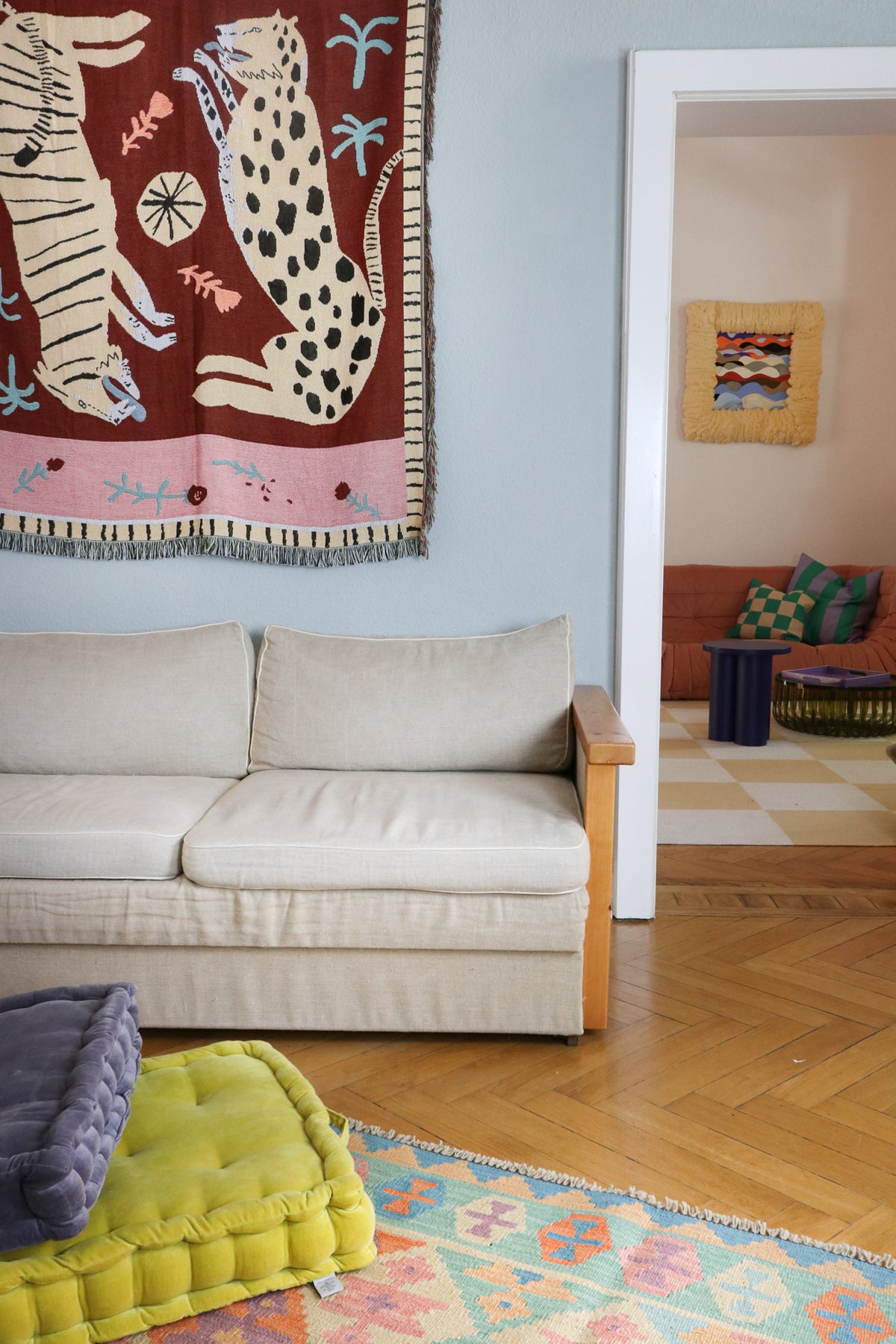
In very small or narrow spaces, the "Accent" rule can be the best solution. Here, the rug sits freely in front of the sofa without any furniture on top (except perhaps the coffee table). A minimal gap of 5 to 10 cm from the sofa is key so that no awkward disconnect occurs. This method is also more budget-friendly.
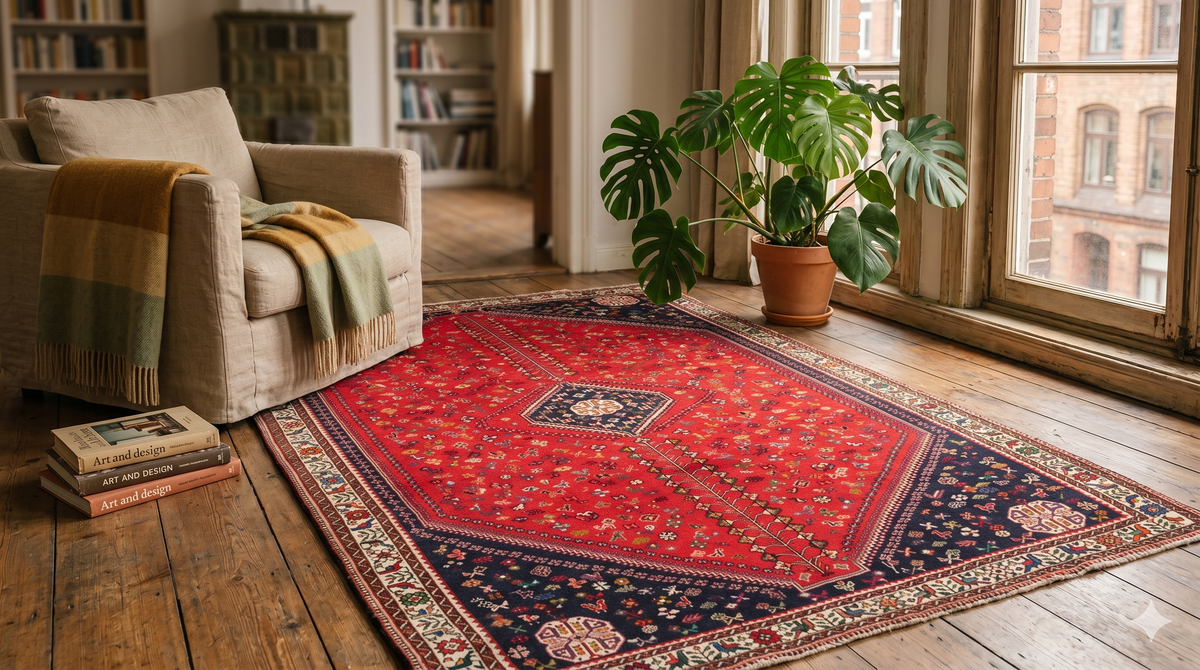
Sometimes less is more. Especially in smaller apartments, narrow layouts, or when you want to highlight a particularly expressive one-of-a-kind rug, the "Accent" method is the ideal choice. Here, the seating does not touch the rug. It sits freely in front of the sofa and serves as a colorful or textural accent defining the area before the couch.
The crucial factor with this method is distance. The rug should be positioned very close to the sofa, leaving only about 5 to 10 centimeters of space. If the gap is larger, the arrangement quickly feels disconnected and the rug appears to float aimlessly in the room. The coffee table, however, can and should stand entirely on the rug to establish a connection. This method is also a budget-friendly option since you can work with a smaller rug size. It is wonderful for graphic and colorful Kelim pieces that function as floor art and should not be hidden under furniture.
| Rule | Ideal for... | Placement | Effect |
|---|---|---|---|
| The Anchor | Most living rooms | Front furniture legs on the rug | Connecting, grounded |
| The Island | Large, open-plan spaces | All furniture on the rug | Zoning, spacious |
| The Accent | Small, narrow rooms | Rug freely in front of the sofa | Accentuating, space-saving |
The Most Common Mistakes When Choosing a Rug: And How to Avoid Them
The most common mistake is choosing a rug that is too small, looking lost and failing to connect the furniture, often referred to as the "postage stamp effect." Another mistake is placing the rug too far from the couch. To avoid this, use our AR visualizer to test the size directly in your room before you buy.
Choosing the right rug and positioning it properly can be a challenge, but with a bit of know-how, the typical pitfalls are easy to avoid. By far the most common mistake is picking a rug that is too small. It ends up looking like a solitary postage stamp in the room instead of tying the furniture together into a cohesive whole. The seating group seems to float around it rather than rest on it.
Another classic mistake is leaving too much distance between the rug and the sofa, especially with the "Accent" method. This "no man's land" gap breaks the visual connection and leaves the space looking unfinished.
How to avoid these mistakes:
- Measure and mark: Before you start searching, measure your seating area. Use painter's tape to outline the dimensions of your desired rug on the floor. This gives you a true feel for the proportions and lets you see immediately whether the size works.
- Use technology: Unsure how a 200x300 cm rug will actually look in your living room? With our AR visualizer on the website, you can place our rugs virtually and true to scale in your own room. It is the best safeguard against making a wrong purchase.
- When in doubt, go larger: If you are hesitating between two sizes, almost always choose the larger option. A rug that is too large is rarely an issue; one that is too small almost always is.
A hand-knotted rug is an investment for life. With proper care, it will accompany you for many years. Find out more about how to properly care for your rug so that its beauty is preserved.
To find out how much wider than the sofa your rug should be, check our guide on whether a rug should be larger or smaller than the sofa.
FAQ
How large should the rug be in relation to the sofa? As a rule of thumb, the rug should be at least 15 to 20 cm wider than your sofa on each side. This creates visual balance and ensures that the rug frames the sofa rather than disappearing beneath it. With the "Anchor" method, this extra width gives neighboring armchairs enough room to place their front legs on the rug as well.
How much space should there be between the rug and the wall? In larger rooms, we recommend leaving about 45 to 60 cm of space from the walls. This visible border of flooring acts like a mat board in a frame, making the room feel more spacious. In smaller rooms, this distance can be reduced to 20 to 30 cm to allow the rug to be as large as possible without visually overwhelming the space.
Does a round rug also work in front of a sofa? Absolutely! A round rug is a wonderful way to soften the often rigid, straight lines of a seating group and create a softer, more dynamic feel. It should be large enough so that, much like with the "Anchor" rule, it can be slid under the front legs of the sofa to establish a connection.
What should I do with a sectional or L-shaped sofa? With a sectional, a large rectangular rug is the best choice. It should be positioned so that it fits under the front legs of both sections of the sofa. Ideally, the rug follows the L-shape and frames the entire seating area, creating a cohesive, well-defined lounge zone.
Can I layer rugs? Yes, rug layering is a fantastic trend to bring more texture, depth, and personality into a room. The classic combination is a large, neutral base rug (such as jute or a plain wool rug) topped with a smaller, expressive rug, such as a patterned Kelim or a vintage piece. Just make sure the colors harmonize.
Now you know the secrets of perfect rug placement. Use this knowledge to find the rug that does not just decorate your living room, but completes it. Try out different sizes and styles virtually with our AR visualizer and find the hand-knotted unique piece that tells your story. Browse our living room rug collection now.
,%20%22The%20Island%22%20(all%20furniture%20sits%20completely%20on%20it),%20...)